Last verified: August 25, 2026. If you are comparing frontier AI models to organize Obsidian notes, the tested evidence points to a practical verdict rather than a model-war verdict: Claude Code, Gemini CLI, and OpenAI Codex can all perform the mechanical work of renaming files, grouping notes, applying tags, cleaning frontmatter, and producing indexes. The safer question is which agent fits your vault size, budget, rate-limit tolerance, and appetite for command-line approvals.
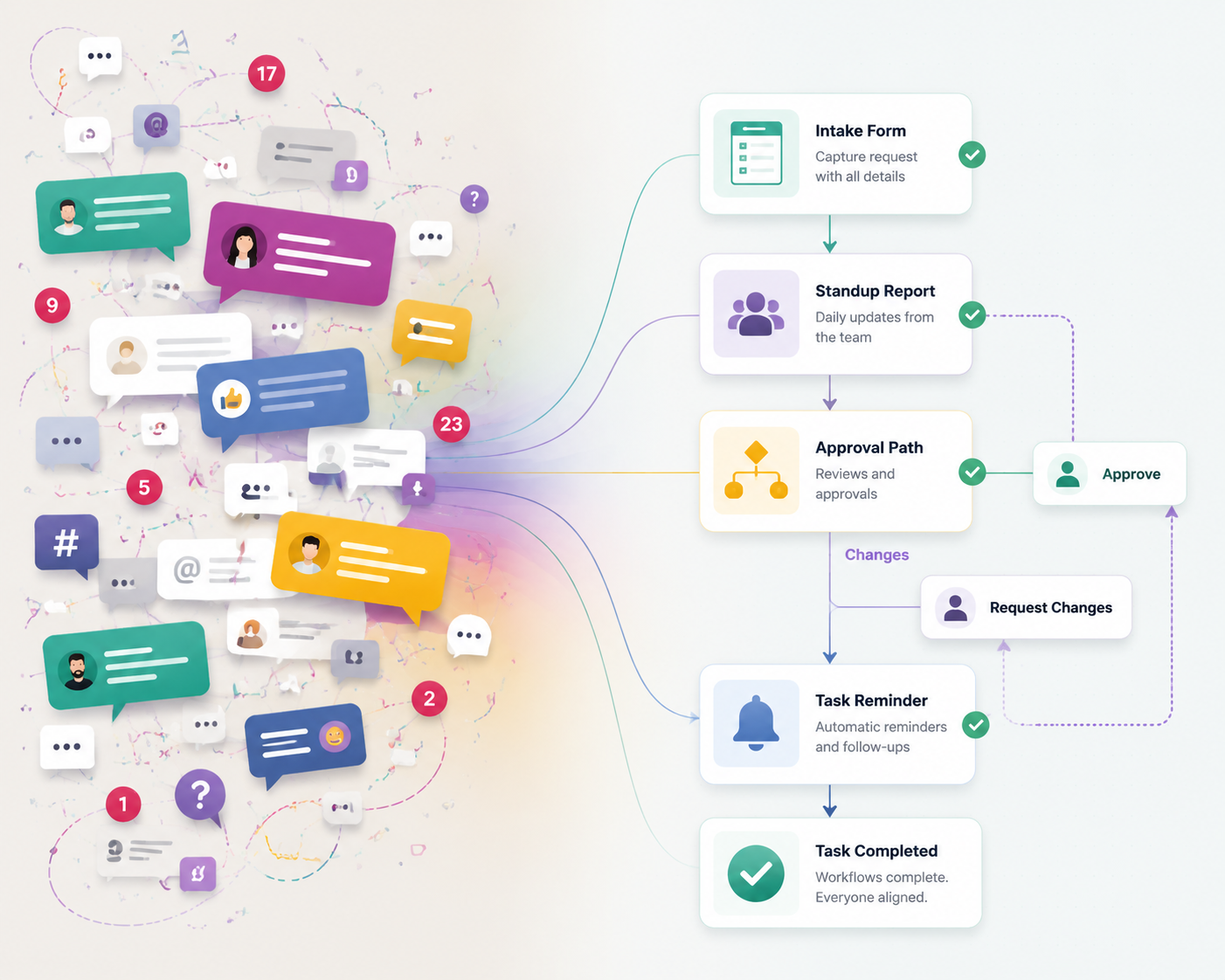
The hard condition is the same for all three: do not let an agent edit your real vault directly without an audit, a proposed change plan, phased execution, and version control. The cheerful “done” message is not the end of the cleanup. The end is when you open Obsidian afterward, inspect the diff, check links and aliases, and can still roll back if the agent made confident nonsense.
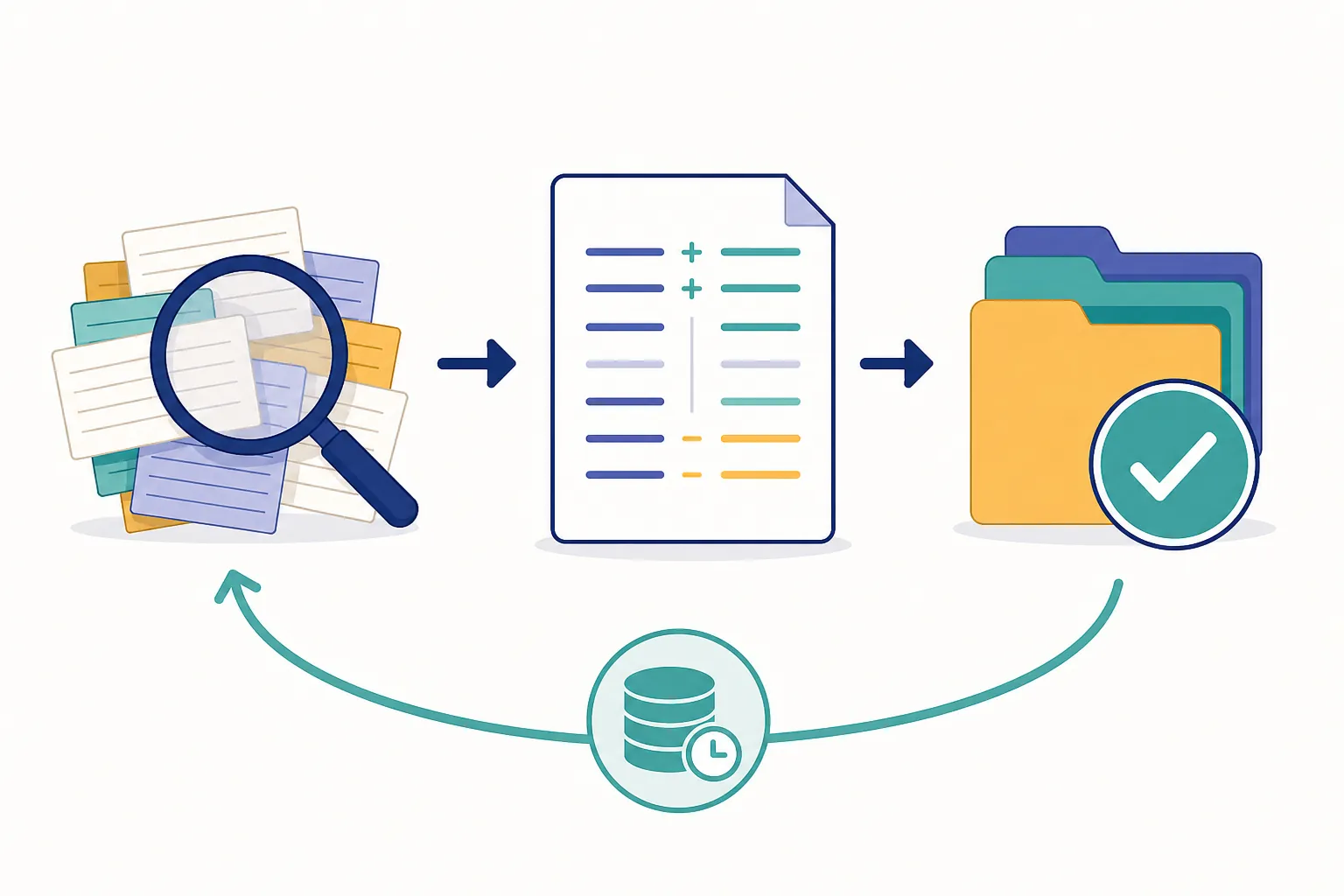
One boundary matters before comparing tools: no available source ran Claude Code, Gemini CLI, and Codex on the same Obsidian vault under the same test conditions. That means this is not a controlled benchmark of cleanup quality. The best evidence comes from separate field reports, CLI capability comparisons, and vault-management case studies, so the honest answer narrows by working conditions rather than crowning a universal winner.
Here, “frontier AI” means advanced models operating near the leading edge of current AI capability, with enough general reasoning and tool-use ability to act across files rather than merely autocomplete a note. Palo Alto Networks describes frontier AI as highly capable systems that push the boundary of current AI development, which is enough scope for this comparison; the real question here is vault outcomes, not a taxonomy lesson.[1]
The most useful real cleanup looked more like a migration than a one-shot request
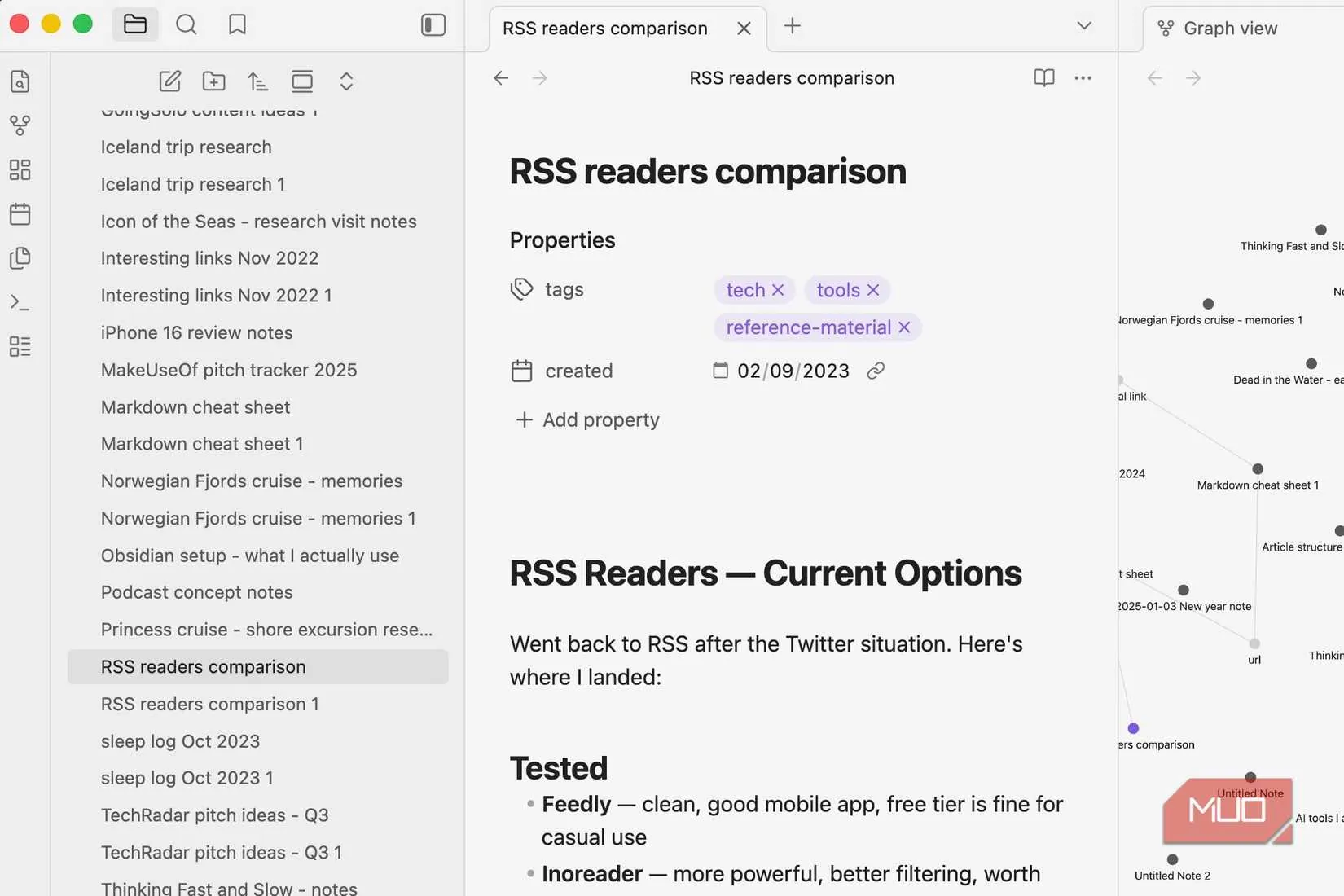
The strongest Obsidian-specific evidence is the April 2026 MakeUseOf run pairing Claude Code with notesmd-cli. It started with a vault that had accumulated 847 notes over five years, including roughly 340 untagged notes, roughly 200 inconsistently tagged notes, 14 overlapping folders, 63 files named “Untitled,” and 11 empty files.[2] That baseline matters. Without it, “AI organized my vault” can mean anything from fixing filenames to shuffling chaos into prettier chaos.
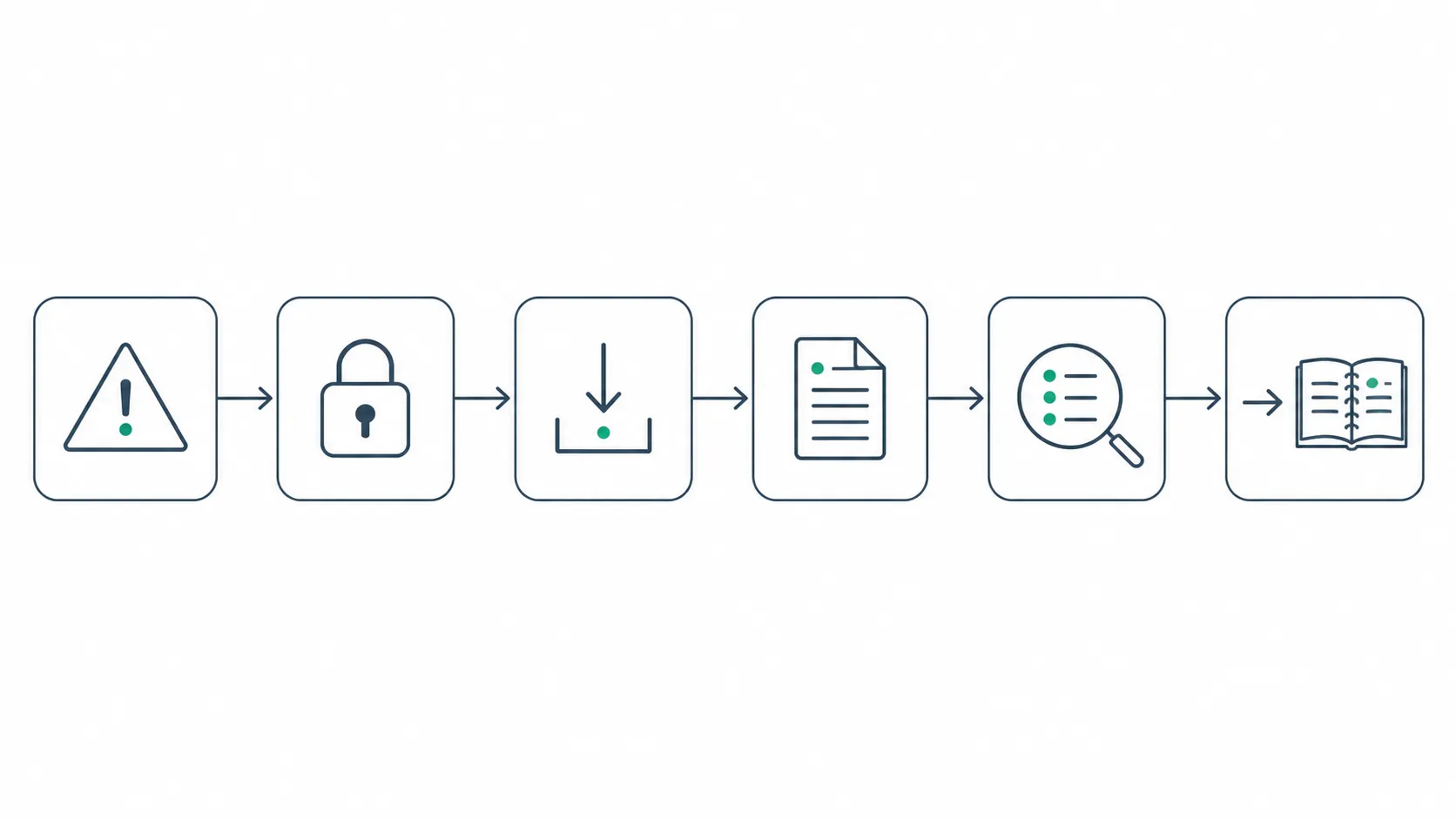
The workflow was a three-phase protocol: audit, propose, execute. Claude Code did not begin by moving files. It first inspected the note structure, identified tag and folder problems, and produced a change plan. Only after that did the cleanup proceed. The reported run took about 90 minutes and reduced the unresolved pile to about 40 genuinely ambiguous notes; the author still manually re-moved 3 files afterward.[2]
That last sentence is the part worth keeping. A good agent did not eliminate human judgment; it concentrated the human work into the notes that actually needed judgment. In a dirty Obsidian vault, that is already a large win. Empty files can be detected. “Untitled” files can be renamed from their contents. Overlapping folders can be merged or separated by a consistent rule. Inconsistent tags can be normalized. But a note that mixes a project meeting, a personal idea, and a half-written source excerpt may still need its owner.
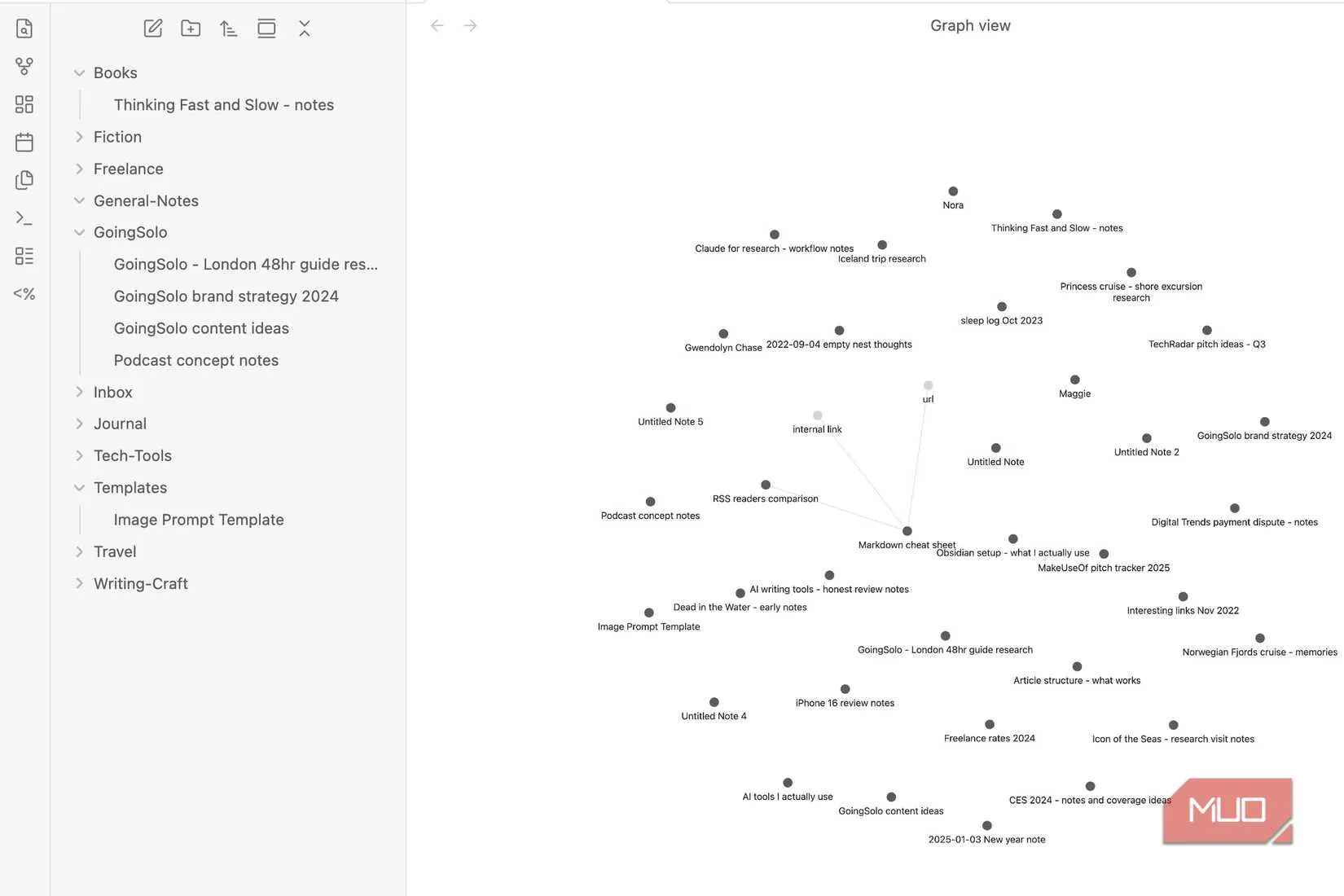
The MakeUseOf case is persuasive because it gives both a before-state and an after-state. It does not merely say Claude Code was smart. It shows which mess existed, which operations were attempted, and what remained after automation. For a reader with years of note debt, that is more useful than a leaderboard score.
What the agents can fix, and what they can quietly damage
The repairable layer of an Obsidian vault is mostly file-system work plus Markdown interpretation. An agent can read filenames, headings, links, aliases, tags, and frontmatter; infer that “Meeting notes,” “Meetings,” and “1 Meetings” are probably overlapping containers; and propose a cleaner convention. It can also create an index note or map of content so the vault has an entry point again.
The damage layer is just as ordinary. A model can move a file and leave a human-facing link less meaningful. It can over-normalize tags until useful distinctions disappear. It can convert a messy but personally meaningful folder into a tidy abstraction you never use. It can choose the wrong canonical name for two near-duplicate notes. These failures are not exotic AI failures; they are migration failures with fluent explanations attached.
That is why the workflow matters more than the wording you give the model. The minimum safe harness is:
- Make a full vault backup before the agent sees anything.
- Put the vault under git or another version-control system so every file move and text edit can be inspected.
- Run an audit first: counts of notes, empty files, untagged notes, duplicate-looking titles, folder overlaps, broken links, and frontmatter patterns.
- Require a proposed plan before execution.
- Approve changes in batches, not as one vault-wide blast.
- Review diffs after each batch, then open Obsidian and verify that the result still feels usable.
If that sounds like too much ceremony, that is useful information. These tools are closer to coding agents operating on Markdown files than to a one-click Obsidian plugin. They reward the person who is willing to inspect a patch.
Claude Code: the strongest documented Obsidian cleanup path
Claude Code has the cleanest Obsidian-specific public case in the available material because the April 2026 run documents a messy baseline, a staged protocol, and concrete leftovers. It also aligns with DeployHQ’s June 2026 comparison, which described Claude Code as especially strong at multi-file refactoring while listing a standard 200K-token context window and a 1M-token Sonnet 4.5 beta context option.[3]
Those coding-assistant characteristics do not prove Claude Code will clean every vault better than Gemini CLI or Codex. They do explain why it is comfortable territory for vault reorganization: Obsidian cleanup resembles a refactor. The agent has to find related files, rename or move them coherently, update metadata, and keep enough of the surrounding tree in mind to avoid local fixes that create global clutter.
Claude Code is the pick I would start with when you want the best-documented Obsidian cleanup path and are comfortable treating the vault like a small software repository. It is less attractive if cost is the first constraint; DeployHQ’s comparison notes that Claude Code had no free tier.[3]
For a deeper Claude-specific path, use the existing Claude Obsidian organization profile as the narrower companion to this comparison.
Gemini CLI: context size and low-friction experiments are the draw
Gemini CLI’s clearest advantage in the available comparison is context capacity and cost of experimentation. DeployHQ listed Gemini CLI with a 1M-token context window and a free tier of about 1,000 requests per day, while describing Gemini as better able to hold larger trees in context.[3]
For Obsidian, that matters most when the vault is large enough that the agent’s field of view becomes the bottleneck. A bigger context window can make it easier to compare folder conventions, recurring tag patterns, and related notes without constantly chunking the vault into smaller jobs. The caution is that DeployHQ was comparing coding-assistant behavior, not running an Obsidian vault cleanup. Treat the numbers as capability signals, not as proof of better note-organization results.
Gemini CLI is therefore attractive for large-vault reconnaissance, audit passes, and lower-cost trial runs on a copied vault. If you are already building a Gemini-centered workflow around Obsidian, the Gemini Gems and Obsidian setup guide is the more practical next stop for implementation details.
Codex: the case for portability, token discipline, and fewer rate-limit headaches
The most useful Codex evidence is not a same-vault cleanup benchmark. It is Jiradett’s May 2026 report about switching vault management from Claude Code to Codex after citing lower token consumption and fewer rate limits. The more important finding was that the durable asset was the structured knowledge system: plain-Markdown instructions, memory files, and a knowledge graph that could move across agents.[4]
That punctures a lot of model loyalty. If your vault-management system is encoded as clear Markdown rules, naming conventions, tag policies, and review steps, then the agent becomes more swappable. Codex makes sense when you are already paying for or using OpenAI tooling, when Claude’s rate limits or token consumption are getting in the way, or when you care more about maintaining a portable knowledge-operation layer than about staying with the model that performed the most publicized cleanup.
This is also where many vaults get messy in the first place: exported conversations, Markdown dumps, and half-processed AI transcripts. If that is your starting point, clean the import path before asking any agent to reorganize the aftermath. The ChatGPT history to Obsidian migration guide is the better place to handle that upstream mess.
The 15-million-word Claude run is a boundary case, not a promise
Eleanor Konik’s January 2026 Claude-and-Obsidian account is valuable because it sits at the far edge of scale: a 15-million-word vault churned overnight into a tidy index file. The part to copy is not “run it overnight and hope.” The part to copy is the discipline: git commits after every change and pull-request-style review instead of destructive edits.[5]
A very large vault changes the job. The agent is no longer just cleaning bad filenames; it is producing navigation surfaces so the owner can re-enter a knowledge base that may be too large to inspect manually. At that size, indexes, maps of content, and reviewable commit history matter more than whether every individual note lands in the perfect folder on the first pass.
For ordinary users, the lesson is smaller: scale makes rollback more important, not less. The more impressive the automation looks, the more boring the safety rails should be.
A cheap local tagger is useful, but it answers a different question
There is a lower-cost baseline worth mentioning because it keeps expectations honest. In an October 2025 MakeUseOf run, a local LLM was used to help organize a 502-note Obsidian vault with a predefined tag list, and the setup took under an hour.[6] That kind of workflow can be perfectly sensible if the job is constrained tagging.
It is not the same question as choosing among Claude Code, Gemini CLI, and Codex as frontier agents. A predefined tagger can classify notes into an existing scheme. A frontier coding agent can operate across files, propose structural changes, write instructions, update Markdown metadata, and create navigation notes. If all you need is cheap tag application, do not overbuy the tool.
Decision matrix: which agent should touch your vault?
| Your situation | Best starting choice | Why | Safety condition |
|---|---|---|---|
| Small or medium vault; you want the best-documented Obsidian cleanup path | Claude Code | The strongest available vault-specific case used Claude Code with a staged audit-propose-execute workflow. | Use git, review the proposed plan, and approve changes in batches. |
| Large vault; context capacity is likely to be the bottleneck | Gemini CLI | The reported 1M-token context window makes it attractive for broader audits and large-tree inspection. | Treat context size as a capability signal, not a guarantee of better cleanup. |
| You want to experiment without committing budget immediately | Gemini CLI | The free-tier note makes it the easiest candidate for copied-vault trials. | Run only on a duplicate vault until the workflow is proven. |
| You already use Claude and care about multi-file refactoring behavior | Claude Code | Vault cleanup resembles a refactor: many small file and metadata changes need to stay coherent. | Keep every move reviewable. |
| You are hitting token or rate-limit friction, or already live in OpenAI tooling | Codex | The Codex switch report supports the case for lower token consumption, fewer rate-limit problems, and portable vault instructions. | Move the rules into Markdown instruction files so the system is not trapped inside one model. |
| You only need predefined tagging | Local LLM or simpler automation | A frontier agent may be unnecessary for constrained classification. | Keep the tag list explicit and review misclassifications. |
| You want a one-click plugin and do not want CLI, git, or diffs | None of these | These are agentic file-operation workflows, not low-friction consumer cleanup buttons. | Do not run them on your real vault. |
The subscription stack matters more than people admit. If you already pay for Claude and have a moderate vault, Claude Code is the path with the best public Obsidian cleanup evidence. If you are trying to minimize cost or inspect a very large tree, Gemini CLI is easier to justify as the first experiment. If OpenAI tooling is already where your work lives, or if rate limits and token usage have become the pain point, Codex is a reasonable vault manager as long as the operating instructions are portable.
Dated verdict
As of August 25, 2026, I would not choose a frontier AI model for Obsidian cleanup by asking which one is “smartest.” I would choose Claude Code for the most proven Obsidian-specific cleanup path, Gemini CLI for very large-context inspection and low-cost experimentation, and Codex for portable vault-management systems where token use, rate limits, or an existing OpenAI stack are the deciding constraints.
I would not use any of them on a real vault without a backup, git or equivalent version control, a baseline audit, a proposed change plan, phased approvals, and diff review. And I would not use any of them if I were unwilling to accept that some notes will remain ambiguous. The best run is not the one where the agent pretends every note has an obvious home. It is the one where tomorrow’s version of you can see what changed, reverse what failed, and keep using the vault.
References
- What Is Frontier AI? Palo Alto Networks.
- I Paired Claude Code With Obsidian CLI and It Finally Organized Five Years of Notes. MakeUseOf. Apr 2026.
- Comparing Claude Code, OpenAI Codex, and Google Gemini CLI: Which AI Coding Assistant Is Right for Your Deployment Workflow? DeployHQ. Jun 2026.
- Why I Switched from Claude Code to Codex for Managing My Obsidian Vault. Medium. May 2026.
- Claude + Obsidian Got a Level Up. Eleanor Konik. Jan 2026.
- I Tried Letting a Local LLM Organize My Obsidian Notes. MakeUseOf. Oct 2025.