
If you are searching for how to stay productive with sleep deprivation from a new baby, the answer is not to make your note system more ambitious tonight. It is to keep yourself from making the kind of productivity decision that looks clean at 3 a.m. and becomes cleanup work for your rested future self.
Capture the thought. Label what is bothering you. Park the decision. That is still productivity. What should wait is the switch from Notion to Obsidian, the full Evernote export, the Logseq graph rebuild, the “local-first versus cloud” decision, the PARA overhaul, the second-brain redesign, and any migration where you could lose attachments, links, metadata, or trust in the archive.

The warning is narrow on purpose. You still have to function. You may still need a place to dump feeding notes, work promises, medical questions, grocery fragments, and the half-formed idea you know will evaporate before morning. A simple capture habit is protective. A cross-app system decision is different. It asks the most impaired version of you to do work that depends on attention, restraint, comparison, and honest self-assessment.
The safe split: capture now, decide later
A newborn does not merely reduce available hours. It breaks the conditions under which certain decisions are safe. The practical distinction is not “productive” versus “unproductive.” It is reversible versus hard to verify later.
| Do now | Defer until sleep has recovered |
|---|---|
| Write quick notes in the tool you already trust enough. | Choose a new primary notes app. |
| Create a temporary “broken things” list. | Migrate a full archive across apps. |
| Tag or label a note only when it helps you find it this week. | Rebuild a PARA, Zettelkasten, graph, or second-brain structure. |
| Save examples of friction: slow search, bad mobile capture, missing OCR, confusing folders. | Make data-ownership decisions such as cloud AI notes versus local notes. |
| Postpone setup ideas into a dated decision queue. | Delete, deduplicate, bulk rename, or reorganize thousands of notes. |
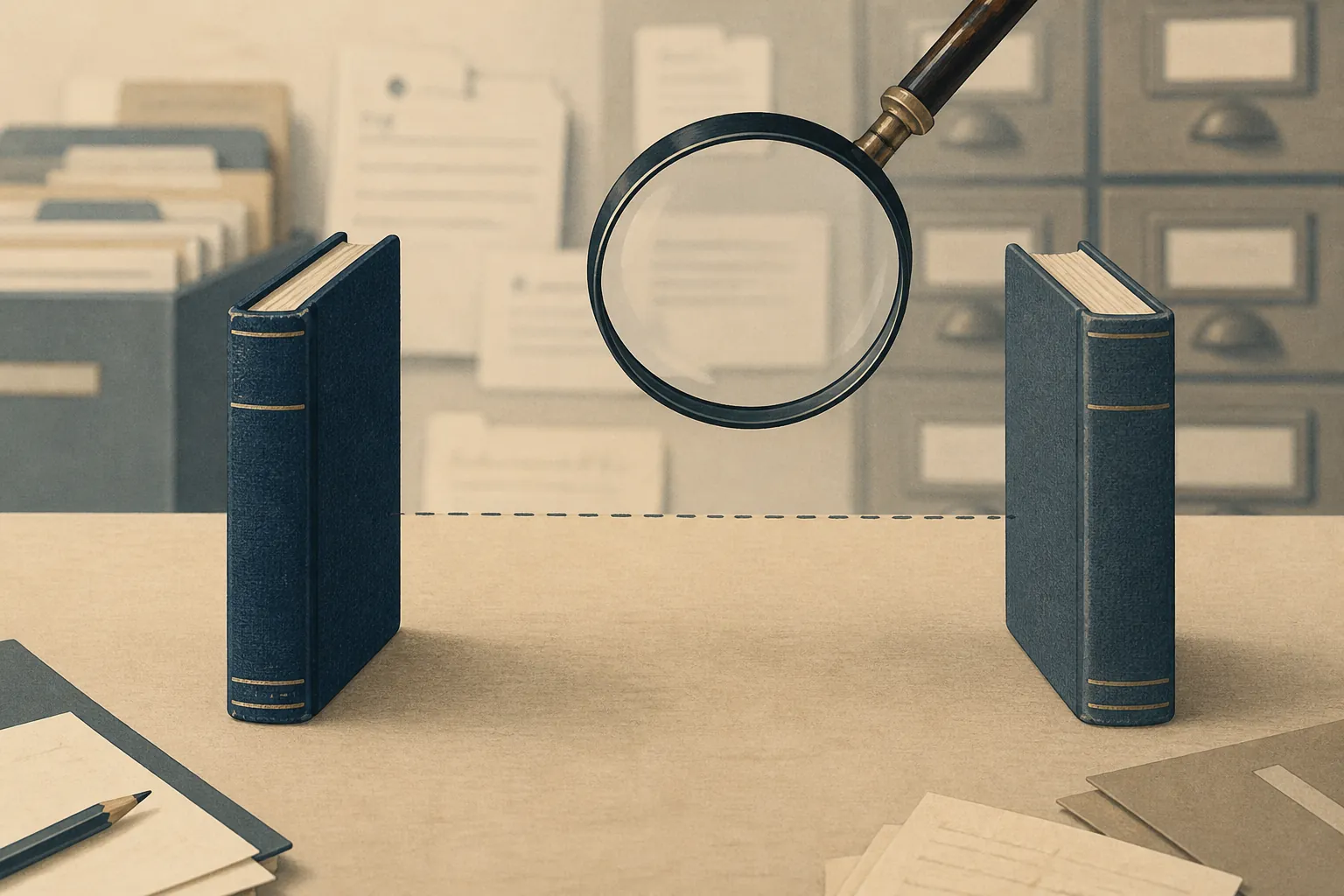
That split is not anti-tool. It is pro-reversibility. A messy note saying “Obsidian mobile capture is annoying when holding baby” can be useful later. A half-finished export with missing PDFs and broken backlinks becomes a second job. The issue is not whether Obsidian, Notion, Logseq, Apple Notes, or Evernote is the better tool. The issue is whether this week’s brain is fit to run that comparison.
Sleep loss attacks the exact faculties note-app decisions require
One reason the note-app itch feels so convincing is that migration looks like organization. It has steps. It has folders. It has templates. It promises a cleaner surface at a time when the rest of life is noisy. But evaluating a note system is not clerical work. It is a judgment task.
A controlled study of 24-hour sleep deprivation in 23 university students found the largest effect on selective attention, with significant drops also in sustained attention, tonic alertness, and cognitive inhibition.[1] Newborn sleep loss is usually chronic and fragmented rather than a single 24-hour total-deprivation experiment, so the study is not a perfect model of early parenthood. Still, the components it identifies are exactly the ones a notes migration asks you to spend.
Selective attention: reading the difference that actually matters
Selective attention is what lets you ignore the shiny part of a product page and notice the small sentence that changes the decision: export format limitations, attachment handling, mobile offline behavior, search indexing, sync conflicts, file ownership, backlink portability, OCR, or whether a “free” AI feature depends on a workflow you would never tolerate in daily use.
Without it, every app looks better than the broken feeling you are trying to escape. Notion’s databases seem like relief from chaos. Obsidian’s local Markdown files seem like permanence. Logseq’s outliner seems like thought itself. Apple Notes seems blessedly frictionless. Evernote’s AI organization may look like a rescue if your current notebooks are sagging under years of debris. Any of those impressions might be right. They are just not enough to justify a migration while your ability to filter signal from decoration is compromised.
Sustained attention: checking the boring parts after the exciting parts
The exciting part of a switch is the first clean screen. The dangerous part comes later: did every attachment move, did internal links survive, did tags map correctly, did archived notes preserve dates, did images remain searchable, did shared notebooks keep permissions, did the mobile app behave when offline, did the export produce files you can inspect outside the vendor’s interface?
That is sustained-attention work. It is not glamorous, and it does not reward the tired brain quickly. The exhausted version of you is more likely to test three happy-path notes, pronounce the migration “basically fine,” and leave the broken edge cases for a later version of you who has more bills, more work, and the same baby.
Inhibition: resisting the setup that feels like control
Cognitive inhibition is the ability to not do the compelling thing. In note systems, that means not installing a plugin because a screenshot looked elegant, not creating twelve properties because one template made them available, not rebuilding your entire vault around a method you discovered during a feeding, and not mistaking “I want a clean life” for “I need a new information architecture before morning.”
This is where newborn productivity culture can become cruel. A parent under load reaches for order because order would genuinely help. The mistake is not wanting less cognitive friction. The mistake is assigning a sleep-deprived brain the job of designing the machine that will carry future cognitive work.
Tonic alertness: noticing the small failure before it compounds
Tonic alertness sounds clinical until you translate it into migration work. It is the baseline readiness that helps you notice, “Wait, why are the PDFs missing from this folder?” or “Why did this export produce HTML instead of Markdown?” or “Why do these notes have today’s date instead of their original created date?”
A note migration often fails quietly. The app does not necessarily shout when a subset of files moved badly. A tired user may not notice until the old account is canceled, the trial expires, or the one note needed for work is now a breadcrumb trail of broken references.
The alcohol comparison is a warning label, not a newborn model
The often-cited benchmark is blunt: after 17 to 19 hours awake, performance on some cognitive and motor tests was equivalent to or worse than a blood alcohol concentration of 0.05%, and response speeds were up to 50% slower on some measures.[2] That finding comes from acute total sleep deprivation. Newborn life is usually not the same laboratory condition; it is more often repeated fragmentation, partial restriction, unpredictable interruptions, and the emotional vigilance of listening for another cry.
So the right use of that comparison is not “you are legally drunk, therefore incapable of everything.” It is more specific: if a long stretch awake can measurably slow responses and impair performance, then the middle of a broken-sleep period is a bad time to make decisions whose errors are hard to see immediately and costly to reverse.
That matters for managers too. A new parent can often continue useful work when tasks are bounded, reversible, and reviewed. Asking the same person to choose the team’s knowledge base, migrate a shared archive, or redesign documentation workflows is a different risk category. The problem is not effort. It is decision safety.
The worst part: impairment may feel like clarity
The most dangerous finding for the 3 a.m. migration impulse is not just that sleep-deprived people perform worse. It is that they may trust themselves more while being wrong. In Harrison and Horne’s work, as summarized in a later review, sleep-deprived subjects became more confident that their answers were correct as wakefulness continued, even when their answers were wrong.[3]

That is the warning light. The feeling of certainty is not reliable evidence that this is the right time to switch tools. It may be one of the symptoms.
In note-app terms, overconfidence sounds like this: “I already understand the export.” “I’ll clean up the tags later.” “I can rebuild the structure from memory.” “This AI organizer will save me enough time to justify the subscription.” “Local files solve everything.” “Cloud search solves everything.” “I’m finally seeing the whole system clearly.” Maybe one of those statements will survive rested scrutiny. The newborn phase is not the moment to find out by committing the archive.
Use a hold rule, not a heroic setup weekend
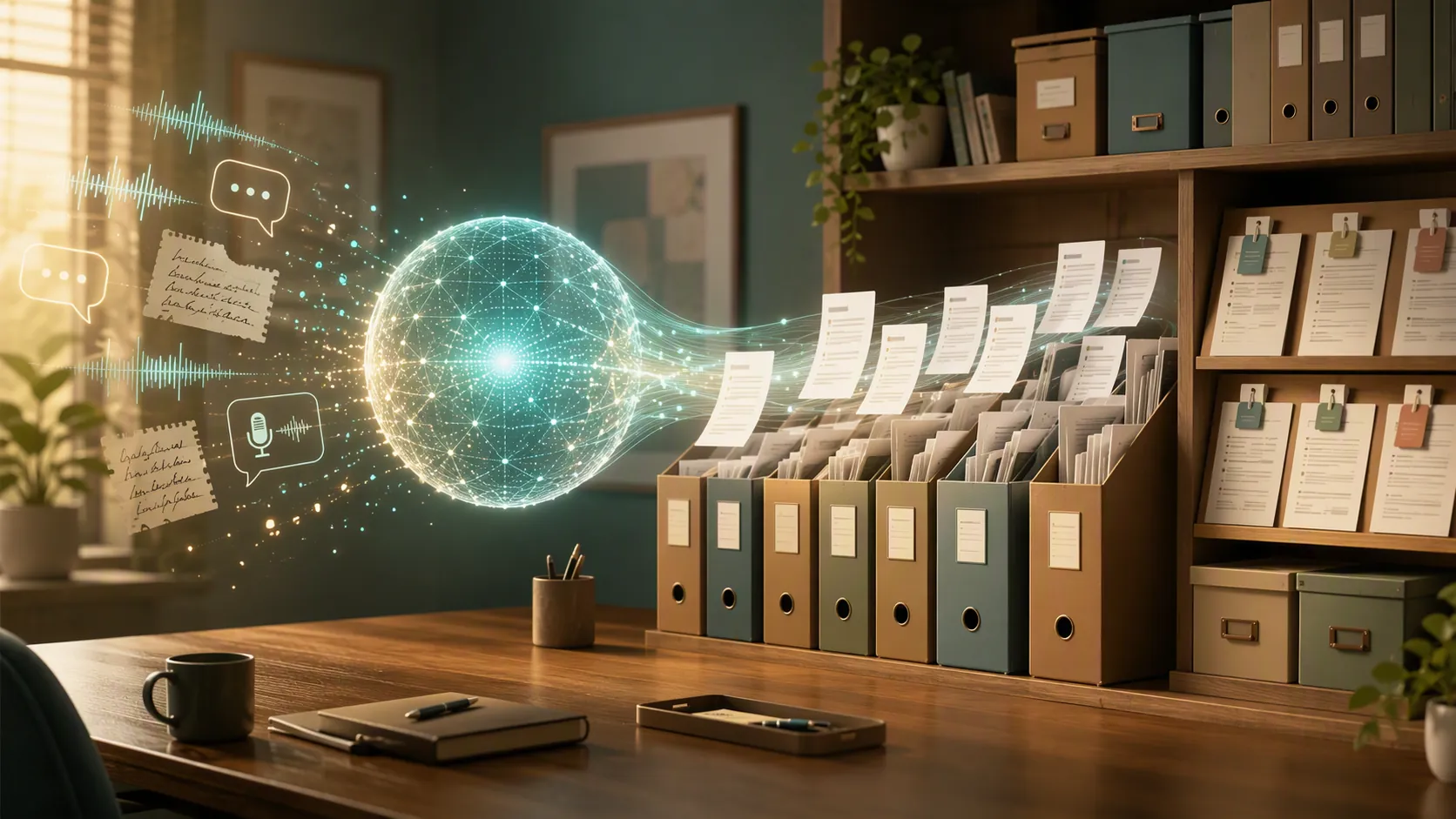
A decision freeze should not become another vague aspiration. It needs a small container, otherwise every irritation keeps reopening the app comparison. The container is a capture-and-defer list.

Keep one note called something boring, such as “Notes system decisions — hold.” Do not make it a dashboard. Do not build a database for it unless you already have one and it costs no effort. The point is to preserve evidence, not to start the migration through the side door.
- Write the friction in plain language: “Can’t capture one-handed,” “search misses old PDFs,” “work notes and baby notes are mixed,” “too many inboxes,” “I don’t trust sync.”
- Name the decision it points to: capture workflow, archive migration, AI features, local ownership, team collaboration, study-note organization, vault structure.
- Mark the reversibility: low, medium, or high. A shortcut is low. A full export and deletion of the old structure is high.
- Add one example. Not ten. One real failure is enough to preserve the signal.
- Close the note and return to the system you already know well enough to use while tired.
This gives the part of you seeking order a job it can do safely: collect evidence. It also protects your future self from having to reverse-engineer why you tore apart the archive. When sleep is more stable, the list will either reveal a real pattern or expose a passing irritation that only looked structural because everything was hard.
A useful hold note is dull
The hold note should not say “build perfect Obsidian vault.” It should say “mobile capture takes too many taps when I’m holding the baby.” It should not say “Notion is bloated.” It should say “couldn’t open the task list fast enough during pediatrician call.” It should not say “Evernote is back?” It should say “test whether AI organization helps with study notes after sleep recovers.”
Specific complaints age well. Grand theories written while exhausted usually do not.
When to reopen the comparison
There is no universal night count that makes a parent ready to redesign a knowledge system. The parental sleep picture is also not just a two-week inconvenience. In coverage of research on first-time parents, The Guardian reported that mothers lost just over an hour of sleep per night in the first three months after birth, with measurable effects still present four to six years later.[4] That does not mean every decision must be frozen for years. It does mean “the baby is no longer brand new” is not the same as “my judgment has fully recovered.”
Reopen the note-system decision when you can compare without urgency. A practical gate is not a feeling of inspiration; it is the ability to do the boring verification work: read export documentation, test a representative sample, check attachments, inspect dates, confirm links, compare mobile capture under normal conditions, and sleep on the conclusion before committing.
If the decision involves your team, add another person to the review. If it involves a personal archive, keep the old system intact until the new one has proved itself with real retrieval tasks. If it involves a paid renewal, separate the billing deadline from the migration decision; paying for one more month may be cheaper than repairing a rushed export.
What to read later, not tonight
There is a time for comparisons. It is just not the hour when fragmented sleep is making a redesign feel like rescue. When you are ready to reopen the queue, start with the kind of decision you actually captured. If the question is broader tool choice for a distributed job, revisit remote work productivity tools starting with notes. If the question is whether AI note features are worth the tradeoffs, save AI note tools versus local notes for the rested comparison, not the midnight spiral.
If your hold note keeps mentioning Evernote, read the test of Evernote’s AI for organizing study notes after you can judge whether the feature solves your problem or simply flatters your exhaustion. If your ambition is a full vault rebuild, postpone AI context engineering in your note vault until you can test the maintenance burden, not just admire the architecture.
For the sleep side of the gate, the useful question is not how to optimize yourself into invulnerability. It is whether attention and flexible judgment are back enough to trust a hard-to-reverse choice. Pieces on why hot nights ruin sleep and focus and whether sleeping in on weekends improves focus belong at that later checkpoint.
Until then, the productive move is smaller and more durable: keep capturing, keep the archive intact, and let the rested parent inherit evidence instead of wreckage.
References
- Sleep deprivation effects on basic cognitive processes: which components of attention, working memory, and executive functions are more susceptible to the lack of sleep? — Sleep Science, 2021.
- Moderate sleep deprivation produces impairments in cognitive and motor performance equivalent to legally prescribed levels of alcohol intoxication — Occupational and Environmental Medicine, 2000.
- Sleep deprivation: Impact on cognitive performance — Neuropsychiatric Disease and Treatment, 2007.
- Parenthood sleep deprivation: after birth, mothers hit hardest – research — The Guardian, February 26, 2019.





Comments
Join the discussion with an anonymous comment.