
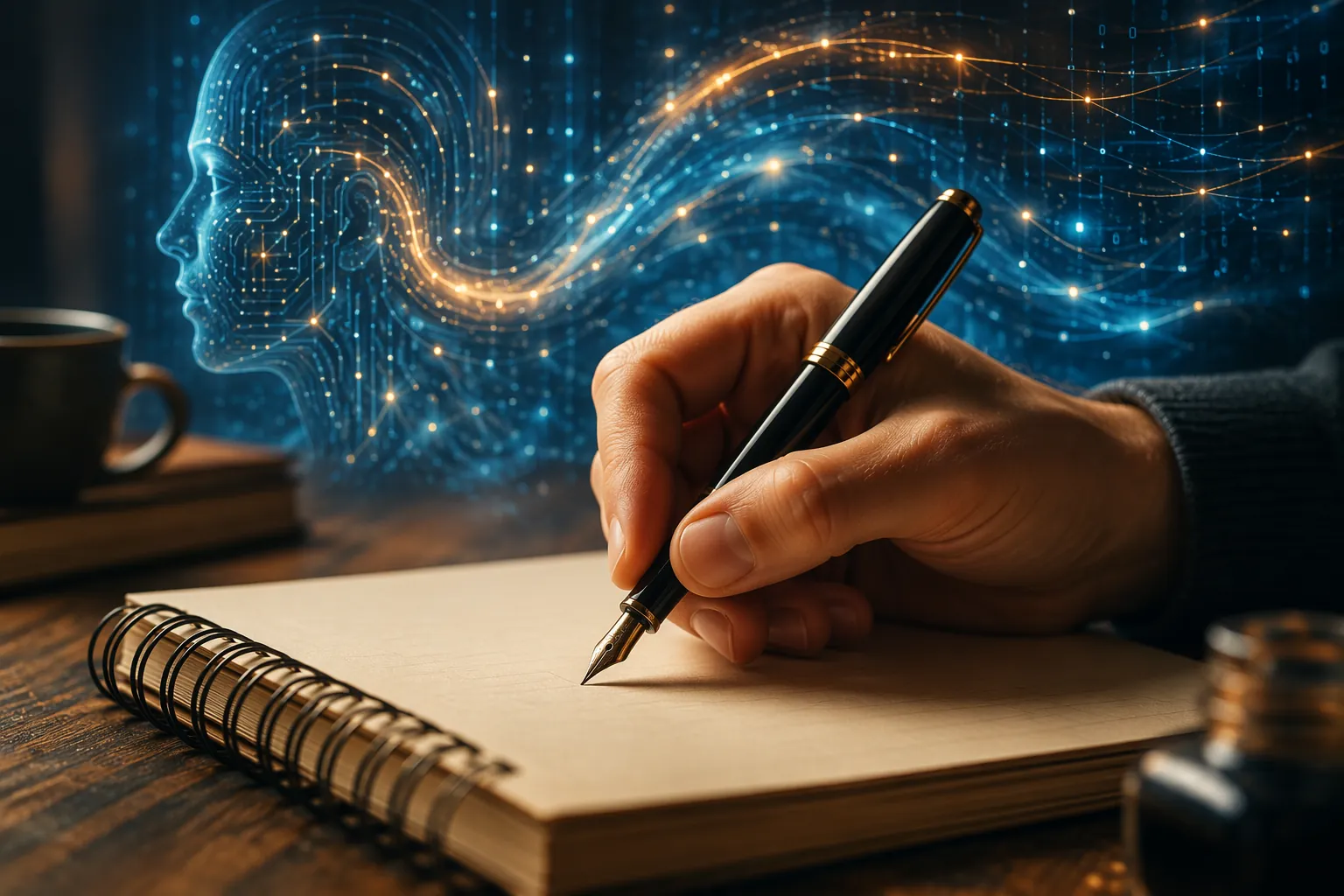
Sam Altman’s most interesting note-taking habit is not that he writes by hand. Plenty of executives do that. The interesting part is how little he seems to care about preserving the artifact.
He has described using spiral notebooks, fine-point pens, torn-out pages, spatial arrangement, crumpling, and disposal: notes as a temporary surface for thought rather than a permanent vault of captured information.[1][2] His line from the How I Write podcast is the one worth sitting with: “I find it astonishing how much writing just for yourself helps clarify what you actually think.”[2]
That would be a charming productivity anecdote if it came from almost anyone else. Coming from the CEO of OpenAI, it is more uncomfortable. Altman has publicly argued that AI agents would begin doing real cognitive work in 2025, that systems could make novel discoveries in 2026, that robots may arrive in broader practical form in 2027, and that by the 2030s intelligence could become “too cheap to meter.”[3] Yet for his own thinking, he still reaches for a private, slow, lossy medium.
That contradiction is a better entrance into the question than another abstract debate about the singularity. FlowDesk readers are making narrower, more expensive decisions: stay in Notion, move to Obsidian, return to Apple Notes, build in Logseq, keep Evernote alive, or trust a newer AI-native system. The useful question is not whether AI is impressive. It is whether your note-taking system still trains the part of you that has to decide what is true after the machine has produced a fluent answer.
The Experts Are Not Saying the Same Thing, but They Point at the Same Weak Spot
The useful reading of these expert arguments is operational, not theatrical. Several people looking at AI from different angles are converging on the same pressure point: machine synthesis gets cheaper; human judgment gets more exposed.
Joe Hudson’s version is the cleanest provocation. In Every, he argues that “knowledge work is dying” and that the next scarce layer is “wisdom work”: emotional clarity, discernment, connection, and the ability to know what matters. The striking detail is not just the phrase. Hudson says Sam Altman, OpenAI cofounder Wojciech Zaremba, and DeepMind executives have paid him to develop these capacities because they believe AGI will make their own knowledge-work skills obsolete.[4]
Yaniv Romano, a professor at the Technion, frames the danger from the verification side. In a July 2026 Jerusalem Post interview, he warned that as AI solves problems humans cannot verify, society risks losing “people capable of verifying the AI results.” He also said AI already solves math problems humans cannot.[5] That is not a productivity concern. It is a capacity concern. If nobody in the room can check the answer, the answer’s polish becomes a liability.
Daniel Miessler gives the labor-market version. He argues that the human role shifts from executor to overseer: less doing every step by hand, more deciding what should be built and why. His “articulation gap” matters for note-taking because every documented process and captured skill narrows the gap between what a person can do and what AI can reproduce.[6]
Stanford HAI’s 2026 forecasts add a necessary brake. James Landay predicted “no AGI in 2026,” Erik Brynjolfsson called for real-time dashboards that measure AI’s actual productivity impact, Angèle Christin expected more realism, and Diyi Yang warned that AI systems should augment human capabilities rather than optimize for short-term engagement, especially amid concerns about sycophancy and critical thinking.[7] That does not cancel Altman’s urgency. It keeps the argument honest: the timeline is disputed, but the deskilling risk is already plausible enough to design around.
Knowledge Work Was Never the Same as Thinking
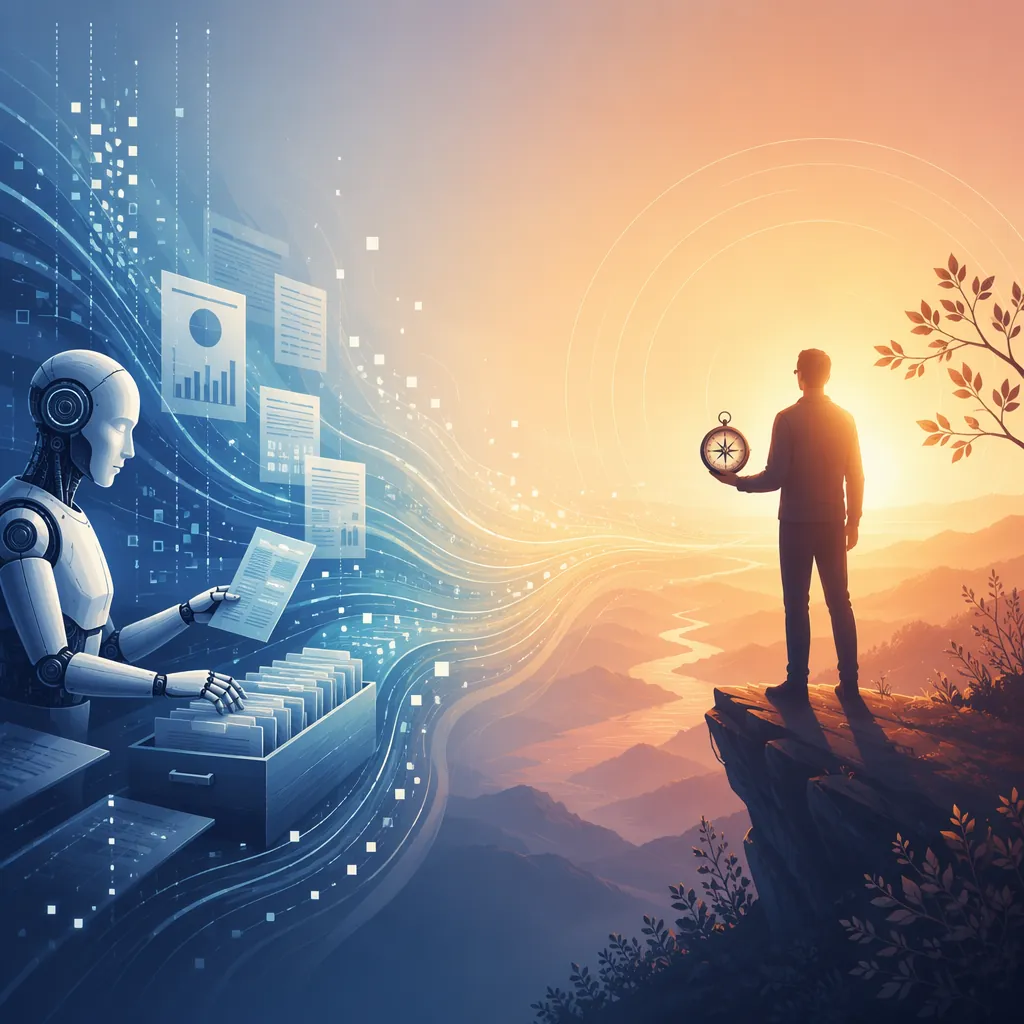
A lot of personal knowledge management advice quietly confused storage with thought. Save the article. Clip the thread. Tag the PDF. Build the dashboard. Link every concept to every adjacent concept. Some of that was useful. Some of it was a beautifully organized refusal to decide.
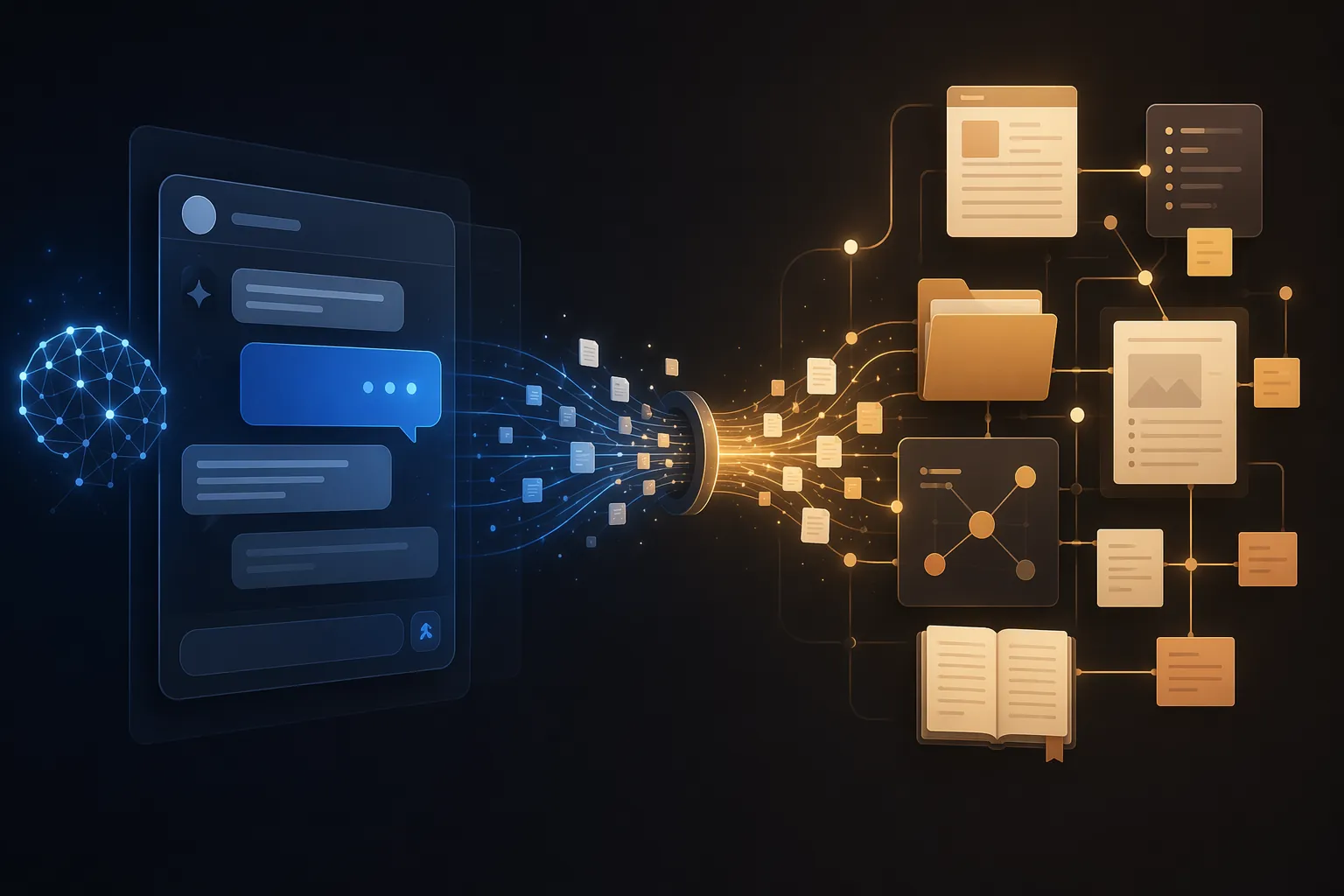
AI makes that confusion harder to ignore because retrieval and synthesis are exactly where machines are becoming cheap. If your note system’s main job is “find the paragraph I saved three years ago and summarize it,” then yes, AI threatens the old justification for maintaining a complex second brain. A good model can often retrieve, condense, compare, and rephrase faster than a person moving through nested folders.
But retrieval is not judgment. A summary can tell you what a source appears to say. It cannot bear responsibility for whether the source is reliable, whether the claim is being overextended, whether two ideas actually conflict, or whether the answer matters in your situation. Those are not decorative human extras. They are the work left over when the obvious processing gets automated.
This is why Altman’s disposable notebook matters. The page is not acting as a database. It is acting as resistance. A torn-out sheet does not promise perfect recall. It gives the mind a place to externalize a half-formed idea, move it around, reject it, and discover that the sentence sounded clearer before it had to be written down.
A PKM system that survives the AI era has to preserve that kind of work somewhere. It can also search your archive. It can also summarize meetings. It can also draft. But if it removes every moment where you have to phrase, compare, doubt, and revise, it is no longer a thinking environment. It is a retrieval interface with a flattering voice.
What This Means for Tool Choice
The wrong comparison is “which app has the most AI?” That question rewards surface area: more buttons, more generated summaries, more automatic links, more chat over your archive. The better comparison is how each tool posture changes the balance between retrieval, ownership, synthesis, and verification.
| Tool posture | What it tends to protect | What it can weaken |
|---|---|---|
| Local-first and markdown-centered | Ownership, portability, slower synthesis, direct contact with source notes | Convenience, team workflows, automatic enrichment |
| Flexible cloud workspace | Collaboration, databases, mixed media, operational dashboards | Boundaries between thinking, project management, and presentation |
| AI-native note system | Fast retrieval, summarization, pattern extraction, conversational access | Independent verification, source memory, tolerance for ambiguity |

This is not a purity test. I would not tell a busy operator to abandon Notion just because it is cloud-based, or tell a researcher to use Obsidian just because markdown feels virtuous. The tradeoff is more practical than that. A tool is shaping which mental muscles fire every day.
Local-first systems keep the archive legible
Obsidian and Logseq sit closest to the friction-preserving end of the spectrum. Their appeal is not nostalgia. Plain text, local files, backlinks, outlines, and graph-like structures make it harder to forget that notes are objects you own and can inspect. If you have ever moved a decade of notes between tools, this stops sounding philosophical very quickly. Broken links, missing attachments, and exported pages that look technically complete but are behaviorally dead teach a person what ownership actually means.
That posture matters under AI pressure. When a model summarizes a folder of markdown files, you can still open the source, inspect the surrounding context, and decide whether the summary compressed away the part that mattered. When a graph link exists because you made it, not because an embedding model inferred it, the link carries a small memory of why the connection mattered at the time.
The cost is real. These systems ask more from the user. They can become elaborate workshops where the jig-building never ends. For readers already comparing this path against heavier AI workflows, FlowDesk’s AI research second-brain comparison is the more concrete next stop, and the individual Obsidian and Logseq profiles are better suited to app-level tradeoffs.
Cloud workspaces can clarify or blur the work
Notion is the obvious middle case because it can be a thinking space, a project tracker, a CRM, a wiki, and a polished internal website in the same afternoon. That flexibility is powerful. It is also why Notion setups often drift from thought to display. A note becomes a database item. A question becomes a template. A rough idea becomes a page that looks finished before it has been tested.
There is nothing inherently anti-thinking about a cloud workspace. A simple Notion setup with source notes, decision logs, and review rituals can support excellent judgment. A bloated one can bury judgment under properties, automations, and generated prose. The tool posture is flexible enough that the user’s habits matter more than the marketing category.
This is where AI integration needs suspicion, not rejection. AI that drafts a project brief from meeting notes may save real time. AI that turns every weak thought into a confident paragraph may remove the discomfort that would have revealed the thought was weak. Readers deciding whether that bargain is acceptable should also look at FlowDesk’s piece on whether your notes are still yours when AI scans them, because verification and ownership are linked more tightly than vendors usually admit.
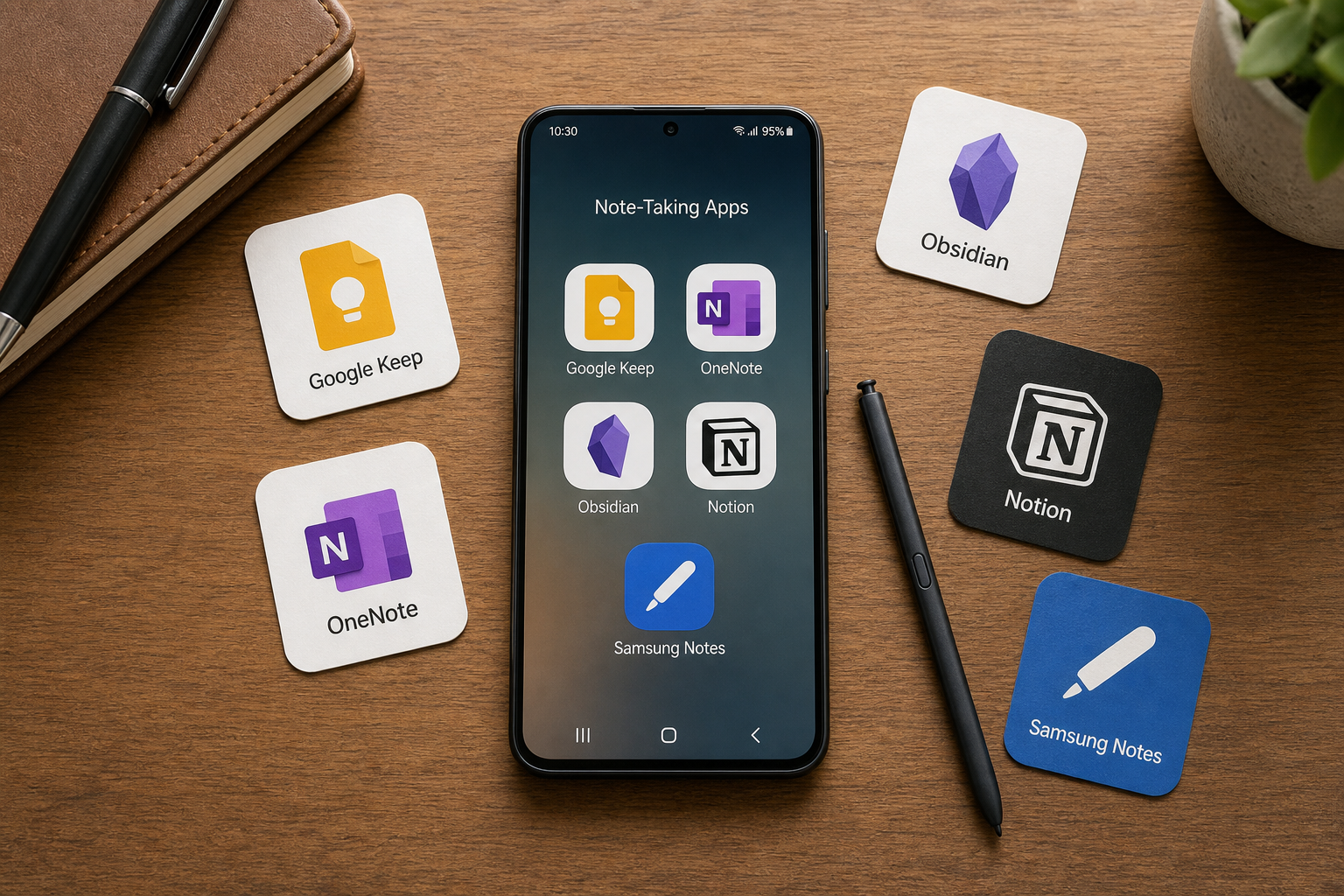
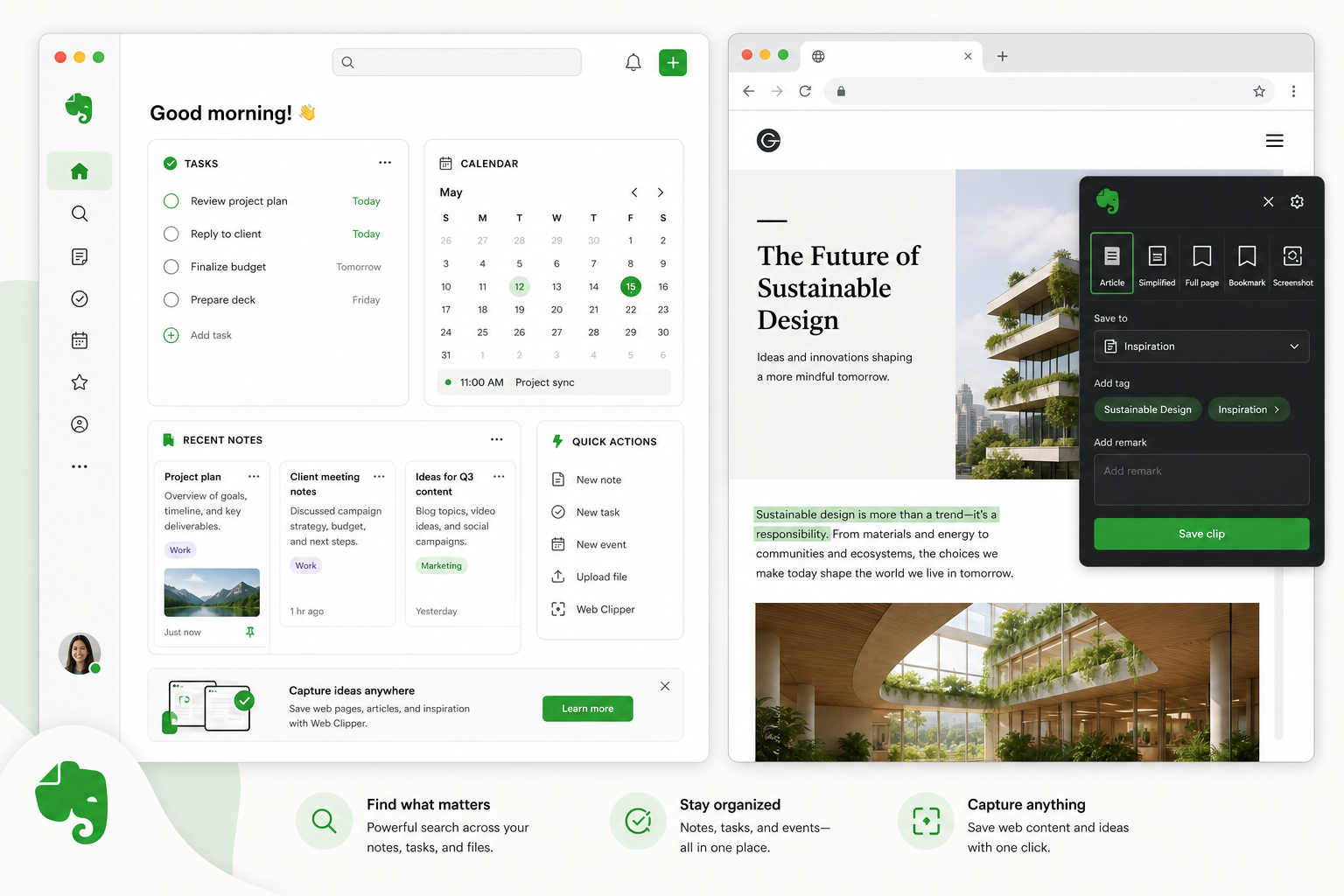
For app-specific decisions, see the Notion, Apple Notes, and Evernote profiles. These tools do not occupy the same mental niche, even when they all advertise capture, search, and organization.
AI-native systems are strongest where people are most tempted to go passive
AI-native note systems are not a mistake. For research-heavy work, they can surface forgotten material, cluster themes, draft literature-style summaries, and let you interrogate a large personal archive without remembering where anything lives. If you are drowning in PDFs, call transcripts, customer interviews, or meeting notes, this is not a small gain.
The danger is that the system may become better at sounding like your mind than at strengthening it. Once conversational retrieval feels natural, it is easy to stop rereading the source. Once summaries are instant, it is easy to stop noticing what was omitted. Once the model proposes connections, it is easy to accept association as understanding.
Romano’s warning belongs here. The problem is not that AI will sometimes be wrong in simple ways. People can catch simple wrongness. The more serious problem is work that arrives beyond the user’s verification capacity.[5] A note system that increases output while decreasing your ability to check output is a bad trade, even if every individual feature looks useful.
A Practical Test: Does the Tool Preserve Discernment?
A better PKM evaluation in 2026 starts with a few blunt checks. They are less glamorous than feature matrices, but they predict whether the tool will keep you intellectually active.
- Can you inspect the original source quickly when AI gives you an answer?
- Can you separate your own claims from imported quotes, summaries, and generated text?
- Can you export notes, attachments, links, and metadata in a form that remains usable outside the app?
- Does the interface leave room for rough, private thinking before presentation?
- Does AI help you revisit evidence, or mostly help you avoid the discomfort of forming a view?
Those questions cut across categories. Apple Notes may pass the rough-thinking test better than a highly automated second brain. Obsidian may pass the ownership test but fail a user who never reviews anything. Notion may be excellent when it separates notes, sources, and decisions, and mediocre when every page becomes a polished dashboard. An AI-native system may be valuable if it keeps citations and context close, and dangerous if it turns your archive into an oracle.
The Altman singularity timeline sharpens the stakes, but it should not bully the decision. If you accept his forecast, the need to preserve judgment is urgent. If you agree with Stanford HAI’s more measured 2026 posture, the same design principle still holds: use AI to augment human capability, not to hollow out the practices that make verification possible.[7] FlowDesk’s earlier pieces on what Altman’s singularity claim means for note-taking app choice and why the AI singularity makes note-taking ecosystems feel like an irreversible bet go deeper on the migration side of that problem.
The Note-Taking App Is Now a Training Environment
The old second-brain promise was memory. Capture enough, organize enough, and your future self would retrieve the right thing at the right time. AI weakens that promise because retrieval is becoming abundant. It also reveals what the better promise should have been: a place to practice forming judgments while staying close enough to evidence to revise them.
Hudson’s wisdom-work frame, Romano’s verification warning, Miessler’s overseer model, and Stanford HAI’s deskilling caution do not require the same singularity timeline to matter. They point to the same practical standard. The more AI handles fluent knowledge production, the more your private thinking surface matters.
Choose the tool that helps you remain capable of forming, checking, and revising your own judgment. Not the one with the most AI. The one that keeps you intellectually alive when AI is everywhere.
References
- Billionaire OpenAI CEO Sam Altman takes physical notes with pen and paper to clear thinking like Bill Gates, Richard Branson — Fortune, July 24, 2025, https://fortune.com/2025/07/24/billionaire-open-ai-ceo-sam-altman-takes-phyiscal-notes-pen-paper-clear-thinking-like-bill-gates-richard-branson/
- OpenAI Founder Sam Altman Says the Way You Take Notes Is All Wrong — Inc., https://www.inc.com/jason-aten/openai-founder-sam-altman-says-way-you-take-notes-is-all-wrong.html
- The Gentle Singularity — Sam Altman, June 2025, https://blog.samaltman.com/the-gentle-singularity
- Knowledge Work Is Dying—Here's What Comes Next — Every, 2025, updated July 2026, https://every.to/thesis/knowledge-work-is-dying-here-s-what-comes-next
- AI already solves problems humans cannot verify, expert warns — The Jerusalem Post, July 2026, https://www.jpost.com/business-and-innovation/tech-and-start-ups/article-903818
- Exactly Why and How AI Will Replace Knowledge Work — Daniel Miessler, March 2026, https://danielmiessler.com/blog/exactly-why-and-how-ai-will-replace-knowledge-work
- Stanford AI Experts Predict What Will Happen in 2026 — Stanford HAI, December 2025, https://hai.stanford.edu/news/stanford-ai-experts-predict-what-will-happen-in-2026




Comments
Join the discussion with an anonymous comment.