
In Q3 2026, the oddest productivity lesson in Silicon Valley is not coming from a note-taking startup. It is coming from Sam Altman saying, in a podcast appearance reported by The Economic Times, “We are now in the singularity,” while the most concrete descriptions of his own thinking practice still involve spiral notebooks, fine pens, torn-out pages, and a fresh 100-page notebook every few weeks.[1]
That contradiction is the useful part. If you are trying to understand what Altman’s singularity claim means for note-taking tools, the answer is not that every notebook app now needs a chatbot bolted onto it. It is that AI has made capture, summary, and retrieval astonishingly cheap, while the harder work of deciding what you actually think has not disappeared. Sometimes the faster tool solves the real problem. Sometimes it just produces a more searchable pile.

Altman’s public language raises the temperature. In his June 2025 essay “The Gentle Singularity,” he wrote that “we are past the event horizon” and that “intelligence too cheap to meter is well within grasp.”[2] Those lines help explain why note-taking apps have become anxious territory. If intelligence is becoming cheap, why would anyone keep paying attention to pen strokes, local files, folders, backlinks, and friction?
Because the notebook is doing a different job.
The notebook detail that matters is not the pen
The Fortune account of Altman’s note-taking is memorable for its specificity: spiral notebooks, Uniball Micro 0.5mm or Muji 0.38 pens, pages ripped out and crumpled on the floor, and roughly a 100-page notebook every two to three weeks.[3] Matt Ragland and Inc. have also written about the same broad habit, which makes it harder to dismiss as a one-off anecdote polished for a profile.[4][5]
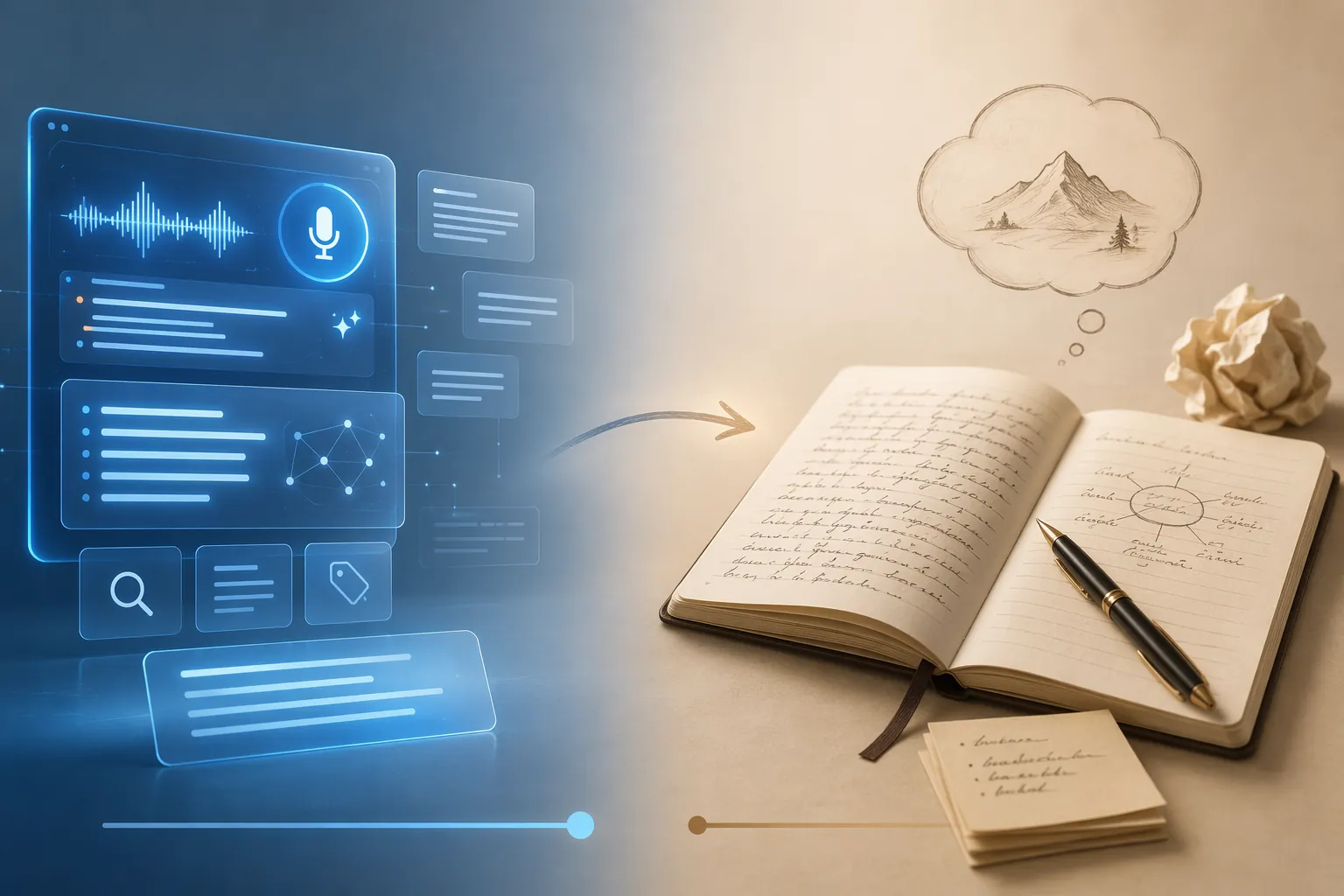
The pen model is trivia. The crumpled pages are the signal. A software demo rarely shows the moment where a thought is rejected before it becomes a record. A database wants an object. A meeting assistant wants a transcript. A knowledge graph wants a node. Paper lets a half-formed idea exist just long enough to be judged, then destroyed without ceremony.
Altman’s own explanation is better than most productivity commentary around him. Fortune quotes him saying that “writing is externalized thinking” and that “it’s harder to hide really messy thinking when you have to actually write it down and stare at it.”[3] That is not an anti-AI statement. It is a distinction between recording thought and forcing thought to take shape.
Anyone who has lived inside several note systems knows the difference. A meeting summary can save you when the alternative is forgetting what a client actually asked for. A transcript can make a research interview usable. Search can rescue an old decision from the swamp. But a tool that captures everything also removes one of the old filters: the need to decide, while writing, whether a thing deserves to exist.
AI note apps are capture-velocity tools
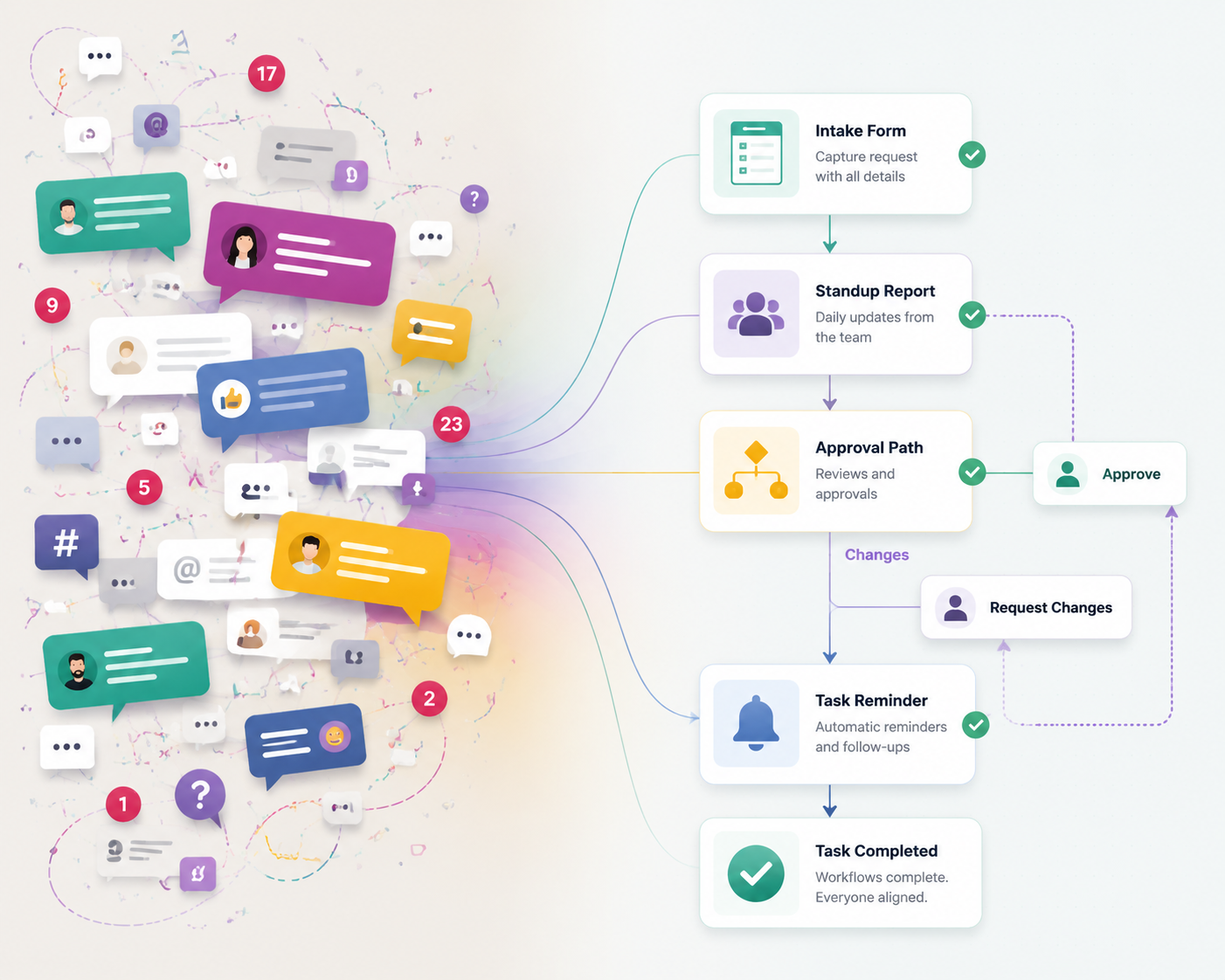
The strongest case for AI note-taking is not philosophical. It is operational. If your week is full of meetings, calls, demos, interviews, standups, and follow-ups, manual capture becomes a bottleneck. People talk faster than you can type. Action items get buried. A client says the important sentence casually, then the conversation moves on. In that environment, an AI note-taker is not pretending to be your second brain. It is more like a capture net.
That is why the adoption numbers, even when treated carefully, matter. Laxis, a vendor in the AI note-taking space, reported in 2026 that 75% of professionals use an AI note-taker in work meetings.[6] Because the source is vendor-funded, it should not be treated as neutral proof of effectiveness. It does show something narrower: AI meeting capture is no longer fringe behavior in the market these tools are selling into.
For some workflows, that is enough. If you are a founder taking investor calls, a consultant juggling clients, a researcher reviewing many interviews, or a manager trying to reconstruct who promised what, the basic value proposition is clear: record more, summarize faster, retrieve sooner. The gain is not that the tool thinks better than you. The gain is that fewer inputs disappear before you can process them.
| If your bottleneck is… | The useful tool behavior is… | Typical app direction |
|---|---|---|
| Missing what was said | Recording, transcription, speaker-aware summaries, action-item extraction | AI-heavy meeting notes |
| Finding prior context | Semantic search, resurfacing, automatic links, fast retrieval | AI-integrated workspace |
| Clarifying an idea | Slow phrasing, deletion, rewriting, visible mess | Handwriting or low-friction plain text |
| Trusting the archive | Local storage, exportability, readable files, fewer opaque automations | Local-first notes |
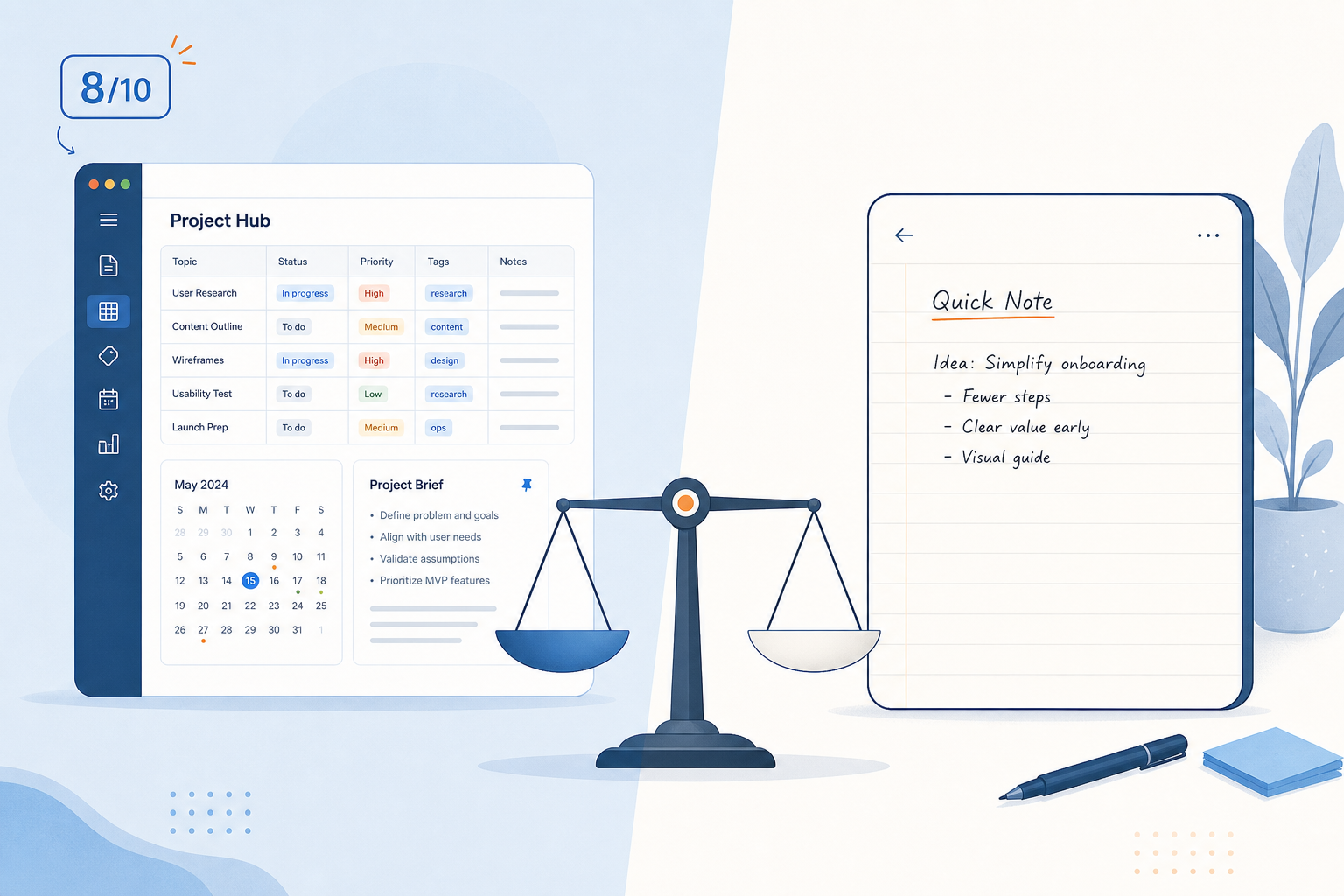
This is where most app comparisons get noisy. They line up features as if a meeting bot, a markdown file, a canvas, and a paper notebook are all trying to solve the same problem. They are not. The practical comparison is whether you need more reliable capture or more deliberate thought.
If you are at the point of comparing ecosystems rather than features, FlowDesk’s broader note-taking software comparison by privacy, AI, and platform trade-offs is the more appropriate next layer. The Altman paradox helps you ask the first question. The app comparison helps you live with the answer.
Handwriting is not magic. It is friction.
There is a lazy version of this argument where paper becomes morally superior because it is old. That version should be left on the floor with the bad pages. Handwriting is slow, hard to search, easy to lose, and terrible for sharing. If you run a team on handwritten notes alone, someone else will eventually pay the coordination cost.
The useful defense of handwriting is narrower. Slow input changes what enters the system. You compress as you write. You choose verbs. You notice when a sentence has no spine. You cannot hide behind a full transcript because there is no transcript. The page asks for a thought, not a dump.
That does not mean handwriting should own your entire workflow. It may only need to own the moments where premature structure is dangerous: the first outline of a strategy, the uncomfortable diagnosis after a failed launch, the private version of an idea before it becomes a deck, the decision you are tempted to let the archive make for you.
Local-first tools sit somewhere between the notebook and the AI workspace. Obsidian, Logseq, and similar systems can preserve some deliberate friction while still giving you search, links, and a durable archive. They do not force thoughts into paper, but they can keep your notes closer to plain files and farther from an opaque service layer. For readers with migration scars, that matters.
The cognitive-offloading caution is real, but limited
The research most relevant here is not a direct study of AI note-taking apps. Grinschgl and colleagues studied cognitive offloading and found that passive delegation can weaken memory traces.[7] That finding should not be stretched into “AI meeting summaries make you stupid.” It does not prove that. It does, however, give a sensible caution: when a system takes over remembering too early and too passively, the user may preserve access to information without forming the same internal grasp of it.
That distinction matters because modern note tools increasingly blur three actions that used to be separate: capture, compression, and interpretation. A human note-taker hears a meeting, chooses what to write, and later revisits the choice. An AI note-taker can capture the whole meeting, produce a tidy summary, label action items, and make the result searchable before the person has decided what mattered.
That can be wonderful. It can also create the feeling that the work has been done because the artifact looks finished. The risk is not the existence of the summary. The risk is confusing a legible output with a processed thought.
The switching question: what are you actually losing?
A useful note-taking decision starts with the failure mode, not the feature list. Before switching from a local-first setup to an AI-heavy workspace, or from a general notes app into a meeting assistant, identify what is currently breaking.
- If you are losing information, your capture layer is too weak. AI transcription, meeting summaries, and semantic search may be worth the cost and lock-in.
- If you are losing insight, your processing layer is too weak. More automatic capture may make the pile larger without making your judgment sharper.
- If you are losing trust, your ownership layer is too weak. Prioritize export formats, local storage, privacy controls, and whether the app can be left without reconstructing your working life.
- If you are losing momentum because of cost, your system may be too dependent on features that are priced as ongoing services rather than durable tools.
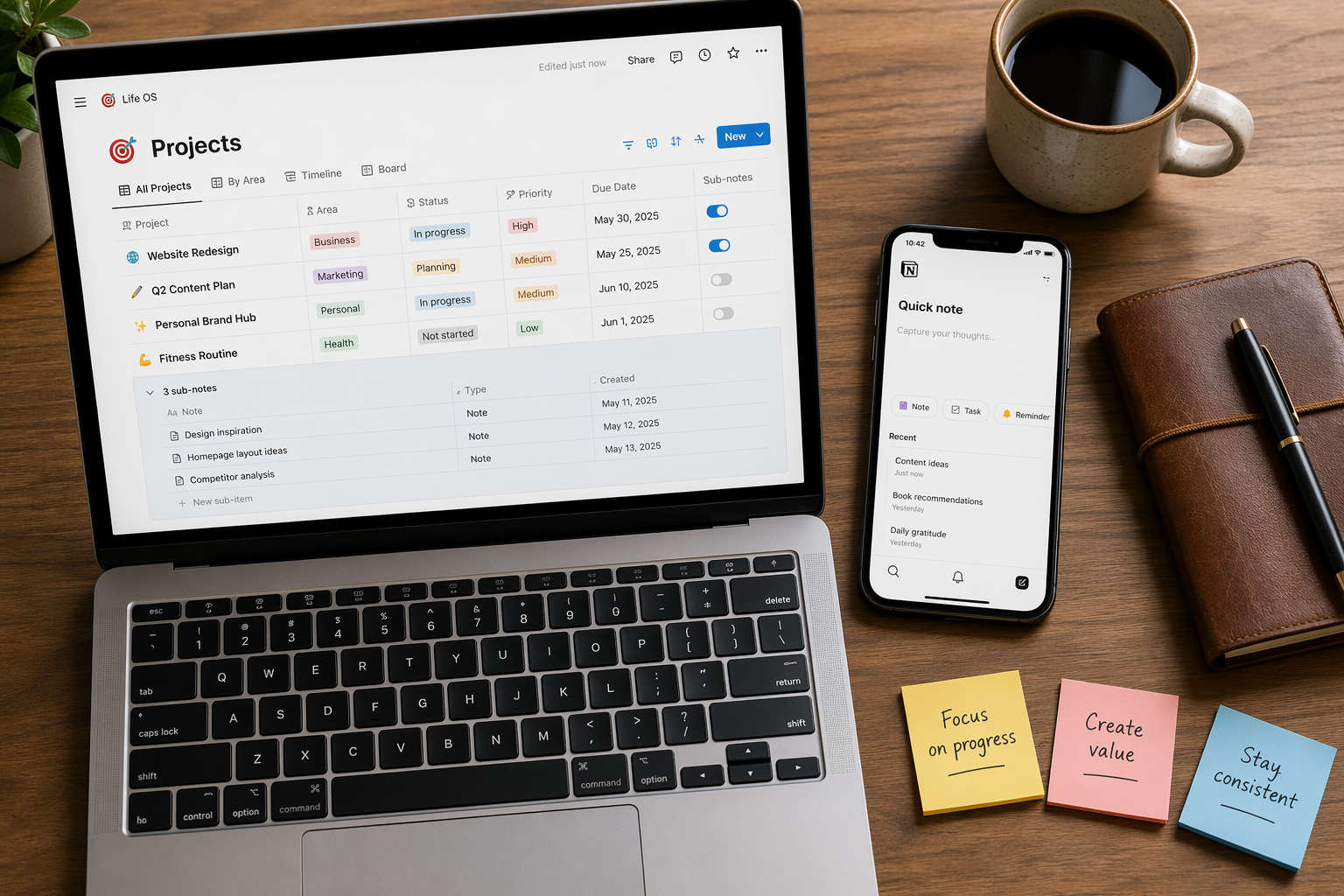
Pricing belongs in this decision because AI is rarely just a toggle. Once summaries, search, and assistants become central to a workflow, the user is not merely choosing a note interface. They are choosing an account relationship, a subscription path, and a migration problem if the economics change. In 2026 pricing comparisons, Notion’s full AI path required the Business plan at $20 per user per month, while Obsidian’s core app remained free with optional Sync at $4 per month. That is why cost-sensitive readers often end up comparing free or local-first options alongside AI suites rather than treating them as different categories entirely. If that is your pressure point, FlowDesk’s honest comparison of free note-taking apps is the more practical fork.
The same applies to forced migration. If the reason you are shopping is not curiosity but a pricing change, a free-tier restriction, or old archive anxiety, the AI question should come after the exit question. Can you export? Are attachments intact? Do internal links survive? Are dates, tags, and notebooks preserved in a form another app can read? Readers leaving Evernote-style systems may want to look at FlowDesk’s Evernote 2026 pricing analysis or the Evernote export pitfalls guide before falling in love with a new assistant.
A practical read of the Altman paradox
Altman’s singularity claim makes AI feel urgent. His notebook habit makes the urgency more precise. The lesson is not that the OpenAI CEO secretly distrusts AI, or that serious thinkers must return to paper. The lesson is that even someone selling the acceleration story appears to keep one slow surface where thoughts have to become visible before they become assets.
So choose the tool by the work it protects.
- Switch toward AI-heavy note-taking if your main pain is capture, summarization, recall, meeting volume, or retrieval across too much material.
- Stay local-first, or keep handwriting in the loop, if your main pain is shallow accumulation, unclear thinking, privacy anxiety, export risk, or the sense that every captured fragment is being mistaken for knowledge.
- Use both if your work has both modes: AI for high-volume inputs, paper or plain local notes for the moments when the idea is still too messy to deserve a database field.
The singularity may or may not be the right word for the current moment. Your next note-taking decision does not require settling that. It only requires knowing whether your system is failing before the thought is captured, or after everything has been captured too easily.
References
- OpenAI CEO Sam Altman says ‘we are now in the singularity’ — The Economic Times, July 2026, link
- The Gentle Singularity — Sam Altman, June 2025, link
- Sam Altman’s analog note-taking method — Fortune, July 24, 2025, link
- How Sam Altman Takes Notes — Matt Ragland, link
- Sam Altman note-taking coverage — Inc., link
- Laxis 2026 AI note-taking adoption data — Laxis, 2026, link
- Cognitive offloading research — PMC, 2021, link





Comments
Join the discussion with an anonymous comment.