
If you are trying to read Ashton Kutcher’s AI venture activity as a signal for note-taking tools, the useful starting point is not the celebrity investor angle. It is a sentence he posted about Cursor: the company mattered because it treated AI as “a first-class citizen” and designed “the data, workflows, and interface around how an LLM actually reasons.”[1]
That is a sharper lens than the usual “AI is coming for productivity apps” fog. A note app with a chatbot bolted into the sidebar is still mostly a human filing cabinet. A workflow designed for an LLM starts somewhere less glamorous: where the data lives, how cleanly it can be inspected, whether state persists across sessions, whether actions are reversible, and whether a person can tell what the agent used before it changed anything.
Kutcher’s timing makes that lens worth taking seriously, without turning him into an oracle. Inc. reported in July 2026 that he was leaving Sound Ventures to launch a new venture firm focused on artificial intelligence.[2] The interesting part is not that another investor likes AI. It is that his public enthusiasm keeps clustering around products that rebuild a workflow around machine reasoning instead of sprinkling AI over an old interface.
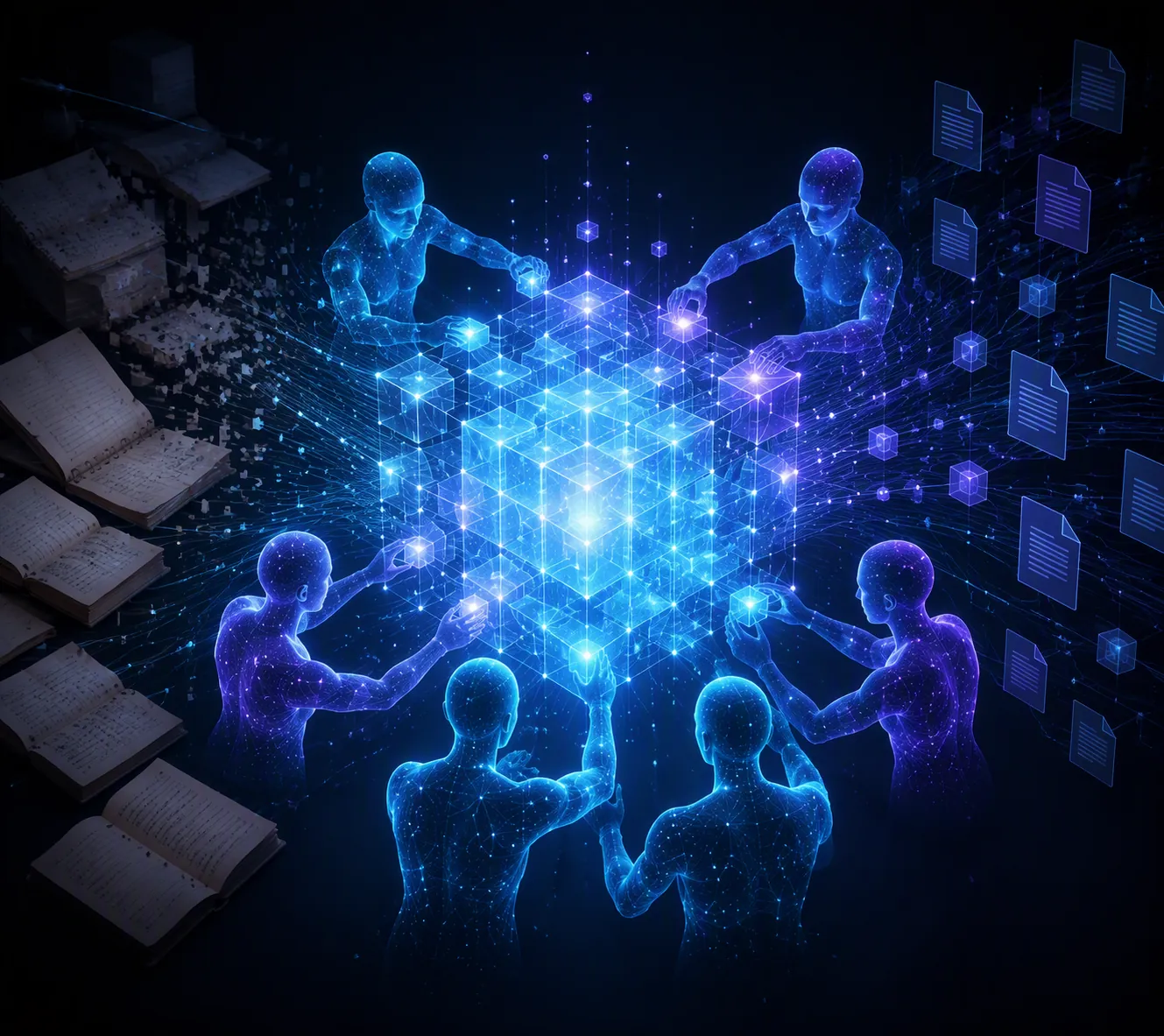
For note-taking people, that distinction matters. The next durable note system may not be the one with the prettiest editor or the most confident AI summary. It may be the one that can sit underneath agents as usable infrastructure: structured enough to query, portable enough to escape, and explicit enough that future automation does not turn a decade of notes into opaque sludge.
Day.ai and the end of manual capture as the default
Day.ai is the cleanest example of this workflow shift outside code. In a Sequoia podcast interview, founder Christopher O’Donnell described a CRM that automatically captures information from meetings, email, and Slack, with provenance and user override, rather than making sales teams manually type the same fragments into fields after the fact.[3]
The memorable line is his claim that data entry “as a concept will entirely go away.”[3] It is a useful provocation, not yet a proven industry outcome. The narrower, better-supported point is that Day.ai is betting the primary record should be assembled from the work as it happens, then reviewed and corrected by the user, rather than created by the user as a separate clerical ritual.
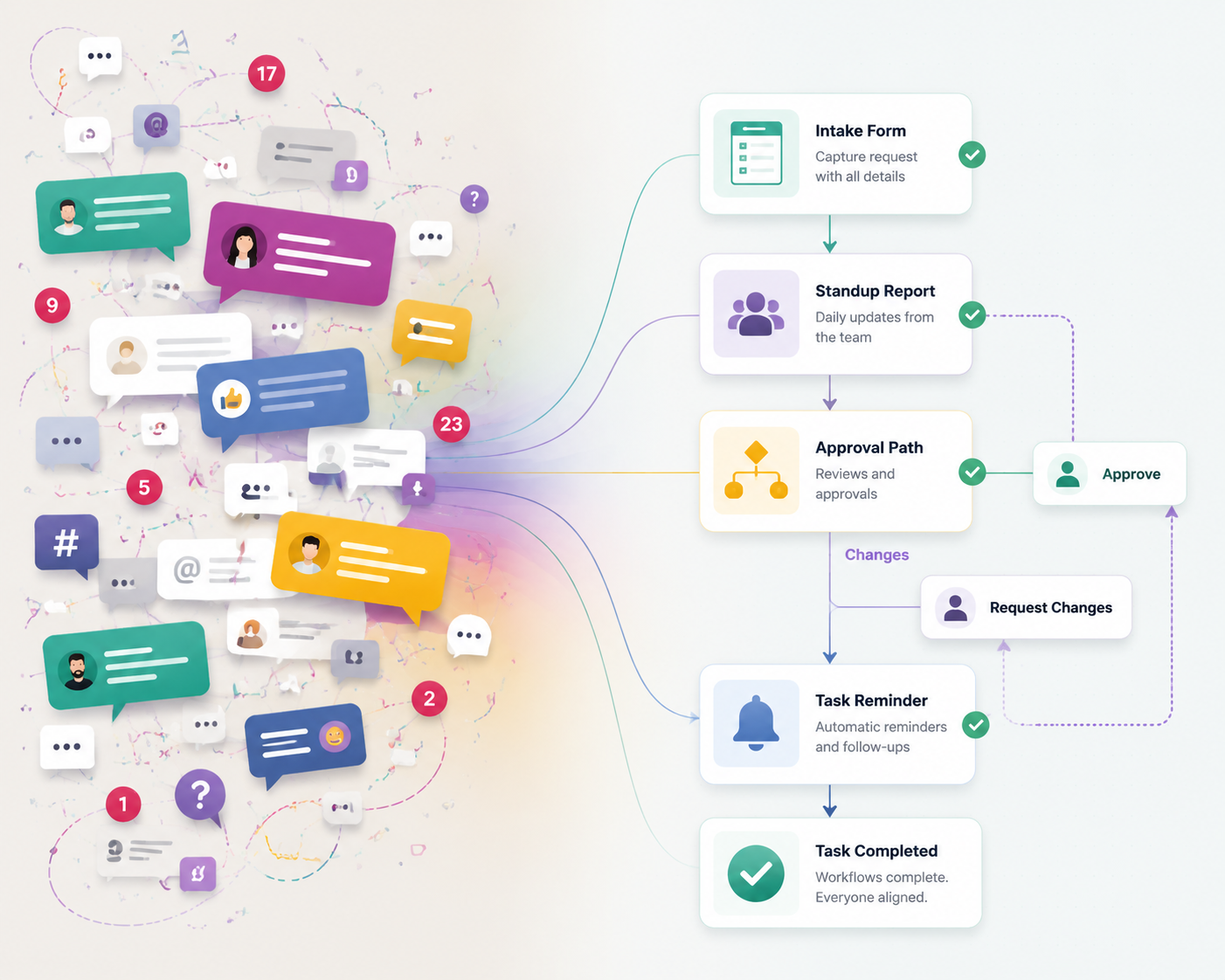
O’Donnell’s analogies are doing real work here. He compared the shift to Spotify making future generations wonder why anyone bought CDs, and criticized legacy CRM data as being “down-sampled into pixel art.”[3] That pixel-art phrase lands because it describes what many knowledge systems already do. A real conversation becomes a few hand-entered bullets. A decision becomes a tag. A source becomes a pasted link with no surrounding context. Later, the AI is asked to infer the missing resolution.
Kutcher made the connection explicit by calling Day.ai “the Cursor of CRM.”[4] That phrase is irritating if it becomes a lazy template for every vertical SaaS pitch. It is useful if it means: stop treating the LLM as an assistant trapped inside an old workflow, and start redesigning the workflow around what the model can observe, retrieve, and act on.
For notes, the equivalent question is uncomfortable: how much of your knowledge base is actual knowledge, and how much is pixel art? A meeting note that says “follow up with Maya re: budget” may be perfectly readable to you on Tuesday. Six months later, an agent needs more: which Maya, which budget, what source, what deadline, what changed, and whether it is allowed to update the project record.
OpenClaw is more interesting as architecture than as hype
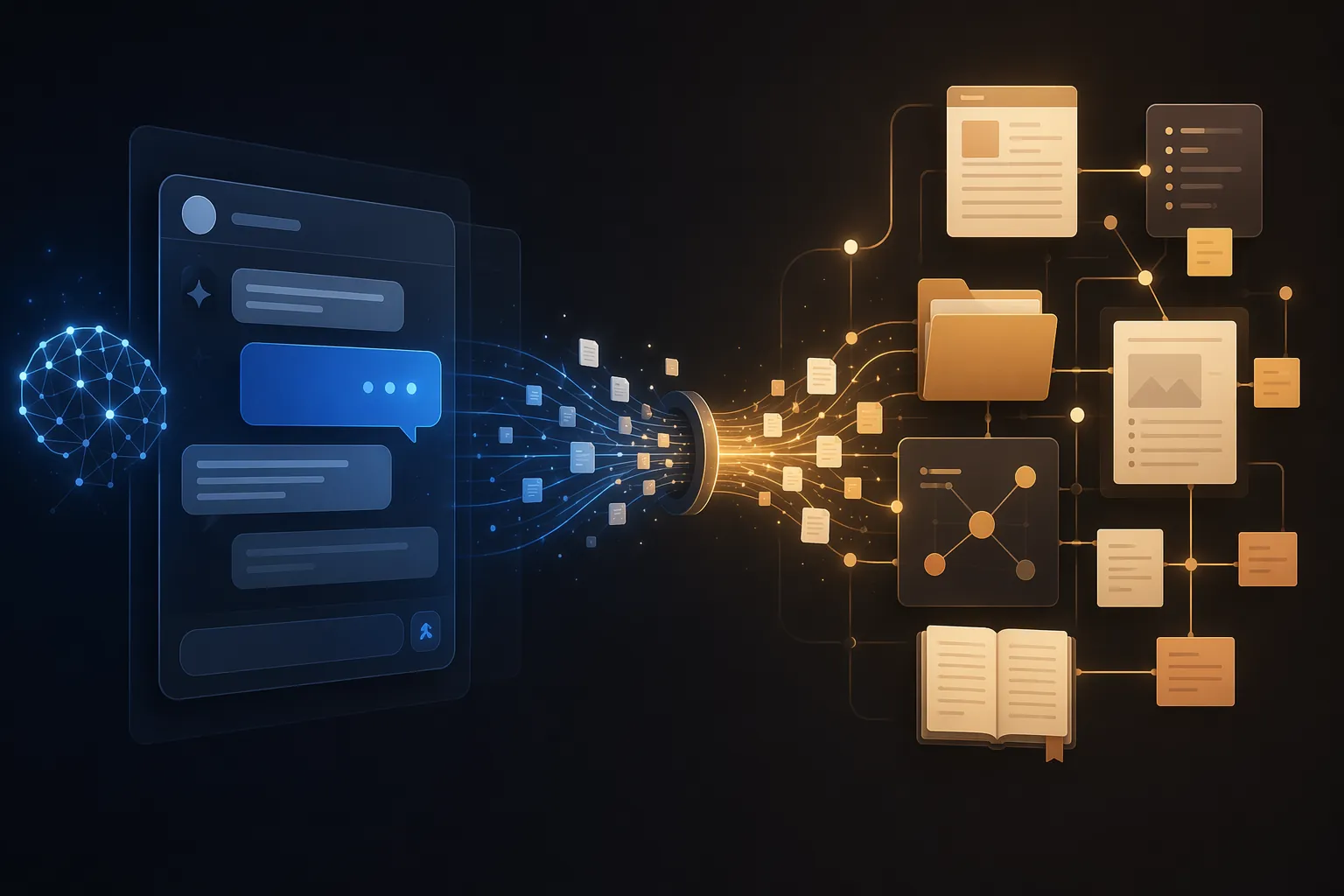
OpenClaw pushes the same idea further. A third-party architecture overview describes it as a hub-and-spoke system: interface layers such as WhatsApp, Telegram, Slack, and iMessage sit apart from an agent runtime that handles session management, memory systems, tool execution, and sandboxing.[5] That separation is the part worth slowing down for.
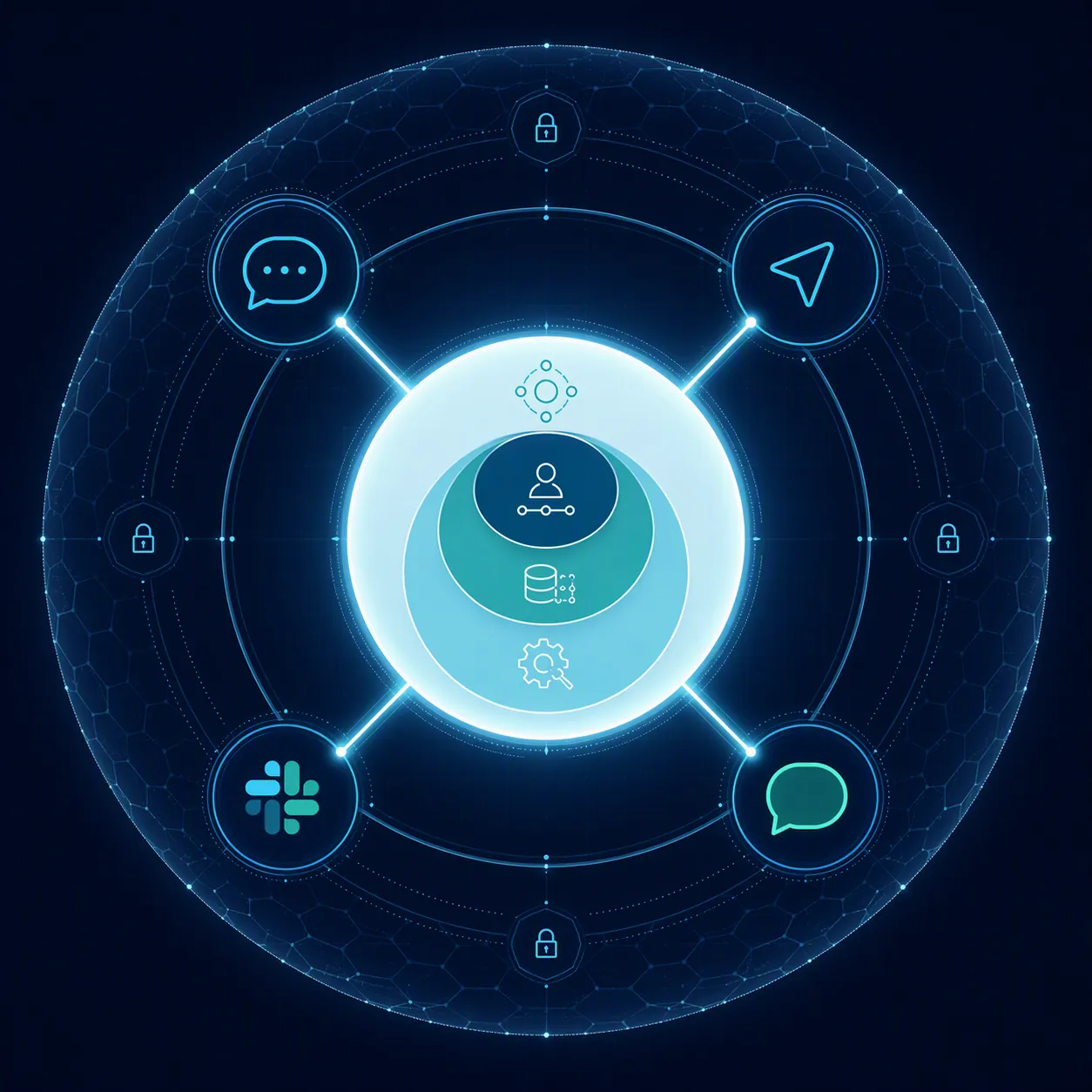
In the older app model, the interface is the product. You open the app, navigate its screens, and perform work inside its boundaries. In the OpenClaw-style model, the interface can be almost disposable. The agent receives instructions through whatever channel is convenient, keeps a persistent sense of the task, calls tools when needed, and runs risky operations inside a controlled environment.
The same overview reports that OpenClaw had more than 180,000 GitHub stars, that Andrej Karpathy called it “the most incredible sci-fi takeoff-adjacent thing I’ve seen,” and that Kutcher spent nearly an hour with creator Peter Steinberger at ClawCon.[5] Those details show attention. They do not prove OpenClaw will become the dominant agent layer. Social-media excitement around a conference is atmosphere, not adoption data.
Still, the architecture points to the right evaluation problem. If an agent becomes the front door to work, the systems underneath it need to expose state, accept controlled actions, and preserve context between sessions. A note app that only offers a nice reading surface becomes less central. A note app that can act as a reliable memory and action substrate becomes more valuable.
This is where security stops being a separate checklist item and becomes part of the product shape. Tool execution, memory, and sandboxing are not decorative architecture words. They decide whether an agent can read a note, draft a reply, update a CRM, or run a script without quietly spreading one bad assumption through the rest of a system. If you are comparing AI features inside note apps, FlowDesk’s AI note-taking security comparison is the more practical companion question: not “does it have AI,” but “what can the AI touch, and how would I know?”
The note app becomes the substrate
Once the agent is treated as the likely interface, the note-app comparison changes. The editor still matters; people still need to think, draft, annotate, and revise. But the editor is no longer the whole test. The deeper question is whether your notes can be read and acted on by something that is not you.
| Criterion | Why it matters when an agent is the front door | What failure looks like |
|---|---|---|
| Structured data | The agent can distinguish tasks, sources, people, dates, projects, and decisions instead of guessing from prose. | Everything becomes a blob of text that must be reinterpreted every time. |
| Reliable export | Your knowledge can move if the interface, AI provider, pricing, or product direction changes. | Export drops metadata, backlinks, database fields, comments, or attachments. |
| API or automation surface | Agents can query and update notes through controlled paths instead of screen-scraping the app. | Automation depends on brittle UI actions or manual copy-paste. |
| Semantic search | The system can retrieve related context even when wording differs. | The agent only finds exact matches or invents connections from incomplete context. |
| Local-first or durable storage | Your archive remains useful during outages, vendor changes, or model swaps. | The knowledge base is functionally unavailable when the cloud layer is unavailable. |
| Plugin extensibility | Power users can add bridges, parsers, workflows, and model integrations as agent behavior changes. | You wait for the vendor to support the one workflow your system depends on. |
| Clear provenance | Users can see which note, meeting, email, or source supported an action. | A polished answer arrives with no inspectable trail. |
This is also why venture news matters only after it is translated into architecture. Funding can accelerate migration waves, but it does not tell you whether your own archive is safe, portable, or agent-readable. If you want the market-pressure version of this argument, FlowDesk’s piece on how AI funding drives note-taking app migration waves belongs next to this one. The decision still has to come back to your data model.
Obsidian and Logseq: good candidates when the archive stays inspectable
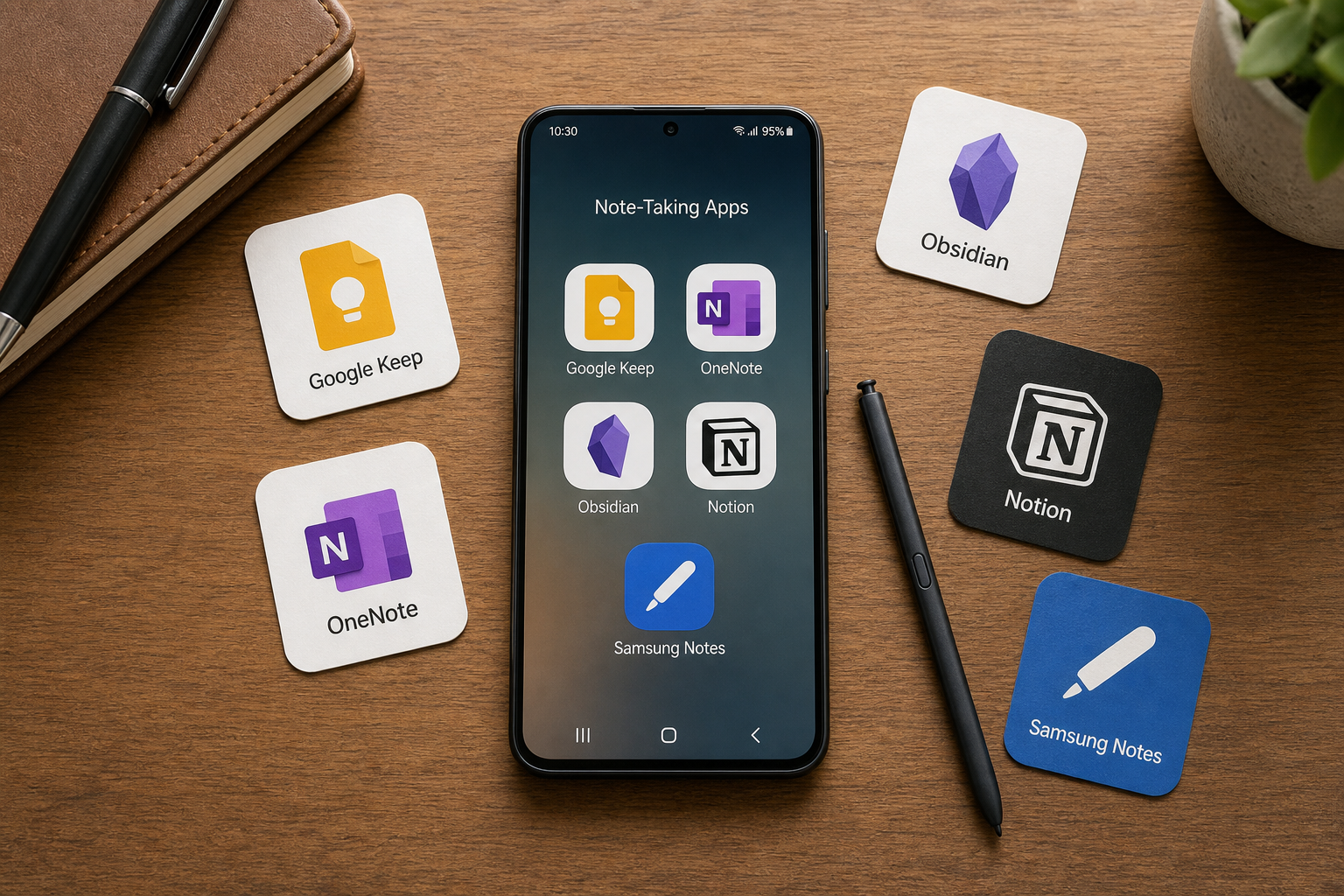
Obsidian and Logseq deserve a sympathetic reading in this environment because local, structured, hackable systems may age well. A folder of Markdown-like notes, links, blocks, tags, and metadata is not glamorous. It is, however, the sort of material an agent can inspect without needing the original app to behave perfectly.
That does not make every Obsidian or Logseq setup agent-ready. A vault can still become sludge if the structure lives only in your head, if important state is scattered across plugin-specific formats, or if tasks are written as charming fragments with no project, owner, or source. Local files are an advantage only when the system remains legible outside the author’s memory.
The practical move is not to wait for a perfect “AI Obsidian” or “AI Logseq.” It is to make the archive easier for any agent layer to work with: consistent frontmatter, stable folder conventions, explicit source notes, links that mean something, and project pages that collect decisions instead of merely decorating them. FlowDesk’s Gemini Gems setup for an Obsidian workflow is one concrete way to think about layering an AI assistant over a local knowledge base without pretending the assistant is the knowledge base.
Notion: strong structure, more questions about dependence
Notion should not be dismissed by local-first purists. Its databases, properties, relations, views, and collaborative surfaces are exactly the kind of structure many agents need. In teams, a well-maintained Notion workspace may be easier for an agent to query than a beautiful private vault full of personal shorthand.
The test is portability and access. Can the database structure leave intact? Can an automation layer read and update the right fields without depending on a fragile browser interaction? Can permissions prevent an agent from seeing the wrong workspace? Can a user trace a generated recommendation back to the source page, property, or comment that supported it?
This is where “AI built in” is not enough. A built-in assistant may be convenient, but convenience is not the same as durable architecture. A workspace that depends completely on one vendor’s AI layer can become awkward when models change, when pricing changes, or when the service is unavailable. FlowDesk has looked at the model-switch version of that problem in Microsoft Replaces OpenAI: Time to Move from OneNote to Obsidian? and the outage version in Which Note Apps Work When ChatGPT Goes Down?. Those are not edge cases for people who are turning notes into infrastructure.
A practical audit before you migrate
Do not migrate because Kutcher is excited about agents. That is a bad reason to move a knowledge base. Use the pattern behind the bets to audit the system you already have.
- Export one real project, not a toy note. Include attachments, database fields, backlinks, comments, tasks, and source material. If the export cannot reconstruct the work, the app is your container, not your archive.
- Inspect the structure. An agent should be able to identify people, projects, dates, sources, decisions, and next actions without guessing from vibes.
- Test connection paths. Look for APIs, automation hooks, local files, plugins, or stable exports. If the only path is copy-paste, the system is not ready for agentic workflows.
- Check provenance. When AI summarizes, edits, or recommends, you should be able to trace the result back to specific notes or source records.
- Run a failure drill. Ask what happens if the AI provider is down, the app changes its AI partner, or your workspace has to move. The answer should not be panic.
If your current problem is broader than AI compatibility, start with the ordinary workflow fit first. FlowDesk’s guide to choosing a note-taking app by workflow is still the calmer base layer. A system that does not fit how you work today will not magically become coherent because an agent can talk to it tomorrow.
The better lesson from Cursor, Day.ai, and OpenClaw is not that traditional note-taking is dead. It is that the note app is becoming less important as a place where humans admire pages and more important as a substrate that software can read, query, move, and act on. Choose the system that keeps your knowledge inspectable when the interface changes.
References
- Post by Ashton Kutcher on Cursor — X
- Ashton Kutcher Leaving Sound Ventures to Launch New VC Firm Focused on Artificial Intelligence — Inc., July 2026
- Training Data: Christopher O'Donnell — Sequoia Capital
- Post by Ashton Kutcher on Day.ai — LinkedIn
- OpenClaw System Architecture Overview — ppaolo.substack.com




Comments
Join the discussion with an anonymous comment.