
Next Step
Setup
Configuration guides for an app the reader has already chosen or just migrated into: vault and folder structures, PARA-method or second-brain setups, starter plugin sets, and template starting points, scoped tightly to personal knowledge management rather than general productivity advice. Serves readers at a distinct, later task stage than Comparisons or Migrations: the decision is made, and they need the tool working. Excludes app-vs-app evaluation and migration mechanics entirely. Each guide is reached primarily as the 'next step' link from the matching migration guide or tool profile, not as standalone blog browsing.

PARA, Zettelkasten, and Building a Second Brain: Three Layers, One PKM System
Choosing between PARA, Zettelkasten, and Building a Second Brain often misses the point — each method serves a different layer of knowledge work, and the most durable systems combine elements from all three. This comparison explains the core differences and shows how to build a hybrid system that matches how you actually think and produce work.

How to Choose a PKM Method and App That Fit Your Thinking Style
Feeling stuck between PARA, Zettelkasten, and BASB? This decision framework helps you identify your thinking style, match it to the right methodology, and narrow down your tool options — so your new PKM system actually lasts beyond the first month.

The PKM Stack: Your Personal Knowledge Management System as a 4-Layer Information Flow
Most personal knowledge management setups fail because they try to force one app to do everything. This article introduces the PKM Stack — a four-layer framework that helps you design a system where information flows naturally from capture to action, preventing tool sprawl and overwhelm.

The Real Price of Personal Knowledge Management: A Total-Cost Comparison of 10 PKM Apps
This total-cost comparison of 10 personal knowledge management apps reveals hidden expenses beyond sticker prices—sync fees, AI add-ons, storage upgrades, and vendor lock-in—helping budget-conscious knowledge workers choose the most cost-effective app for their actual usage pattern.

AI in Accounting Workflow 2026: Why 98% Adoption Isn't Solving the Accountant Shortage
Despite 98% AI adoption in accounting workflow software, most firms see no measurable productivity gain — yet the loss of 340,000 U.S. accountants since 2019 makes automation a strategic necessity. This article examines what AI actually does today, its honest limitations, how leading tools compare, and the critical EU AI Act deadline coming August 2026.

How to Evaluate AI Productivity Tools Based on ROI, Not Features
Most AI tool evaluations focus on features and fail to predict business impact. This article presents a seven-criteria ROI-first framework that helps leaders separate the 12% of AI investments that deliver both revenue and cost gains from the 56% that deliver neither.

Which AI Productivity Tools Actually Pay for Themselves? A Data-Driven Guide
This guide helps decision-makers identify which AI productivity tools deliver measurable returns, organized by category with ROI data, a minimum-savings threshold rule, and a 90-day implementation blueprint to prove value.

The Best AI Productivity Tools for 2026: Curated Picks by Category
With thousands of AI tools on the market, this curated roundup narrows the field to one well-vetted pick per category — from writing and meetings to scheduling and automation — each backed by productivity benchmarks and explicit 'best for' verdicts.

Best AI Tools for Productivity in 2026: How to Build Integrated Workflows That Actually Save Time
Most AI productivity guides list tools in isolation. This article shows operations-minded knowledge workers and team leads how to connect AI tools—like Fireflies, Perplexity, Notion, and Motion—into automated workflows that eliminate manual copy-paste and deliver real time savings.

How to Choose and Implement Business Workflow Management Software: A 2026 Step-by-Step Guide
This guide helps operations managers and team leads evaluate, select, and deploy business workflow management software using a process-first approach that dramatically reduces the risk of automation failure. It covers process mapping, tool selection criteria, side-by-side comparisons, a 10-minute first workflow setup, and a phased rollout plan.

Convert Handwritten Notes to Text: Free Methods That Actually Work (2026 Test Results)
We tested free handwriting-to-text methods—Google Lens, Apple Notes Scribble, Microsoft OneNote, and ChatGPT's free tier—to find out which actually work for digitizing handwritten notes. This guide reveals accuracy scores, hard limits, and when you need to pay.
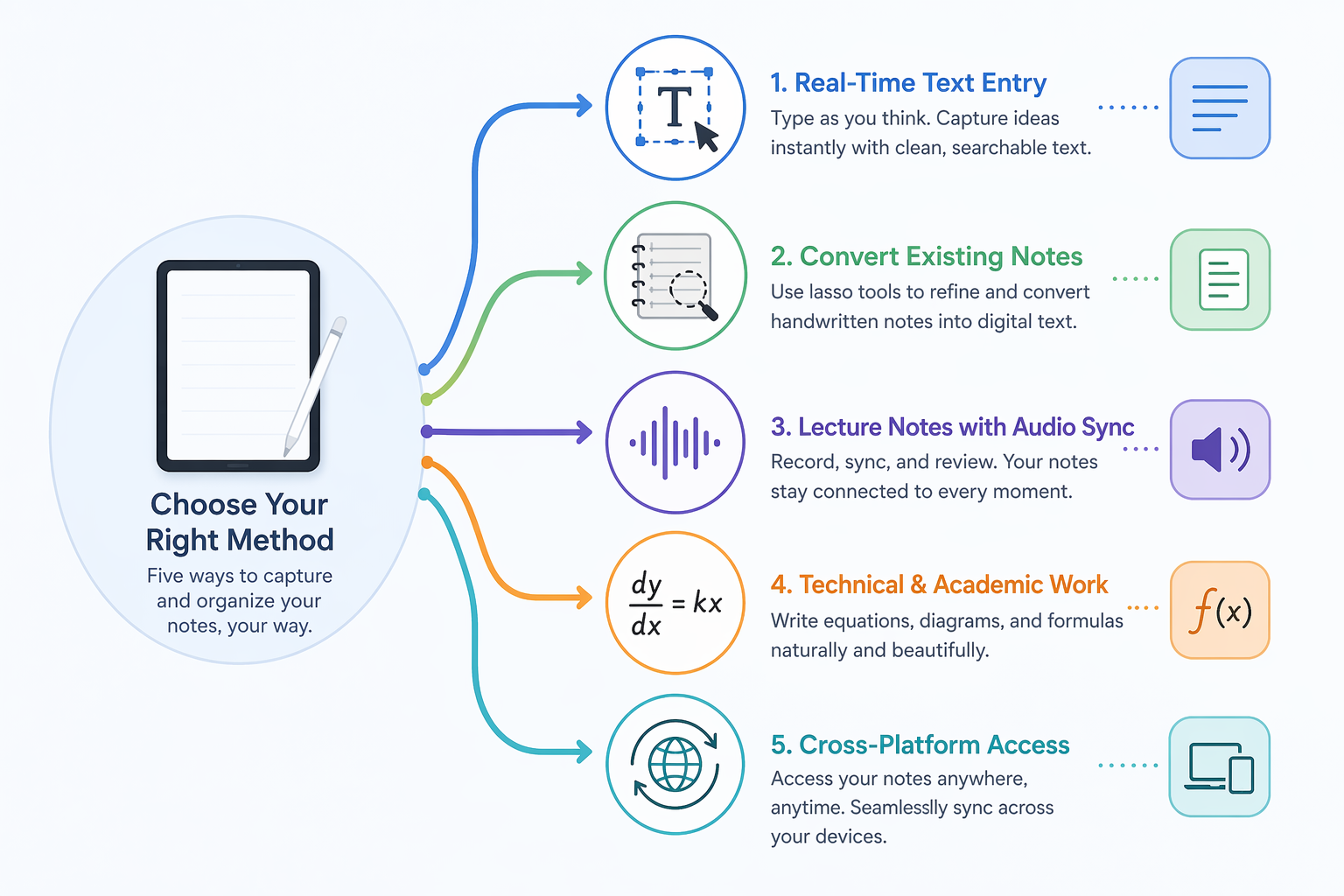
How to Convert Handwritten Notes to Text on iPad
Learn how to convert handwritten notes to text on your iPad using Apple Scribble, GoodNotes, Nebo, OneNote, or Notability — with step-by-step setup instructions for each method and guidance on choosing the best one for your workflow.