
For note-taking productivity, the iPhone 18 Pro Max vs iPhone 17 Pro answer is not the usual phone-review answer. If your day is quick Apple Notes entries, a few Safari checks, calendar edits, and no long audio capture, the iPhone 17 Pro is enough. If your day means handwriting in GoodNotes or Notability for hours, recording lectures or meetings, checking PDFs and web sources, and letting transcription run while the screen stays awake, the rumored iPhone 18 Pro Max is the safer battery choice — assuming its leaked battery and efficiency claims hold.
The reason is simple enough to matter at 5:40 PM: the confirmed iPhone 17 Pro battery is 4,252 mAh in the eSIM model, while the iPhone 17 Pro Max sits at 5,098 mAh; iPhone 18 Pro Max leaks point to roughly 5,200–5,500 mAh, with 5,500 mAh claimed by Ice Universe and reported by AppleInsider in July 2026.[1][2] That is before adding the rumored A20 Pro efficiency gain and display changes.
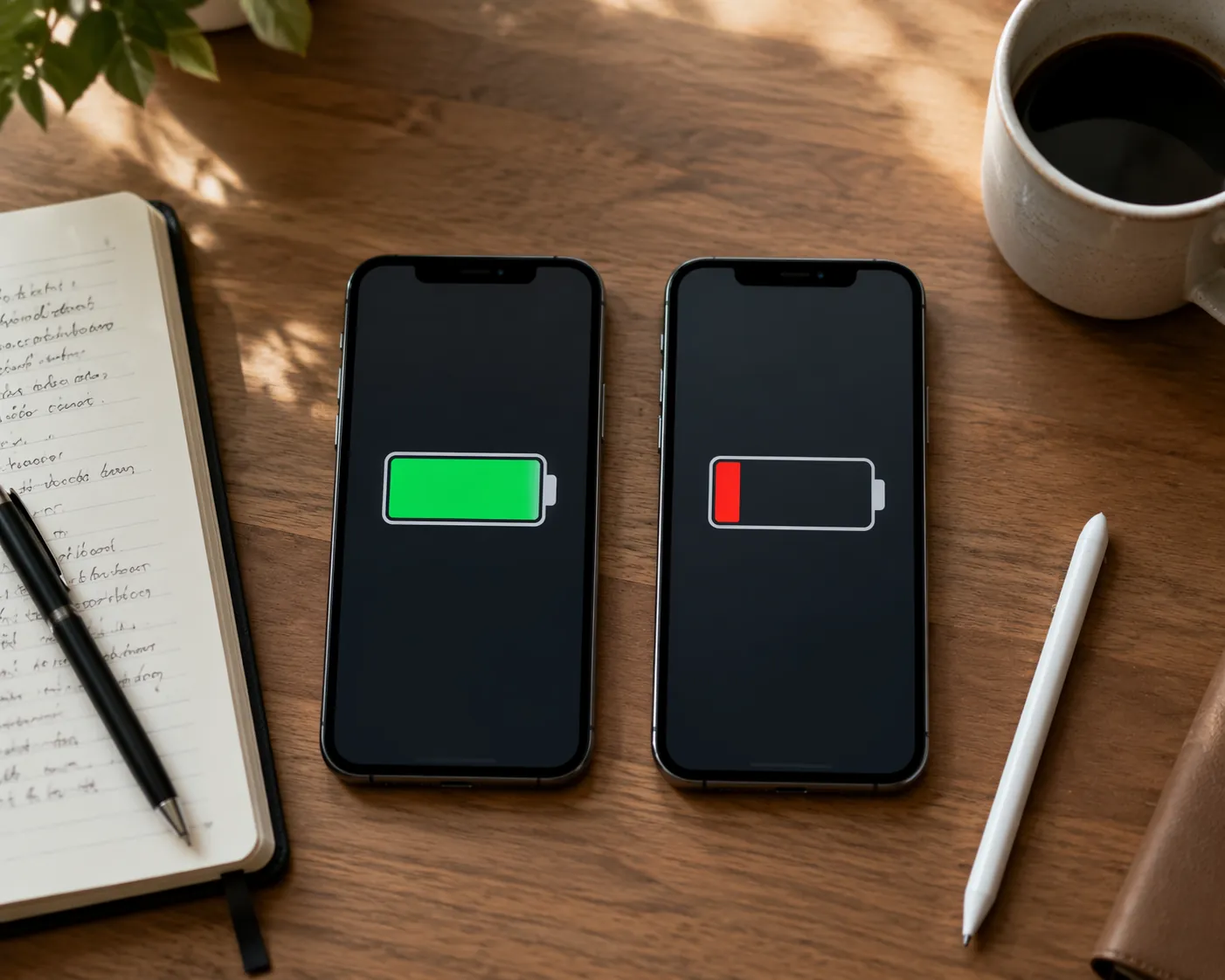
The Decision Depends On The Kind Of Notes You Take
A phone used as a note-taking device is not doing one job. It is usually doing four small jobs at once: keeping the screen on, accepting handwriting or typing, recording audio, and checking references. Add weak signal, Bluetooth earbuds, background sync, and Apple Intelligence transcription, and the neat battery estimate from a product page starts to feel too polite.
For light notes, the iPhone 17 Pro is defensible. That means short typed notes, task capture, a few photos of whiteboards, light Safari browsing, and no continuous lecture or meeting audio. A smaller phone is easier to hold, easier to pocket, and less annoying when you are standing in a hallway trying to add one thought before it disappears.
Moderate note-taking is where the choice starts to tighten. A student moving between classes, a manager sitting through several meetings, or a researcher moving between interviews may keep the screen on for long stretches, open PDFs, use split references, and capture audio in blocks. The iPhone 17 Pro can still work here, but it becomes a phone you plan around. You notice where the outlets are. You bring the battery pack because one unexpectedly long session can turn the last part of the day into rationing.
Heavy note-taking is different. Four or more hours of handwriting in apps like GoodNotes or Notability, continuous audio recording, Safari reference checks, file attachments, and transcription are exactly the workload where the Pro Max battery stops being a comfort feature and starts being the reason the setup survives.
| Workflow | iPhone 17 Pro | Rumored iPhone 18 Pro Max |
|---|---|---|
| Quick notes, reminders, light browsing | Comfortably suitable | More battery than most users need |
| Back-to-back classes or meetings with some audio | Usable, but a late-day top-up is wise | Better margin for delays and screen-on time |
| Heavy handwriting, continuous recording, Safari, transcription | Likely top-up risk by late afternoon | Stronger candidate for morning-to-evening use |
| Field notes with weak signal and media capture | Possible, but fragile without external power | Safer if the leaked battery and efficiency gains ship |
Why The Battery Gap Is Larger Than It Looks
The first layer is capacity. Moving from 4,252 mAh in the iPhone 17 Pro eSIM model to a rumored 5,200–5,500 mAh iPhone 18 Pro Max is not a cosmetic difference.[1][2] It is the difference between a device that can be fine under moderate use and one designed with enough reserve for hours of screen-on work.
The physical-SIM detail matters here. The 4,252 mAh iPhone 17 Pro figure applies to the eSIM model; the physical-SIM version is reported at about 3,998 mAh.[1] If you are comparing listings across regions, that is not fine print. It changes the battery baseline before your note app even opens.
The second layer is chip efficiency. The A20 Pro is expected to move to TSMC’s 2nm process, with reports pointing to about a 15% speed gain and roughly 30% better efficiency compared with the A19 Pro.[3] For note-taking, the efficiency number matters more than the speed number. A notes app does not need a benchmark trophy to hold a lecture outline; it needs the processor, display, microphone, wireless radios, and local intelligence features to keep working without burning through the last quarter of the battery.
The third layer is the display. LTPO+ reports claim up to two additional hours of screen-on time.[4] That is a meaningful claim for note-taking because the screen is the part you cannot politely turn off while annotating slides, reading a PDF, or watching a speaker draw something that will not be repeated.
Capacity alone would already favor the larger phone. Capacity plus a more efficient chip plus a more efficient display is where the iPhone 18 Pro Max rumor becomes interesting for productivity rather than just spec-sheet bragging. It is also why the iPhone 17 Pro Max is only a partial substitute in this comparison. Its 5,098 mAh battery is much closer to the rumored 18 Pro Max range, and Apple rates the iPhone 17 Pro Max for up to 39 hours of video playback, but it does not carry the same rumored A20 Pro and LTPO+ efficiency stack.[1][5]
A Heavy Note-Taking Day Exposes The iPhone 17 Pro
Imagine a realistic weekday rather than a battery test: an 8 AM lecture or briefing, handwritten notes for the first hour, audio recording kept on because the speaker moves too quickly, a Safari search during the break, a PDF opened before lunch, another two hours of active notes in the afternoon, then transcription and cleanup before leaving. Nothing in that sequence is extreme. The problem is that every part overlaps.
Handwriting keeps the screen awake and the app active. Audio recording keeps the microphone running and prevents the phone from behaving like it is idle. Safari reference checks wake the modem, especially when the connection is poor. Transcription and Apple Intelligence features add processing load. A camera comparison does not answer this problem; neither does a short charging-speed paragraph.
Under that kind of load, the iPhone 17 Pro’s 4,252 mAh battery can become a late-afternoon liability. Based on the battery figures and reported efficiency claims, the practical expectation is not a lab-certified runtime: with 4+ hours of GoodNotes or Notability, active handwriting, continuous audio, Safari reference work, and transcription, the iPhone 17 Pro will likely need a top-up around 3–4 PM. That is not a failure for a compact Pro phone. It is just the wrong margin for someone whose work breaks when charging becomes the next task.
The 18 Pro Max, if the 5,200–5,500 mAh range and efficiency claims prove accurate, has room for the ugly parts of the day: the room with no accessible outlet, the delayed train, the interview that runs long, the lecture hall where cellular signal is bad enough to punish every sync. The best battery is not the one that looks impressive at noon. It is the one that still lets you review, label, export, or transcribe when the day has already gone sideways.
Charging Speed Does Not Solve The Same Problem
Both generations are expected to sit in roughly the same USB-C fast-charging neighborhood, around 35W. That keeps charging speed from being the deciding factor. A fast top-up is helpful when you own the schedule. It does not help as much when the outlet is across the room, your recording is running, your phone is your reference device, or plugging in means changing seats and losing the thread.
For note-taking productivity, not needing to charge is a different advantage from charging quickly. A battery pack can rescue the iPhone 17 Pro, but it adds another object to remember, another cable to manage, and another point of friction when the work is already fragmented. The Pro Max approach is less elegant in the hand and more forgiving in the day.
The Tradeoff Is Size, And It Is Real
The rumored iPhone 18 Pro Max battery increase is not free. Reports say the phone may be about 0.25 mm thicker and roughly 7 g heavier than the prior Pro Max design.[2][6] Those are small numbers on paper and noticeable numbers if you use the phone one-handed on a commute, carry it in a small pocket, or read in bed.
That tradeoff should not be waved away. The iPhone 17 Pro is the easier daily object: lighter, smaller, less demanding to grip, and more comfortable for quick capture. If your note-taking happens in bursts, the smaller phone may produce more notes simply because you reach for it more often.
But heavy note-taking is rarely a one-handed comfort test. It is often a desk, train tray, lecture hall seat, lab bench, client room, or field bag problem. In those settings, the extra mass is annoying; a dead or anxious battery is worse.
Do Not Treat The iPhone 18 Pro Max As Confirmed Yet
The iPhone 17 Pro side of this comparison rests on released-device information. The iPhone 18 Pro Max side does not. As of July 2026, Apple has not confirmed the iPhone 18 Pro Max battery capacity, A20 Pro efficiency, LTPO+ display behavior, final dimensions, or weight. PCMag’s 2026 rumor roundup also frames the iPhone 18 Pro details as leaks and reports rather than finished specifications.[6]
That uncertainty changes the buying advice. If you need a phone now and can tolerate one planned charge, the iPhone 17 Pro is a reasonable purchase for moderate note-taking. If you are buying specifically to eliminate charging anxiety during sustained notes, recordings, browsing, and transcription, the iPhone 18 Pro Max is the better target only if the rumored battery range and efficiency gains appear in the shipping device.
App Choice Still Matters, But It Does Not Erase The Hardware Gap
Good app habits help either phone. Turning off unnecessary background sync, downloading PDFs before class, lowering brightness indoors, and trimming long audio files can all reduce battery pressure. Choosing the right app also matters: FlowDesk’s handwritten notes app comparison is the better place to sort out the writing experience, while the note-taking app by major and study style guide is more useful if your workload changes by discipline.
Those choices do not make a 4,252 mAh phone behave like a 5,500 mAh phone with a newer efficiency stack. They can reduce waste. They cannot remove the basic difference between a compact Pro model and a Pro Max built around battery reserve.
The Buying Boundary
Choose the iPhone 17 Pro if your note-taking is light to moderate, you value pocketability, and one late-day charge would not interrupt your work. It is the cleaner choice for people who capture notes in bursts and do not depend on continuous audio, handwriting, browsing, and transcription running together for hours.
Wait for or choose the iPhone 18 Pro Max if your phone is expected to carry a full academic, meeting, or fieldwork day without a top-up. The rumored 5,200–5,500 mAh battery, A20 Pro efficiency gain, and LTPO+ screen-on improvement make it the stronger note-taking productivity device, but only if those claims survive the move from leak to shipping hardware.
References
- iPhone 18 Pro Max vs. 17 Pro Max: When Battery Life Matters More Than Specs — Technology Org, July 7, 2026.
- iPhone 18 Pro Max may be fractionally larger and heavier — AppleInsider, July 9, 2026.
- iPhone 18 Pro: Three Ways Apple's Chip Redesign Boosts Performance — MacRumors, July 14, 2026.
- iPhone 17 Pro Max vs iPhone 18 Pro Max: Specs, Features, and What's New Compared — Tech Times, Mar 10, 2026.
- iPhone 17 Pro and 17 Pro Max — Technical Specifications — Apple.
- iPhone 18 Pro Rumors Are Everywhere. Here's What Actually Looks Legit — PCMag, 2026.





Comments
Join the discussion with an anonymous comment.