
Last verified: August 2026. The July security-testing news does not show that Claude exposed private note chats. The useful boundary is narrower: private chats were not breached, public share links were the exposure surface that search-engine indexing surfaced, and uploaded or pasted note content remains subject to Anthropic’s retention, access, and training rules.
That distinction matters if you are using Claude AI for note-taking after security testing concerns. A student who pasted lecture notes into a private chat is in a different position from a consultant who generated a share link months ago. An Evernote migrant uploading years of clipped material is making a different bet again. Treating all three as “Claude leaked notes” is sloppy; treating all three as harmless is not much better.
What the July incidents actually changed for note-takers
The late-July 2026 incidents are worth taking seriously because they made Claude’s boundaries visible under pressure. Anthropic’s Frontier Red Team described real-world incidents in its cybersecurity evaluations on July 30, 2026, but the note-taking lesson is not that every Claude workspace became public. The relevant lesson is that different surfaces carry different exposure paths.[1]
For ordinary private chats, the key fact is simple: the available incident facts do not support a claim that private chat histories were breached. If your notes stayed in a private Claude conversation and you did not create a share link, the July search-indexing concern is not the same thing as a private-chat compromise.
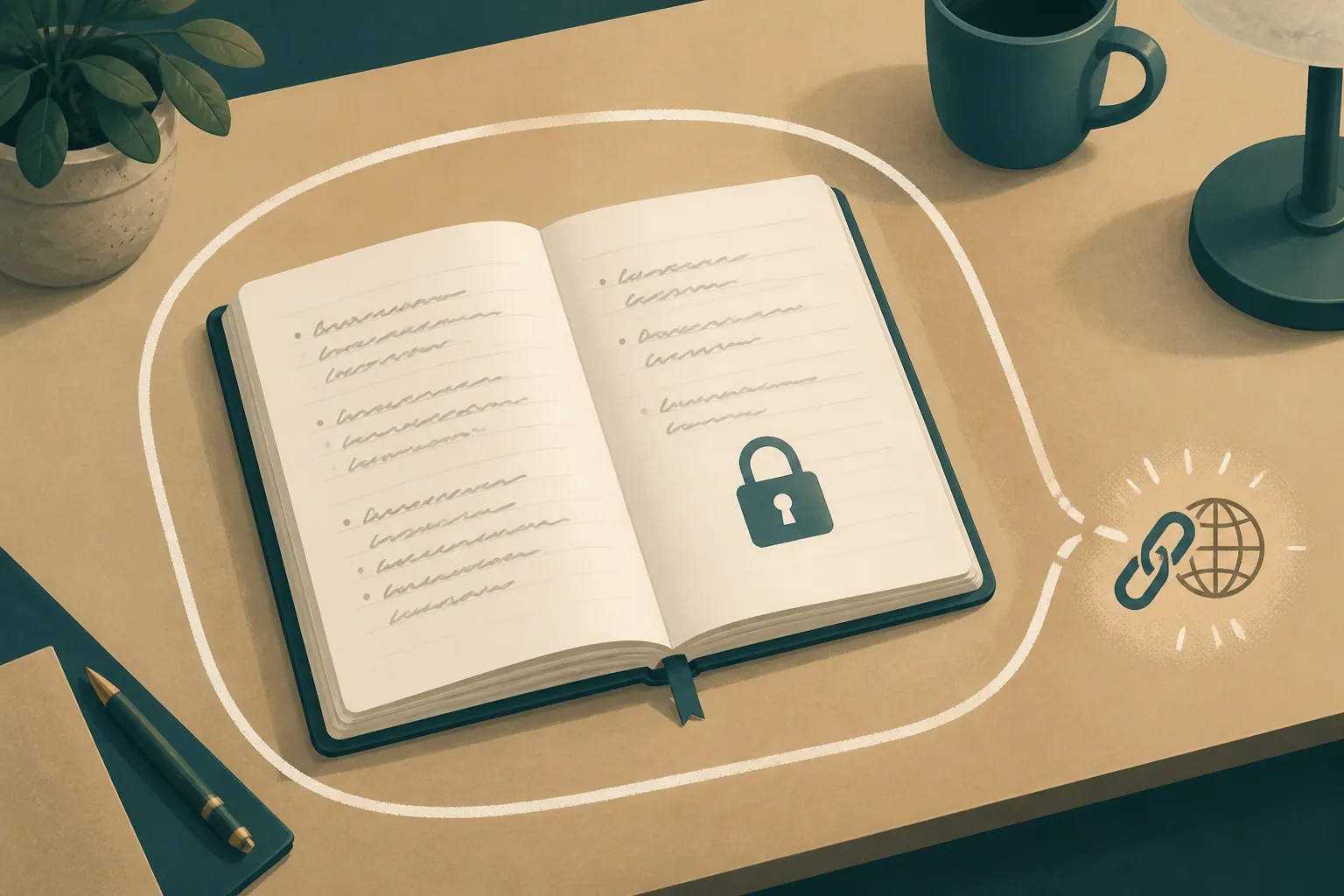
For shared notes, the picture changes. A share link is not just a prettier way to remember a conversation. It creates a separate object meant to be accessible outside the private chat flow. The July concern around search-engine indexing belongs here: public share links became discoverable enough that readers reasonably panicked when they saw note-like Claude pages appearing beyond the place they expected them to live.
For uploaded files and pasted notes, the issue is custody rather than search indexing. Once note content is placed into Claude, it sits under Anthropic’s data-handling rules. The available information places that retention range at roughly 30 days to five years, depending on the relevant context and settings, and training use depends on the applicable opt-in setting.[1]
| Where the note content lives | What the July concern means | What to do first |
|---|---|---|
| Private Claude chat | The incident facts do not show a private-chat breach. | Review what you paste, but do not treat the search-indexing issue as proof your private chat was exposed. |
| Claude share link | This is the surface tied to search-engine indexing and public discoverability. | Audit old links and remove anything that should not be public. |
| Uploaded file or pasted source material | The material falls under Anthropic retention, access, and training-related rules. | Keep irreplaceable or sensitive originals out unless the retention and opt-in settings fit the risk. |
Why people still want Claude near their notes
The attraction is not mysterious. Claude is useful when notes are messy: a transcript with half-finished action items, lecture material mixed with side comments, a stack of research fragments that need to become a readable brief. It can compress, reorganize, compare, extract decisions, and turn a pile of text into something a person can actually use.
That usefulness is exactly why the boundary matters. People do not paste trivial material into these tools only. They paste the things they are trying to understand: client calls, draft strategy, study notes, medical-adjacent research, legal questions, grant material, unpublished interviews. A tool that helps with thinking can become a quiet storage layer before anyone has decided whether it should be one.
The cleanest way to use Claude for note-taking is to keep it in the synthesis role. Let it help you rewrite, cluster, summarize, interrogate, and compare. Do not make it the only place where the original material exists, and do not use a share link as if it were a private notebook tab.

The three surfaces to audit
Private chats
Private chats are the least dramatic part of the July story and therefore the easiest part to misreport. The available facts do not support the claim that private Claude chats were breached. That does not make private chats a vault. It means the specific July indexing concern should not be applied to them as if they were share links.
For day-to-day notes, private chats are best treated as a working surface. Paste the meeting notes you are comfortable processing through a cloud AI service. Ask for an agenda, a decision log, a study outline, or a cleaner synthesis. Then move the durable version back to the system you control: your notes app, document repository, course folder, or client workspace.
Share links
Share links deserve the most immediate cleanup. They are convenient precisely because they loosen the boundary around a conversation. If a Claude-generated summary link was created for a classmate, a client, a collaborator, or your own later reference, it should be judged as published material unless you have verified otherwise.
The uncomfortable part is that old links are easy to forget. A consultant might share a project recap in March, move on to the next engagement, and only think about the link again when a security headline appears in July. A student might share a useful study synthesis with a group chat, forgetting that the source notes included identifying details about a professor, patient scenario, or classmate. The July indexing concern is exactly the kind of event that turns forgotten convenience into cleanup work.
Start there before changing your whole note-taking system. Find shared Claude conversations, revoke or delete links that do not need to exist, and assume that anything once available through a public link may already have been seen by someone outside the original audience.
Uploaded files and pasted source notes
Uploads are quieter than share links, but they carry the longer custody question. The available rules put Claude note content inside retention windows that can run from roughly 30 days to five years, and training use depends on the relevant opt-in setting.[1]
That range is too wide to ignore if your notes contain regulated, confidential, or hard-to-replace material. A lecture outline and a public research PDF are one kind of upload. A client discovery transcript, proprietary roadmap, raw interview notes, or private journal export is another. The decision is not whether Claude is “good at notes.” It is whether this particular material should enter a cloud AI system with those retention and access conditions.

Training opt-in is a separate question from exposure
Search indexing, retention, human or system access, and model training are often collapsed into one anxious sentence. They should not be. A note can be retained without being public. A share link can be public-facing without proving that the same content was used for training. A training opt-in setting can matter even when nothing has been indexed.
For note-takers, the practical move is to check the relevant training setting before building a workflow around Claude. If you are using a personal account, team account, enterprise arrangement, or institution-provided access, do not assume the same defaults apply everywhere. The current boundary is that training depends on the relevant opt-in setting; the responsible action is to verify the setting in the account you actually use.[1]
This is also where screenshots and secondhand advice become risky. A friend’s setting panel, a campus IT note, or a vendor summary may not match your workspace. The only setting that matters for your notes is the one governing the account where you paste or upload them.
A sensible Claude note workflow after the tests
Use Claude where reversibility is still possible. That means the source material exists somewhere else, the output can be reviewed by a human, and accidental exposure would be manageable rather than catastrophic. The more a note resembles a private archive, legal file, client record, unpublished dataset, credential, health record, or personal diary, the less it belongs in a general-purpose AI chat.
- Good fits: cleaning up rough meeting notes, summarizing public articles, turning lecture notes into study prompts, extracting action items from non-sensitive calls, comparing research fragments that are already shareable.
- Poor fits: raw confidential client notes, private journals, credentials, regulated records, unpublished sensitive interviews, internal strategy documents you would not email to a broad audience.
- Borderline fits: anonymized research notes, redacted transcripts, class material with identifying details removed, project notes where the original remains in a controlled workspace.
The cleanup order is also straightforward. First, audit old share links, because that is the exposure surface most directly implicated by the July indexing concern. Second, check the training opt-in setting for the account you use. Third, decide what categories of notes should never be uploaded or pasted. Fourth, keep Claude’s outputs in your real note system rather than letting Claude become the archive by accident.
If you are migrating out of a legacy note system, this matters even more. Bulk migration is when people create second messes while trying to escape the first one. Do not upload an entire archive just because Claude can summarize it. Sample a small, low-risk subset, test whether the synthesis is actually useful, and only then decide whether a more formal redaction or export workflow is worth building.
Who should avoid Claude for notes
Claude is not a good note-taking layer if your main need is private storage, long-term custody, or strict control over every copy of the material. It is also a poor fit if you cannot audit share links, cannot verify account settings, or work under rules that prohibit sending material to external AI services.
It remains a reasonable synthesis tool if you can keep the boundary intact: private chats are not the July share-link story, share links need active hygiene, and uploaded material should be judged under retention and opt-in rules before it enters the system. The July incidents did not make Claude useless for note-taking. They made it harder to pretend that a useful writing surface is the same thing as a private vault.
References
- Investigating three real-world incidents in our cybersecurity evaluations, Anthropic Frontier Red Team, Jul 30 2026.