
Why Ecommerce Marketing Automation Is Different from General Automation
If you run an online store, you have probably noticed that most marketing automation platforms treat your business like any other email sender. They offer generic welcome sequences, blog drip campaigns, and webinar reminders — useful, but not built for the specific challenge of recovering revenue from people who almost bought.
Ecommerce automation is fundamentally different because the data model is different. A general platform sees a contact record with an email address and maybe a lead score. An ecommerce-native platform sees a customer with a purchase history, a product catalog, a customer lifetime value (CLV) score, and a real-time cart that was abandoned 47 minutes ago. That depth of data determines whether you can build a workflow that actually recovers revenue rather than just sending another newsletter.
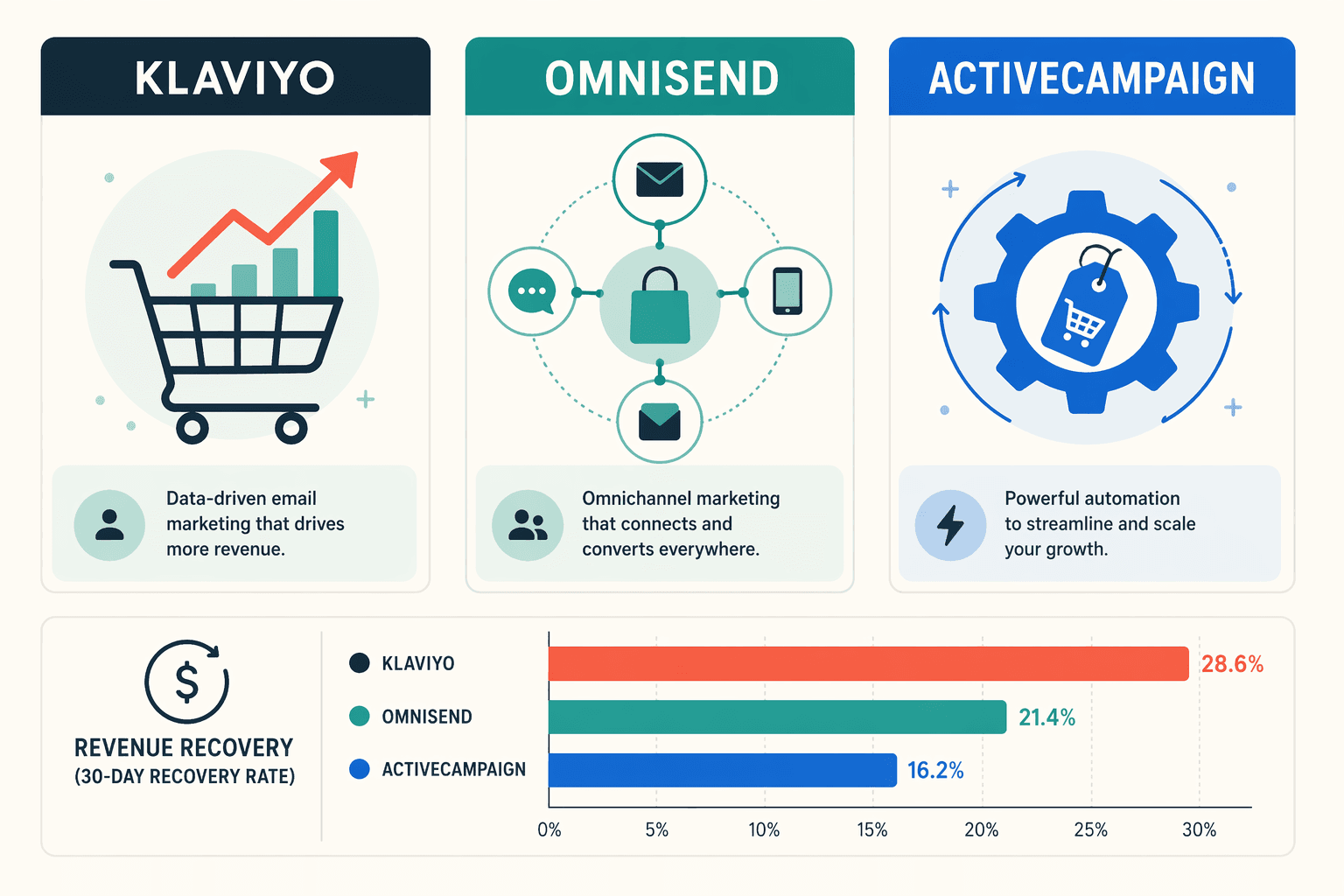
This comparison focuses on three platforms that approach ecommerce automation from different angles. Klaviyo was built specifically for ecommerce email and SMS, with deep Shopify and WooCommerce integrations that track revenue back to individual campaigns. Omnisend was also built for ecommerce from the ground up, but it differentiates with native omnichannel workflows — email, push notifications, and SMS in a single visual builder. ActiveCampaign is a powerful general marketing automation platform that can handle ecommerce workflows through integrations, but it lacks the native product catalog depth of the other two.
The Five Core Ecommerce Revenue Recovery Workflows
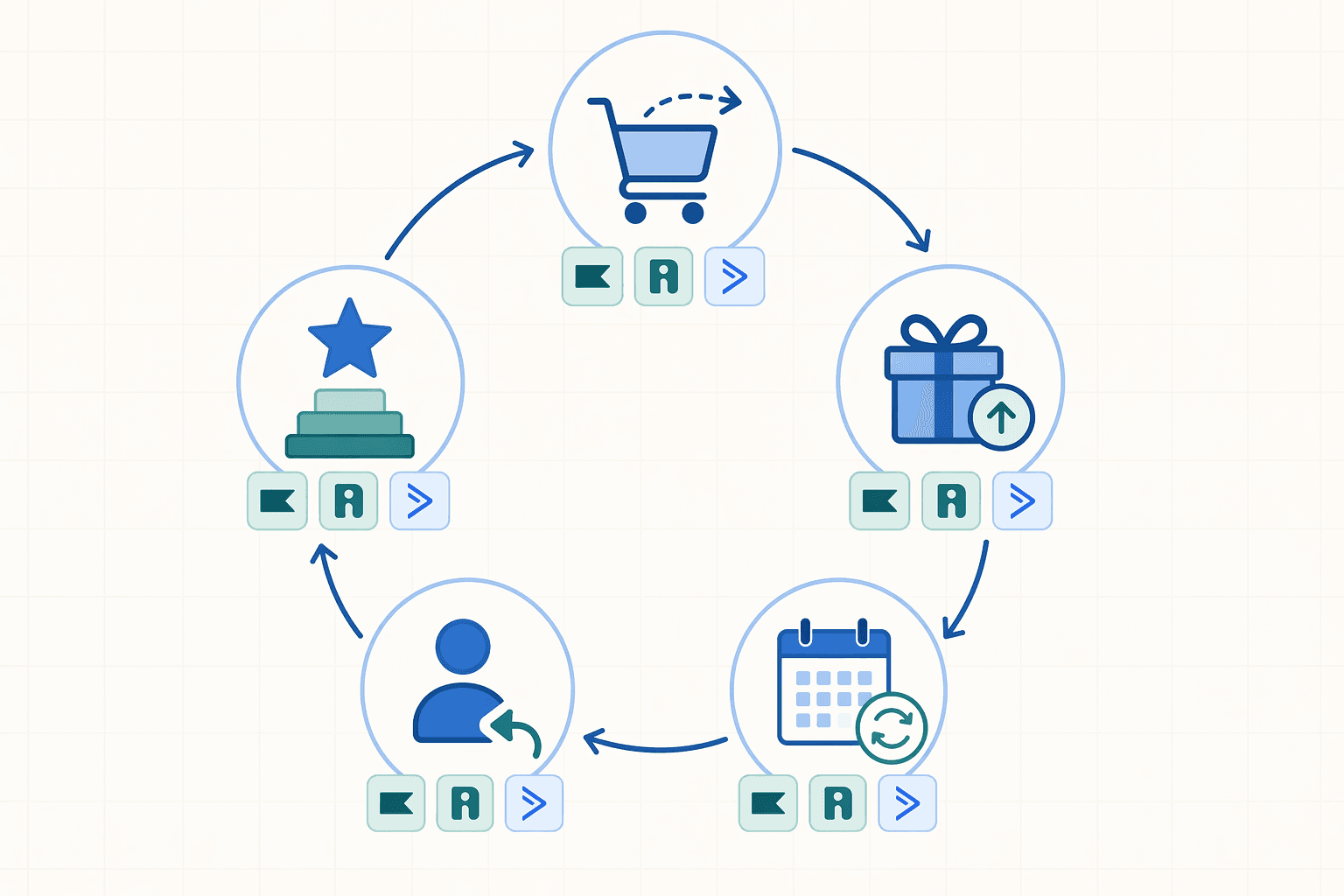
Before comparing platforms, it helps to define the specific workflows that drive revenue for online stores. These are not generic email sequences — each one depends on real-time product data and purchase behavior signals that only an ecommerce-aware platform can provide.
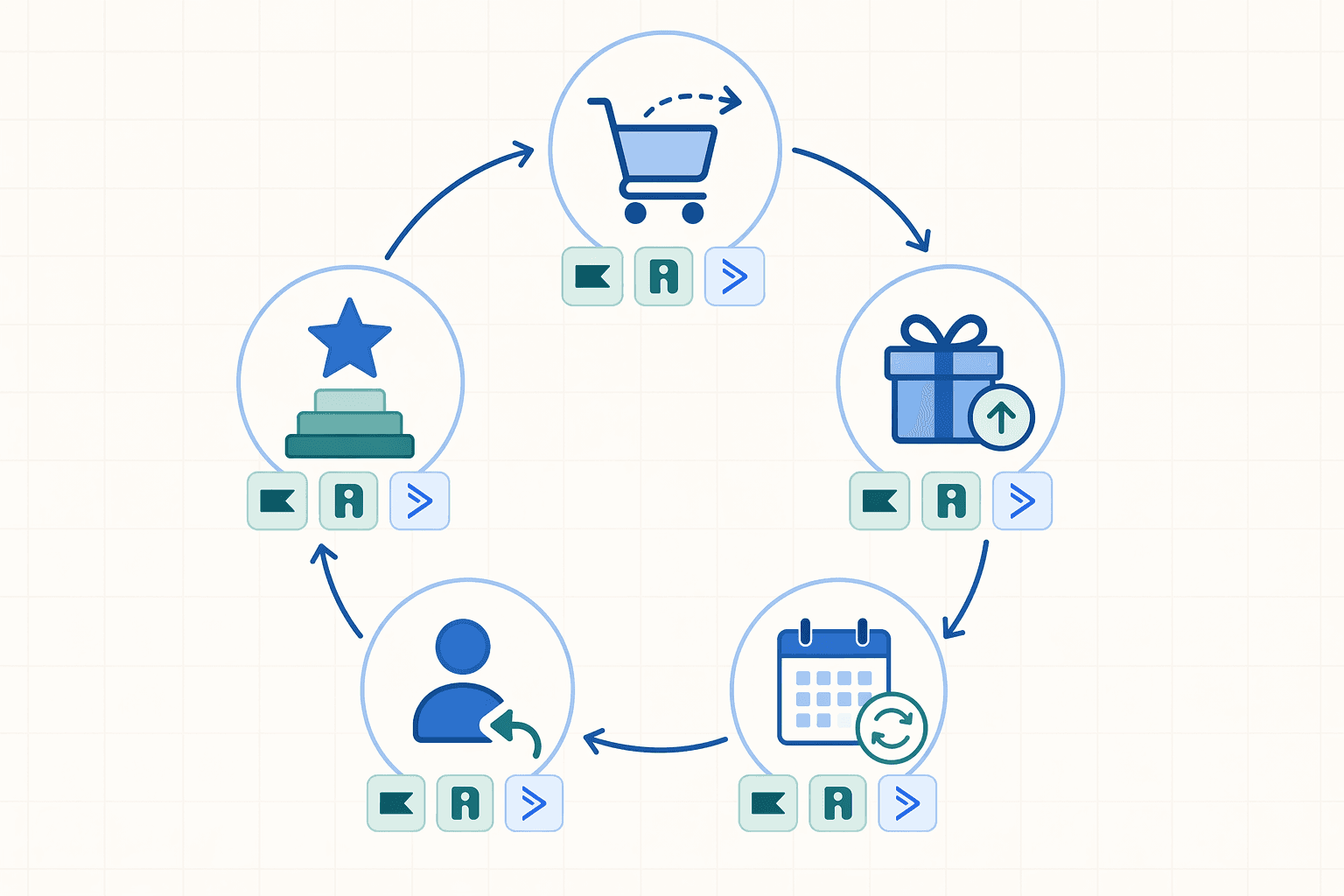
- Abandoned cart recovery. The most common ecommerce automation workflow — over half of all automation workflows in ecommerce are for cart abandonment, according to Email Vendor Selection. With cart abandonment rates hovering near 70%, a well-timed sequence of reminder emails (and sometimes an SMS) can recover 5–15% of that lost revenue. The key requirement: the platform must know exactly what was in the cart, the product images, and the price at abandonment.
- Post-purchase upsell and cross-sell. The moment after a customer completes an order is the highest-intent window for an additional sale. A platform with native product catalog integration can recommend complementary items based on the purchased product, not just a generic "you might also like" list.
- Replenishment prediction. For consumable products — coffee, pet food, skincare — a platform that can calculate when a customer will run out and trigger a purchase reminder is a direct revenue driver. This requires purchase history data and product lifecycle information, not just email triggers.
- Win-back campaigns. Customers who have not purchased in 90, 180, or 365 days need a different message than new subscribers. Win-back workflows depend on recency and frequency data from the platform's customer database.
- Loyalty tier automation. Automatically moving customers between loyalty tiers based on purchase volume, sending tier-upgrade congratulations, and offering exclusive discounts requires a platform that tracks cumulative spend and purchase frequency natively.
Klaviyo: Built for Ecommerce Email and SMS Revenue Attribution
Klaviyo is the platform most ecommerce operators think of first, and for good reason. It was designed from the start as an email and SMS automation platform specifically for ecommerce brands, not as a general marketing tool that later added ecommerce features.
Native Ecommerce Integration Depth
Klaviyo's native Shopify and WooCommerce integrations go beyond simple contact sync. The platform pulls in product catalog data, purchase history, browsing behavior, and real-time cart contents. This means you can segment customers by what they bought, how much they spent, and when they last purchased — without exporting data or maintaining a separate product feed.
The revenue attribution model is Klaviyo's strongest differentiator. Every campaign and flow shows exactly how much revenue it generated, not just open rates and click-throughs. For a store owner deciding where to invest marketing budget, seeing "this abandoned cart flow generated $12,400 last month" is far more useful than "this email had a 22% open rate."
Pre-Built Revenue Recovery Flows
Klaviyo ships with pre-built automation flows for abandoned cart recovery, post-purchase follow-up, win-back campaigns, and replenishment reminders. These are not empty templates — they include segmentation logic, timing recommendations, and product blocks that pull live data from your catalog.
The replenishment prediction workflow is where Klaviyo's product catalog integration really shines. The case study that best illustrates this is Oh Crap!, a compostable dog poop bag company. Using Klaviyo's Shopify integration, the company built a workflow that calculates when a box of bags would run out based on the purchase date and the number of bags per box, then triggers a purchase reminder email at the right moment. The result: unit sales grew by 9,100%.
Pricing and Contact Tiers
Klaviyo offers a free plan covering 250 contacts with 500 email sends per month. The paid Email plan starts at $45 per month for 1,500 active profiles and 15,000 emails. The Email + SMS plan starts at $60 per month for 1,500 active profiles, 15,000 emails, and 1,250 SMS/MMS credits. Pricing scales with contact count, and at higher tiers the per-contact cost decreases.
Omnisend: Native Omnichannel Workflows for Growing Stores
Omnisend is less well-known than Klaviyo, but it has a strong argument for stores that want omnichannel automation without stitching together separate tools. Like Klaviyo, Omnisend was built for ecommerce from the ground up, but its approach is different: it treats email, SMS, and push notifications as equal channels within a single visual workflow builder.
Omnichannel by Design
Most marketing automation platforms let you send email and SMS, but they treat them as separate channels that require separate workflows. Omnisend's visual builder lets you create a single abandoned cart flow that sends an email after 1 hour, an SMS after 4 hours, and a push notification after 24 hours — all within the same workflow, with no Zapier tape required.
This matters for growing stores because SMS and push notifications have higher open rates than email, especially for time-sensitive messages like cart reminders. A store that can reach a customer on their preferred channel at the right moment will recover more revenue than one that relies on email alone.
Native Integrations and Pre-Built Templates
Omnisend natively integrates with Shopify, WooCommerce, and Magento. The platform includes pre-built automation templates for abandoned cart recovery, welcome series, post-purchase follow-up, and product recommendations. The product recommendation blocks pull from your catalog and can show related items, best sellers, or recently viewed products.
Venture Harbour, a marketing research firm, recommends Omnisend as the winner for ecommerce, specifically for any Shopify or WooCommerce store doing more than $100,000 per year in revenue. Their reasoning: Omnisend was built from the ground up for ecommerce, natively integrates with major platforms, and allows omnichannel workflows in a single visual builder with no additional tools needed.
Pricing and Contact Tiers
Omnisend's paid plans start at $36 per month for 2,500 contacts. The Pro plan at $59 per month includes unlimited email sends, which is a significant advantage for stores with high email volume. At 10,000 contacts, pricing is $102 per month, and at 100,000 contacts it reaches $570 per month.
ActiveCampaign: The Generalist with Ecommerce Integrations
ActiveCampaign is the most powerful general marketing automation platform of the three, used by over 150,000 small businesses. Its visual automation builder is the gold standard for conditional logic, scoring, and multi-step sequences. But for ecommerce specifically, it has a different profile than Klaviyo and Omnisend.
Ecommerce Capabilities Through Integrations
ActiveCampaign offers native integrations with Shopify and WooCommerce, but they are not as deep as Klaviyo's or Omnisend's. The platform can sync customer data, purchase history, and cart abandonment events, but it does not have the same native product catalog integration. You cannot, for example, build a workflow that recommends a specific product based on what a customer just purchased without using a third-party integration or custom code.
That said, ActiveCampaign's automation builder is so flexible that you can build sophisticated ecommerce workflows using its triggers, conditions, and time controls. The platform provides triggers for submitting a form, clicking a link in an email, making a purchase, and more, alongside conditions and time controls for building ecommerce workflows like abandoned cart recovery.
Real-World Revenue Results
The most compelling ActiveCampaign ecommerce case study is Your Therapy Source, a pediatric therapy resource company. The company gets 50% of its revenue from email marketing, with most of that coming from abandoned cart automation. Their reported ROI on ActiveCampaign spend is 2,000%, and abandoned cart automation alone drives 30% of total revenue.
Pricing and Contact Tiers
ActiveCampaign's pricing starts at $39 per month for 2,500 contacts. At 10,000 contacts, it is $111 per month, and at 100,000 contacts it reaches $299 per month. ActiveCampaign pioneered the visual automation sequence builder, and its pricing reflects its position as a full-featured marketing platform rather than an ecommerce-specific tool.
Head-to-Head Comparison: Native Integrations, Revenue Tracking, and SMS Support
The table below summarizes the key differences across the three platforms. The most important columns for ecommerce operators are native product catalog integration, revenue attribution per campaign, and SMS support — these are the features that determine whether a platform can execute the five core revenue recovery workflows effectively.
| Feature | Klaviyo | Omnisend | ActiveCampaign |
|---|---|---|---|
| Native Shopify integration | Deep (product catalog, purchase history, real-time cart) | Deep (product catalog, purchase history, real-time cart) | Standard (customer sync, purchase events) |
| Native WooCommerce integration | Deep | Deep | Standard |
| Native Magento integration | No | Yes | No |
| Revenue attribution per campaign | Yes (native) | Yes (native) | Via integrations |
| Native product catalog | Yes | Yes | No |
| SMS support | Native (Email + SMS plan) | Native (omnichannel workflows) | Via integrations |
| Push notifications | No | Yes (native) | No |
| Pre-built ecommerce flows | Abandoned cart, post-purchase, replenishment, win-back | Abandoned cart, welcome, post-purchase, product recommendations | Abandoned cart, welcome (via templates) |
| Segmentation by purchase behavior | Yes (CLV, product, category, recency) | Yes (purchase history, product, category) | Yes (purchase history, tags, custom fields) |
| Starting price (paid) | $45/mo (1,500 contacts) | $36/mo (2,500 contacts) | $39/mo (2,500 contacts) |
| Free plan | 250 contacts, 500 emails/mo | Limited free plan | No free plan |
Real-World Revenue Recovery Results: Case Studies and Benchmarks
The numbers behind these platforms tell a compelling story about what is possible when ecommerce automation is done right. The following case studies and benchmarks come from Email Vendor Selection and ActiveCampaign's blog, and they illustrate the revenue impact of well-designed workflows.
- Oh Crap! (Klaviyo): This compostable dog poop bag company used Klaviyo's Shopify integration to build a replenishment prediction workflow. The workflow calculates when a box of bags will run out based on the purchase date and bag count, then sends a purchase reminder email. Unit sales grew by 9,100%.
- Your Therapy Source (ActiveCampaign): This pediatric therapy resource company gets 50% of its revenue from email marketing, with most coming from abandoned cart automation. The company reports a 2,000% ROI on ActiveCampaign spend, and abandoned cart automation alone drives 30% of total revenue.
- Swim University (ActiveCampaign): This pool care education company increased revenues by 66% using email marketing automation. They added 14,000 new subscribers and used predictive sending and targeted seasonal funnels to drive growth.
- Industry benchmark: Automated workflows generate 30x more revenue per recipient than broadcast campaigns, even though they account for just 1.8% of emails sent. Additionally, 31% of email orders come from targeted marketing automation workflows.
- Cart abandonment prevalence: Over half of all automation workflows in ecommerce are for cart abandonment, and the average cart abandonment rate is nearly 70%. This makes abandoned cart recovery the single highest-impact workflow for most stores.
Verdict: Which Platform for Your Store Size and Average Order Value?
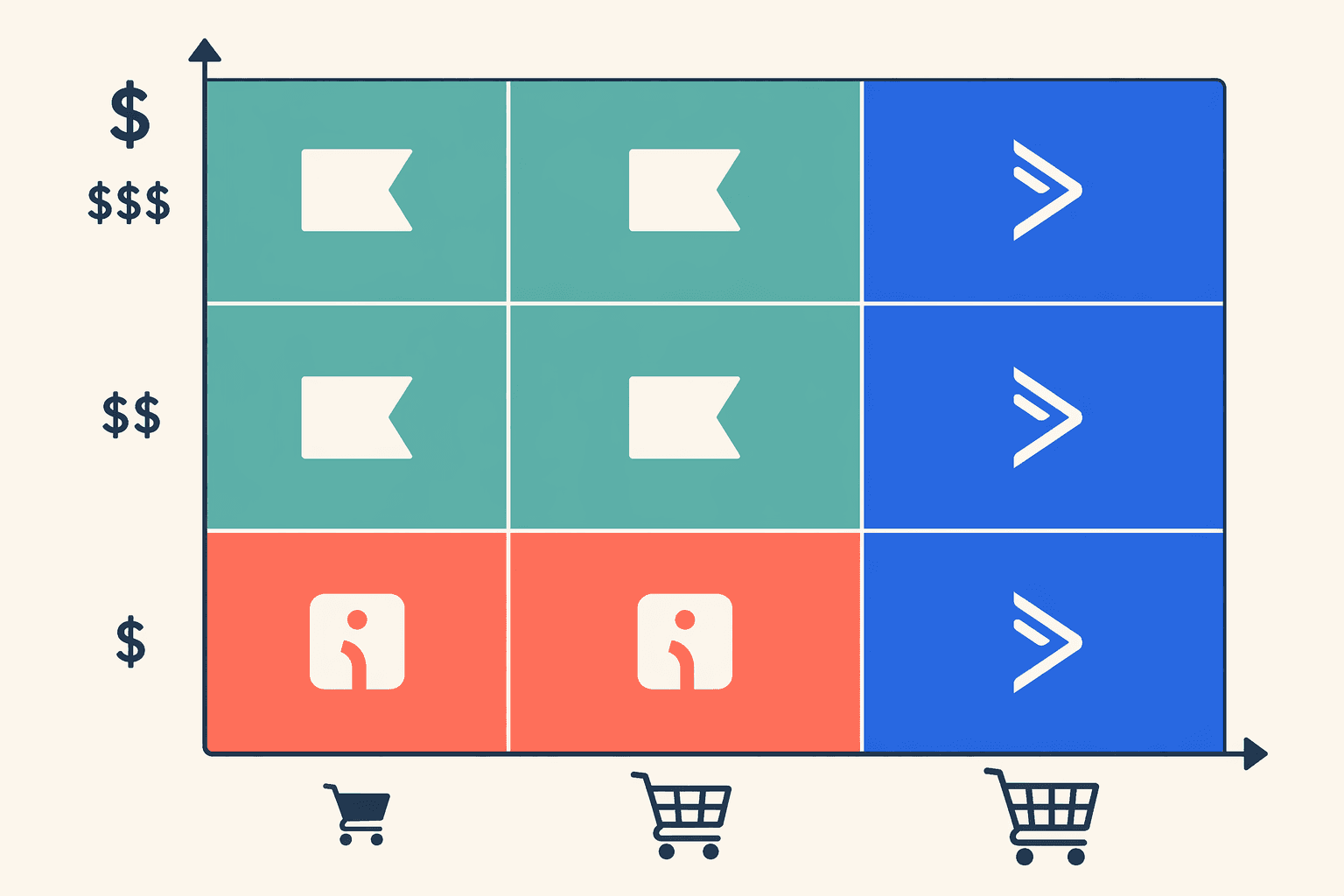
The right platform depends on your store's size, average order value (AOV), and whether SMS is a core channel. The decision matrix below maps the three platforms to common store profiles.
| Store Profile | Recommended Platform | Why |
|---|---|---|
| Small store (< $100k/year), low AOV (< $50) | Omnisend (starting at $36/mo) | Lower entry price, unlimited emails on Pro plan, native omnichannel helps maximize every contact |
| Growing store ($100k–$500k/year), medium AOV ($50–$150) | Omnisend or Klaviyo | Omnisend for omnichannel needs; Klaviyo for deeper revenue attribution and SMS |
| Established store ($500k+/year), high AOV ($150+) | Klaviyo (Email + SMS plan) | Deepest Shopify/WooCommerce integration, revenue tracking per campaign, replenishment workflows |
| Store that needs general marketing automation alongside ecommerce | ActiveCampaign (starting at $39/mo) | Strongest general automation builder, conditional logic, scoring; ecommerce via integrations |
| Store with heavy SMS focus | Klaviyo (Email + SMS plan) or Omnisend | Both have native SMS; Klaviyo for revenue attribution, Omnisend for omnichannel workflows |
Not for You If...
- Klaviyo is not for you if: You need a general marketing automation platform for B2B lead nurturing, webinar registration, or CRM integration. Klaviyo is laser-focused on ecommerce and lacks the broader automation features that ActiveCampaign offers.
- Omnisend is not for you if: You need deep revenue attribution per campaign or sophisticated replenishment prediction workflows. Omnisend's strength is omnichannel reach, not granular revenue tracking.
- ActiveCampaign is not for you if: You want native product catalog integration, real-time cart data, or revenue attribution without third-party tools. ActiveCampaign can do ecommerce, but it requires more setup and integration work than Klaviyo or Omnisend.
Frequently Asked Questions
- Can I use ActiveCampaign for abandoned cart recovery? Yes. ActiveCampaign has native integrations with Shopify and WooCommerce that can trigger abandoned cart workflows. However, the integration is not as deep as Klaviyo's or Omnisend's — you may need to use Zapier or a third-party connector for real-time cart data.
- Does Klaviyo work with WooCommerce? Yes. Klaviyo has a native WooCommerce integration that syncs product catalog, purchase history, and cart data. It is one of the deepest WooCommerce integrations available.
- Is Omnisend good for small stores? Yes. Omnisend's pricing starts at $36 per month for 2,500 contacts, and the Pro plan at $59 per month includes unlimited email sends. Venture Harbour recommends Omnisend for stores doing more than $100,000 per year, but smaller stores can also benefit from its native omnichannel workflows.
- What is the cheapest option for ecommerce automation? Klaviyo's free plan covers 250 contacts with 500 email sends per month, making it the most accessible option for very small stores. Omnisend also has a limited free plan. ActiveCampaign does not offer a free plan.
- How do I migrate from one platform to another? All three platforms support CSV import/export for contacts. For workflow migration, you will need to rebuild automations in the new platform. Klaviyo and Omnisend both offer migration support and documentation. For detailed guidance, see our guide to building marketing automation workflows that drive revenue.
Comments
Join the discussion with an anonymous comment.