
The Enterprise Orchestration Landscape in 2026: Legacy BPM, Cloud-Native, and AI-Native
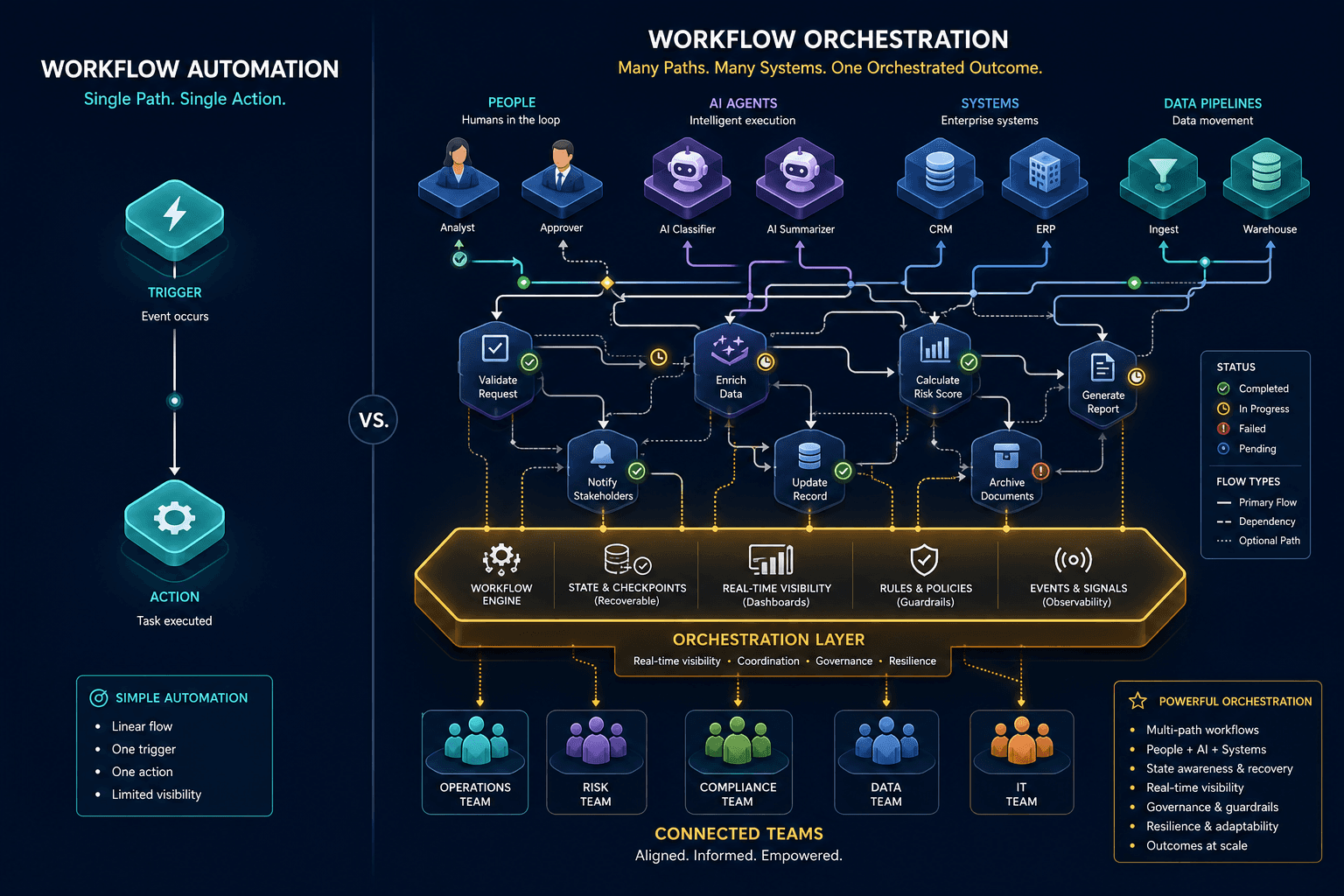
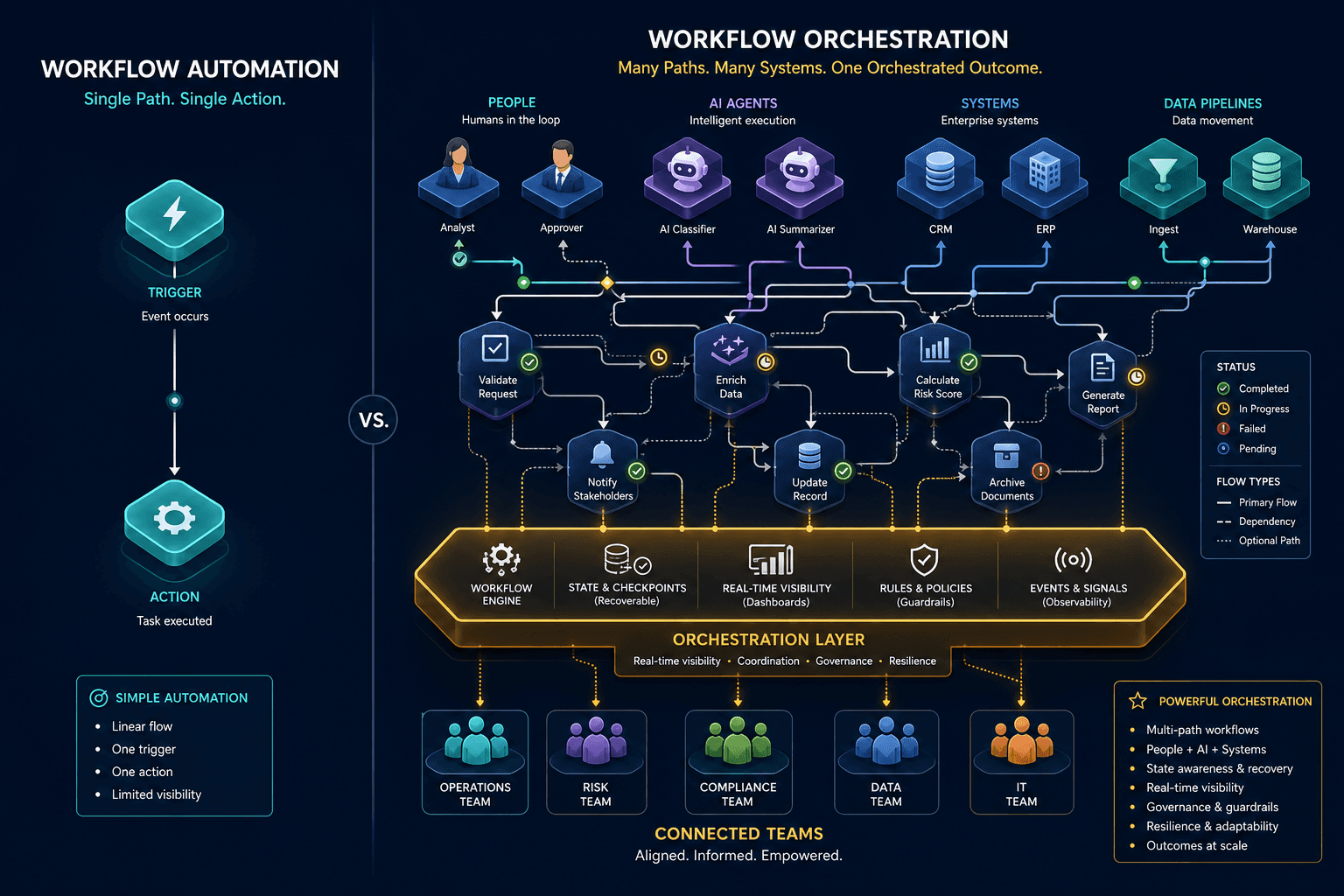
Enterprise workflow orchestration in 2026 is no longer a single category. The market has fractured into three distinct architectural camps, each with its own tradeoffs in governance, speed, and flexibility. For IT leaders in regulated industries — banking, healthcare, insurance, government — choosing the wrong camp means either accepting years of implementation complexity or exposing the organization to compliance risk.
The first camp is the legacy BPM suite: platforms like ServiceNow, Pega, and Appian that grew out of business process management and case management traditions. These platforms offer deep governance, mature compliance certifications, and decades of enterprise deployment experience. Their weakness is architectural complexity and vendor lock-in. Their AI capabilities, while improving, are layered onto architectures designed before AI agents existed.
The second camp is the cloud-native workflow engine: Camunda 8 and Google Cloud Workflows represent this category. These platforms are built on open standards like BPMN 2.0, designed for developer-led deployment, and offer greater portability than legacy suites. However, they require more technical expertise to operate and may lack the out-of-the-box compliance features that regulated buyers need.
The third and newest camp is the AI-native orchestration platform: Elementum is the clearest example. These platforms are built from the ground up to coordinate deterministic processes, AI agents, and human reviewers in a single runtime. They promise dramatically faster deployment — 30 to 60 days in Elementum's case — and architectures that avoid data replication. The tradeoff is shorter track records and less institutional experience with enterprise-scale compliance audits.
This fragmentation is not academic. According to a 2023 IBM Institute for Business Value study, 92% of executives believed workflows would be digitized by 2025 with AI-powered automation, and 86% indicated that process automation and workflow reinvention are becoming more effective due to AI agents. The pressure to adopt AI-native capabilities is real, but so is the regulatory requirement for auditable, deterministic process execution. The platforms that succeed in regulated environments will be those that bridge these two demands without compromising either.
Head-to-Head Comparison: Six Enterprise-Grade Orchestration Platforms
The table below provides a structured comparison across the dimensions that matter most for regulated environments: pricing model, deployment options, AI capabilities, governance features, compliance certifications, and best-fit use cases. Following the table, each platform receives a detailed breakdown with honest strengths, weaknesses, and explicit 'not for you if' caveats.
| Platform | Pricing Model | Deployment | AI Capabilities | Governance & Compliance | Best For |
|---|---|---|---|---|---|
| ServiceNow | Subscription (contact sales) | SaaS, on-premises available | Now Assist, Moveworks acquisition, AI Agent Fabric, AI Control Tower | ITSM-native governance; SOC 2, HIPAA, FedRAMP In Process | Large ITIL shops needing ITSM-aligned orchestration |
| Pega | Subscription (contact sales; not public) | SaaS, on-premises, hybrid | Predictable AI; governed, transparent AI orchestration | Strong BPM/case management maturity; banking, healthcare, government | Heavily regulated industries requiring case management depth |
| Appian | Subscription (contact sales; Agent Studio gated behind Advanced/Premium) | SaaS, on-premises, FedRAMP authorized | Agent Studio (higher tiers); low-code AI integration | FedRAMP authorized; eight-week delivery guarantee | Government and regulated buyers needing fast deployment |
| Elementum | Subscription (contact sales) | SaaS (Zero Persistence architecture) | Three-actor model: deterministic rules, AI agents, human reviewers | SOC 2 Type II, GDPR, CCPA, SOX, HIPAA; 30–60 day deployment | AI-forward enterprises wanting rapid deployment and data sovereignty |
| Camunda 8 | Enterprise license required for Zeebe in production; free tier for non-production | SaaS, self-managed, hybrid | Agentic orchestration capabilities (introduced 2025) | BPMN 2.0 standard; compliance depends on implementation | Developer-led teams needing BPMN-standard portability |
| Google Cloud Workflows | Pay-per-execution (serverless) | Cloud-only (GCP) | Vertex AI integration; custom agent workflows | GCP compliance certifications; no built-in BPM governance | GCP-native organizations building custom orchestration |
Comments
Join the discussion with an anonymous comment.