Last checked: August 2026. The phrase “gen z napping at work productivity” has become messy because two different questions keep getting treated as one: Have young workers ever napped during work, and does napping reliably make them more productive?
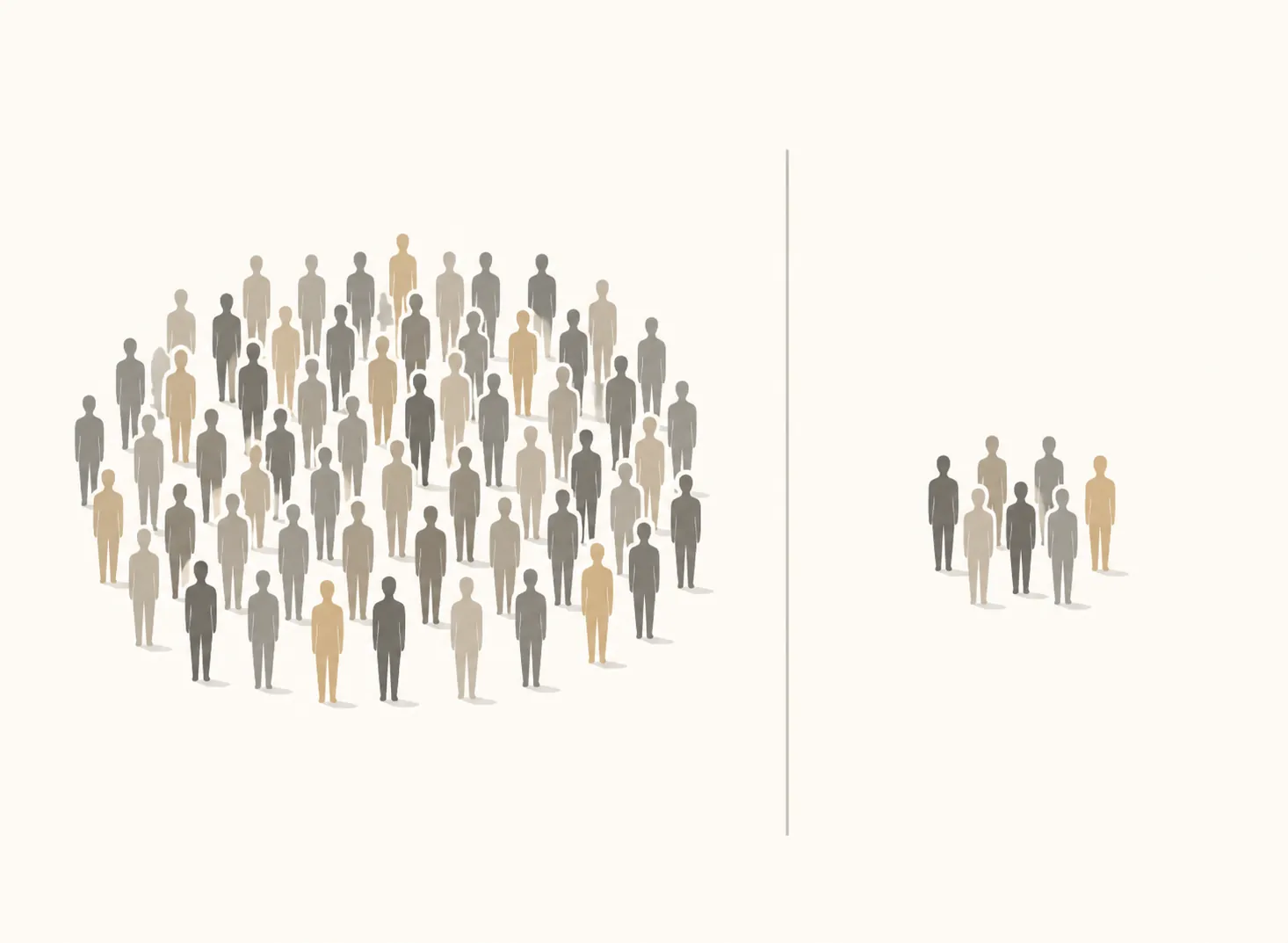
The viral version usually starts with the bigger number: 80% of Gen Z respondents in one survey said they had napped at work. A later survey found something much smaller: 10% of Gen Z said they nap regularly. Those figures are not interchangeable. One asks about ever admitting a behavior; the other asks about a recurring habit. That wording difference does most of the work.
| Claim | Source | Sample / date | Population | What it actually measured | Caveat |
|---|---|---|---|---|---|
| 80% of Gen Z admitted workplace napping | PlushBeds survey [1] | n=1,000; October 2021; MTurk; 3% margin of error | US adults | Self-reported workplace napping by generation; also reported 70% of millennials, 60% of Gen X, and 71% of boomers | Vendor-commissioned, self-reported, and closer to “ever napped” than “regularly naps” |
| 10% of Gen Z nap regularly; 39% never nap | Kickresume survey [2] | n=1,897; July 2025 | Global respondents | Self-reported workplace habits, including regular napping and never napping | Global, self-reported, and using a different frequency threshold than the 80% claim |
| A 30-minute daily nap opportunity improved daily productivity by 2.3% and savings deposits by about 15% | MIT Sloan writeup of MIT/Harvard/Penn Chennai RCT [3] | 452 workers; 2017–2019 | Data-entry workers in Chennai, India | A field experiment testing sleep and nap interventions in a specific workplace setting | Useful causal evidence, but not a plug-and-play estimate for US offices |
| Pilots taking 20- to 30-minute naps were more than 50% more alert and more than 30% more proficient | Harvard Health summary of NASA data [4] | Published December 2024 | Pilots | Alertness and proficiency after short naps | A high-attention aviation context, not a general office-prevalence study |
| Afternoon naps can improve cognitive performance and alertness | Dutheil et al. meta-analysis [5] | 11 studies; 381 participants; 2021 | Study participants in controlled nap research | Cognitive performance and alertness after daytime naps | Small evidence base; timing and post-nap delay matter |
| 79%–80% of Gen Z say stress affects or distracts them at work; 66% say it affects focus | NORC/Humankind quality-of-life study [6] | n=1,121 US adults; October 2025 | US adults | Self-reported stress and work effects | Context for why rest behaviors may appeal, not evidence that people nap at work |
Why the 80% claim and the 10% claim can both be real
The PlushBeds number is the one built for headlines. It is large, generational, and easy to fold into a story about young workers rejecting office norms. But the survey was not a time-use study, a payroll record, or a representative workplace audit. It was a vendor-commissioned self-report survey of 1,000 US adults recruited through MTurk, and the key measure was whether respondents admitted workplace napping, not whether they do it every day, every week, or with employer permission [1].
That distinction matters because “ever” captures a very broad set of behavior. A worker who once put their head down during a migraine, someone who slept in a break room during a double shift, and someone who has a daily 20-minute nap routine could all land in the same bucket. The survey also found high rates among older generations, including 71% of boomers, which makes the usual “Gen Z alone is doing this” reading weaker than the headline version suggests [1].
Kickresume’s 2025 survey shrinks the behavior by asking a narrower question. In that survey, 10% of Gen Z respondents said they nap regularly, while 39% said they never nap. Gen X, by comparison, had a higher “never” share at 54% [2]. That still leaves room for a real generational difference, but it is a much smaller claim than “most Gen Z workers are napping on the job.”
Neither survey should be treated as a universal rate. PlushBeds is US-based but MTurk-recruited and vendor-commissioned. Kickresume is larger but global and self-reported. Both are useful as signals that workplace napping is not imaginary. Neither tells a manager how often it happens inside their company, whether the naps are sanctioned, whether they occur during breaks, or whether they improve output.
This is where the online version of the trend tends to lose discipline. A commercial survey becomes a media hook; the media hook becomes a social-video talking point; the talking point becomes a generational diagnosis. By the end, a loose prevalence measure is carrying an argument about character, ambition, office culture, and productivity. The original sources do not support that much weight.
Stress explains some of the appeal, but not the productivity claim
It is also too easy to turn the correction into scolding. Younger workers are reporting a workplace experience that is heavy with stress. In the NORC/Humankind study, 79%–80% of Gen Z said stress affects or distracts them at work, and 66% said stress affects their focus [6]. That does not prove they are napping, and it does not prove naps fix the problem. It does explain why a short rest can sound less like a perk and more like a survival tactic.
The important boundary is behavioral. Stress data can help explain why a trend resonates. It cannot establish how many people nap during work, whether the nap is replacing sleep, or whether the worker returns with better performance. For those questions, the better evidence comes from controlled nap studies—and that evidence is stronger, but narrower.
What a short nap actually supports
The most useful productivity evidence is not a Gen Z office survey. It is a set of controlled findings showing that short daytime sleep can improve alertness, cognition, or measured output under certain conditions.
The Chennai field experiment is the strongest workplace-style example here because it tested a nap opportunity rather than merely asking workers what they do. In that randomized trial, 452 data-entry workers were studied between 2017 and 2019. A 30-minute daily nap opportunity improved daily productivity by 2.3% and increased savings deposits by about 15% [3].
That is a real effect, and it deserves more attention than the survey drama. It is also not a universal return-on-investment number. The workers, setting, wages, tasks, and sleep conditions were specific to the Chennai study. One co-author later described the nap intervention as comparable to a 50% wage increase in that setting, but that is an internal comparison from the experiment, not a portable estimate for a software company, call center, hospital, or government office [7].
The aviation evidence points in the same general direction for alertness. Harvard Health, summarizing NASA data, reported that pilots who took 20- to 30-minute naps were more than 50% more alert and more than 30% more proficient [4]. That finding is often quoted because it is clean and memorable. It should stay attached to its context: pilots performing attention-sensitive work, not a broad estimate of what happens when office workers nap after lunch.
The meta-analysis evidence also supports a limited claim. Dutheil and colleagues reviewed 11 studies with 381 participants and found that afternoon naps can improve cognitive performance and alertness. The details are not cosmetic: early-afternoon naps, before 1 p.m., appeared more effective; benefits were observed 30 to 120 minutes after waking; and immediate post-nap results were conflicting [5]. In plain workplace terms, a nap is not always followed by instant sharpness.
The consistent practical shape is modest: a short nap, roughly 10 to 30 minutes, taken early in the afternoon, as a supplement to adequate nighttime sleep. That is very different from treating daytime napping as a cure for chronic sleep restriction, burnout, bad scheduling, or unmanaged workload.
There is also a health caveat that belongs before any workplace nap advice. Harvard Health notes that frequent daytime drowsiness can be a sign of conditions such as sleep apnea [4]. A worker who repeatedly cannot stay awake during the day may need medical evaluation or a serious review of sleep and workload, not a nicer couch in the office.
What managers should not infer from the trend
The evidence does not justify a lazy reading of Gen Z. It also does not justify a glossy policy memo promising that nap pods will raise productivity. The prevalence surveys are too dependent on wording and recruitment method. The controlled studies are more credible on mechanism, but they do not describe the everyday behavior of US Gen Z office workers.
A workplace deciding what to permit should separate three questions that often get fused together:
- Prevalence: Are employees actually napping, how often, and during what time—breaks, lunch, unpaid time, or scheduled work time?
- Function: Is the nap compensating for a temporary afternoon dip, chronic sleep loss, night-shift fatigue, illness, caregiving demands, or workload problems?
- Policy: Would a formal rule improve fairness and safety, or would it create surveillance, resentment, or unequal access?
Those questions lead to different decisions. A quiet room available during breaks is not the same as managers encouraging naps as a productivity tactic. A schedule accommodation for shift workers is not the same as a company-wide claim that Gen Z has discovered a new performance hack. A manager who sees someone asleep at their desk still needs context before deciding whether the issue is misconduct, fatigue, illness, or a broken workload.
If a company experiments with rest, the cleanest version is narrow: make expectations explicit, keep naps short, avoid late-day sleeping that could interfere with nighttime sleep, do not penalize workers who do not use the option, and do not use vendor survey prevalence as the business case. The better test is whether a clearly defined rest option reduces errors, improves alertness, or helps specific teams with documented fatigue risk.
Afternoon performance also depends on less viral things: meeting load, task switching, workload design, and how people capture decisions before they disappear. If the broader goal is a better workday, the tools around focus matter too; for example, FlowDesk’s comparison of note-taking software by use case is a more relevant next stop than another round of generational nap discourse.
The narrow answer
Gen Z workplace napping is real enough to discuss. It is not proven to be widespread in the way the 80% figure implies. The stronger productivity evidence supports a short, early-afternoon nap as a limited alertness and cognitive-performance tool, especially when it supplements rather than replaces adequate nighttime sleep. That is permission to treat a brief nap as sometimes useful—not proof of a sweeping Gen Z productivity revolution.
References
- Just Five More Minutes: America’s Napping Tendencies Survey, PlushBeds, October 2021
- Slacking Work Survey, Kickresume, July 2025
- Research proves it: Naps save you money, MIT Sloan
- Can a quick snooze help with energy and focus? The science behind power naps, Harvard Health, December 2024
- Effects of a Short Daytime Nap on Cognitive Performance: A Systematic Review and Meta-Analysis, PMC, 2021
- Quality of Life Study Finds Stress, Social Support Reshaping Work Performance, NORC/Humankind, October 2025
- Why employers should wake up to the value of naps at work, The Conversation