
If you want to know what to do tomorrow, start with the format that has actually been tested: limit Facebook, Instagram, and Snapchat to 10 minutes per platform per day across all your devices. Run the break for one to two weeks, keep access available for necessary messages, and treat it primarily as a mood-focused experiment—not a proven way to restore concentration.
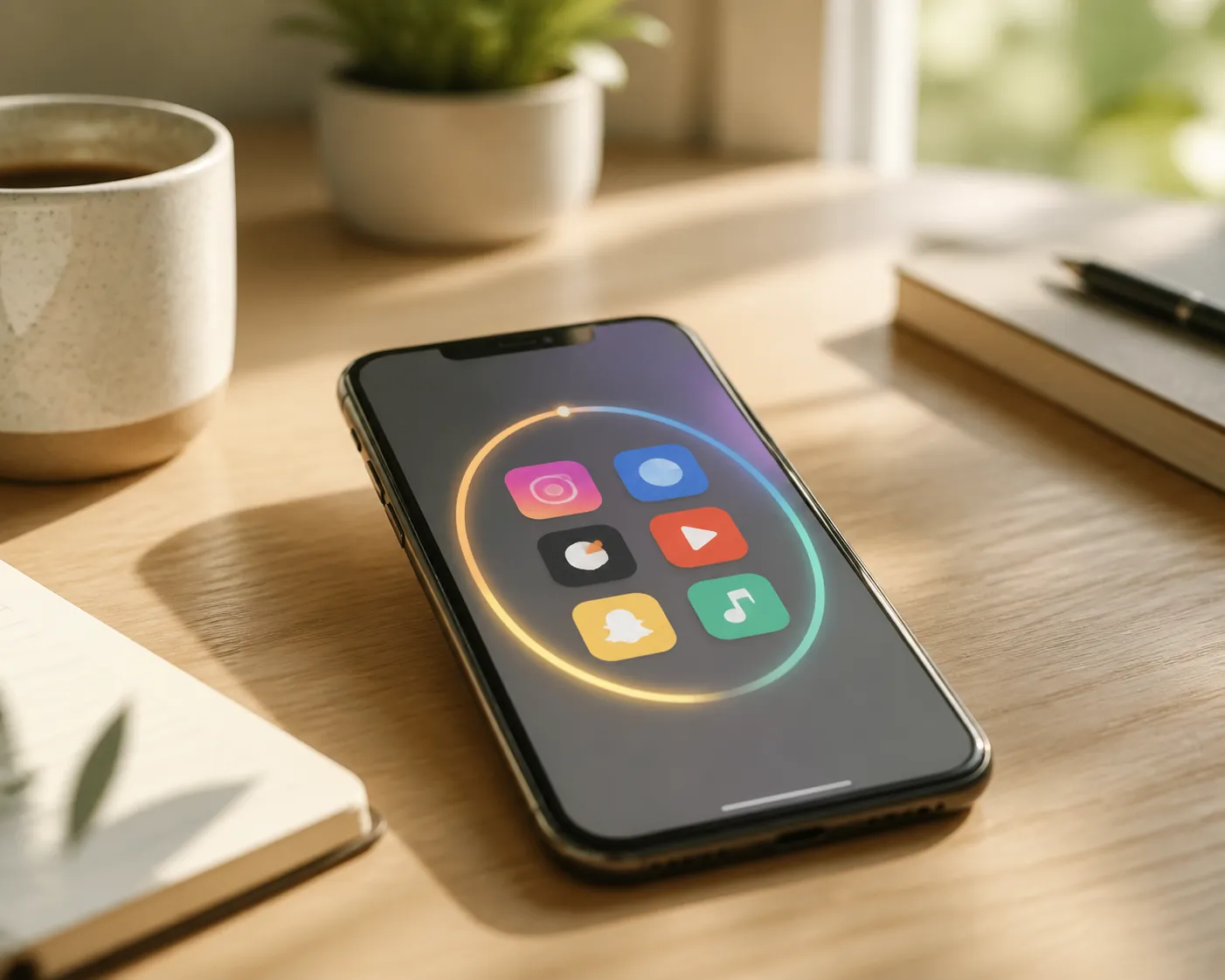
The randomized controlled trial behind this protocol capped each of the three platforms rather than blocking them completely. The researchers specifically rejected zero access because students could depend on social services to exchange important study information. Usage was tracked with RescueTime, the study operated across three academic terms, and post-treatment measurement took place in the third term.[1]
That makes this a practical compromise for anyone who has deleted an app, reinstalled it for one legitimate message, and then ended up back in the feed. You are not promising abstinence. You are creating a small, measurable allowance that preserves necessary access without leaving the whole day open.
The complete break protocol
| Part | What to do |
|---|---|
| Platforms | Include Facebook, Instagram, and Snapchat if you use them. |
| Daily allowance | Allow 10 minutes per platform, giving a maximum of 30 minutes if you use all three. |
| Coverage | Count use across your phone, tablet, computer, mobile browser, and desktop browser. |
| Duration | Choose a fixed period of one or two weeks. |
| Tracking | Use RescueTime where compatible, or another tracker that can account for every route you use. |
| Primary outcome | Record mood or depressive symptoms without assuming that focus will improve. |
| Necessary access | Keep a planned route for essential messages, study information, or work coordination. |
The one- to two-week duration is an evidence-aligned window rather than a magic threshold. Studies included in the relevant meta-analysis used one- or two-week interventions with endpoint measurements.[2] Combining that duration with the RCT’s daily cap creates a workable personal protocol, but it should not be mistaken for an exact reproduction of every study condition.
Set one allowance across every route into the feed
The 10-minute allowance applies to each platform, not each device. Five minutes of Instagram on a phone and five minutes on a laptop exhaust that platform’s allowance for the day. It does not become 10 minutes on the phone plus another 10 on the laptop. If you use all three named platforms, the tested dosage permits up to 30 minutes of social media use in total.[1]
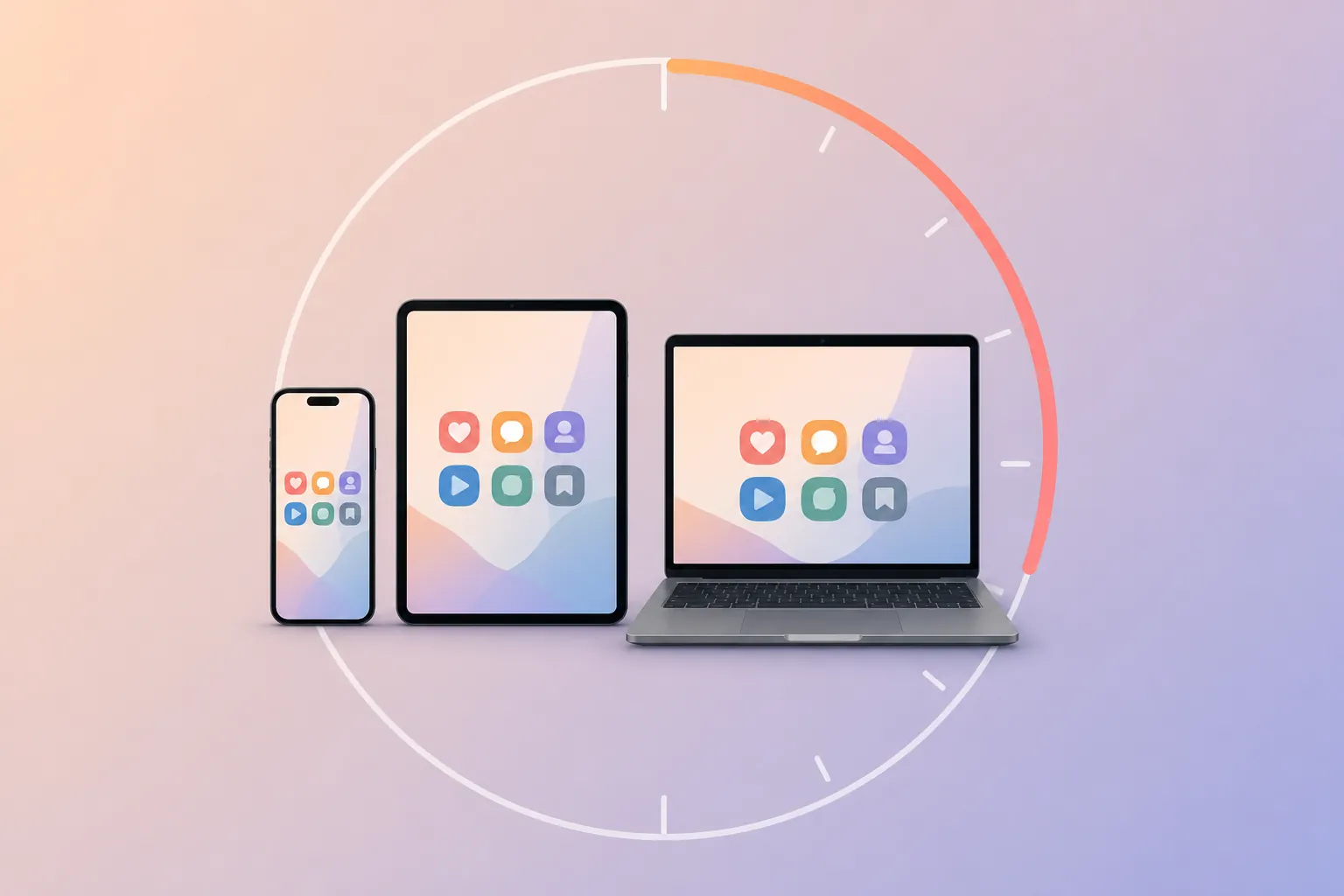
Before the first day, write down every way you reach these services. Include installed apps, mobile websites, desktop tabs, bookmarked pages, alternate browsers, and any secondary device. Uninstalling one app does not close the corresponding website; a systematic review specifically noted web access as a route through which platform use can continue.[3]
Then decide how the allowance will work in ordinary life. You might reserve it for one scheduled check, or divide it into two brief checks when coordination genuinely requires that. The research supports the daily ceiling, not a particular time of day or session pattern, so choose the arrangement you can measure consistently.
Separate messages from browsing where possible
A cap works better when necessary communication has somewhere else to go. Tell classmates, coworkers, family members, or group organizers that urgent matters should come through email, text, or another agreed channel during the experiment. If that is impossible, open the social platform for the specific message during your allowance and leave when the task is complete.
This is also why the protocol does not require deleting your accounts. The research design preserved access because social services can carry important information.[1] Total abstinence may still be a personal preference, but it is a different intervention from the one supported here.
Build enforcement for the moment willpower disappears
A timer that ends by asking whether you would like to ignore it is a reminder, not a firm boundary. An undated, commercially interested analysis from a third-party blocking vendor documents the iPhone Screen Time “Ignore Limit” option and a defeatable passcode workaround.[4] That source does not establish that one blocker is universally better than another, but it identifies the practical failure point accurately: the person who wants another hour is often the same person being asked to enforce the limit.
Use more than one layer when a soft alert has failed you before:
- Set the operating system’s app limit to 10 minutes for each included platform.
- Remove the apps from your home screen, or uninstall them if necessary messages remain available through a less convenient route.
- Log out of browser sessions and remove saved passwords so opening the feed requires a deliberate action.
- Apply equivalent restrictions to the platform websites on every computer or tablet you use.
- If your device supports a passcode-controlled restriction, consider having a trusted person hold the code for the experiment.
- Keep the alternative communication channel visible so a real coordination need does not become a reason to dismantle the setup.
On Android, Digital Wellbeing or another available timer can be treated as a candidate enforcement layer, but its mechanics are not verified in the evidence considered here. Test your actual device before the break: reach the limit, try the browser, try a second device, and see whether the restriction survives. A setting’s name matters less than whether it covers the routes you really use.
If you want a less restrictive alternative, the site’s phone-distraction limits guide addresses reducing interruptions without running a formal social media break.
Track compliance separately from outcomes
Usage data answers whether you followed the cap. It does not answer whether you felt better or focused more effectively. Keep those questions separate so a successful restriction is not automatically counted as a successful mental-health or attention intervention.
Record total time for each platform at the end of each day. Also note any untracked access, such as opening a feed on a shared computer. If your tracker misses a device, add that usage manually rather than treating the blank as zero.
For mood, choose a simple question before you begin and answer it at baseline and at the end. For example, you could note whether low mood interfered with work, study, sleep, or social contact during the preceding few days. This is a personal comparison, not a clinical diagnosis.
If focus is one of your goals, define a separate behavioral measure in advance—such as whether you completed a planned work period without opening a feed. That can help you evaluate your own experiment, but it does not turn the result into research evidence that the protocol improves attention.
What the mental-health evidence does—and does not—show
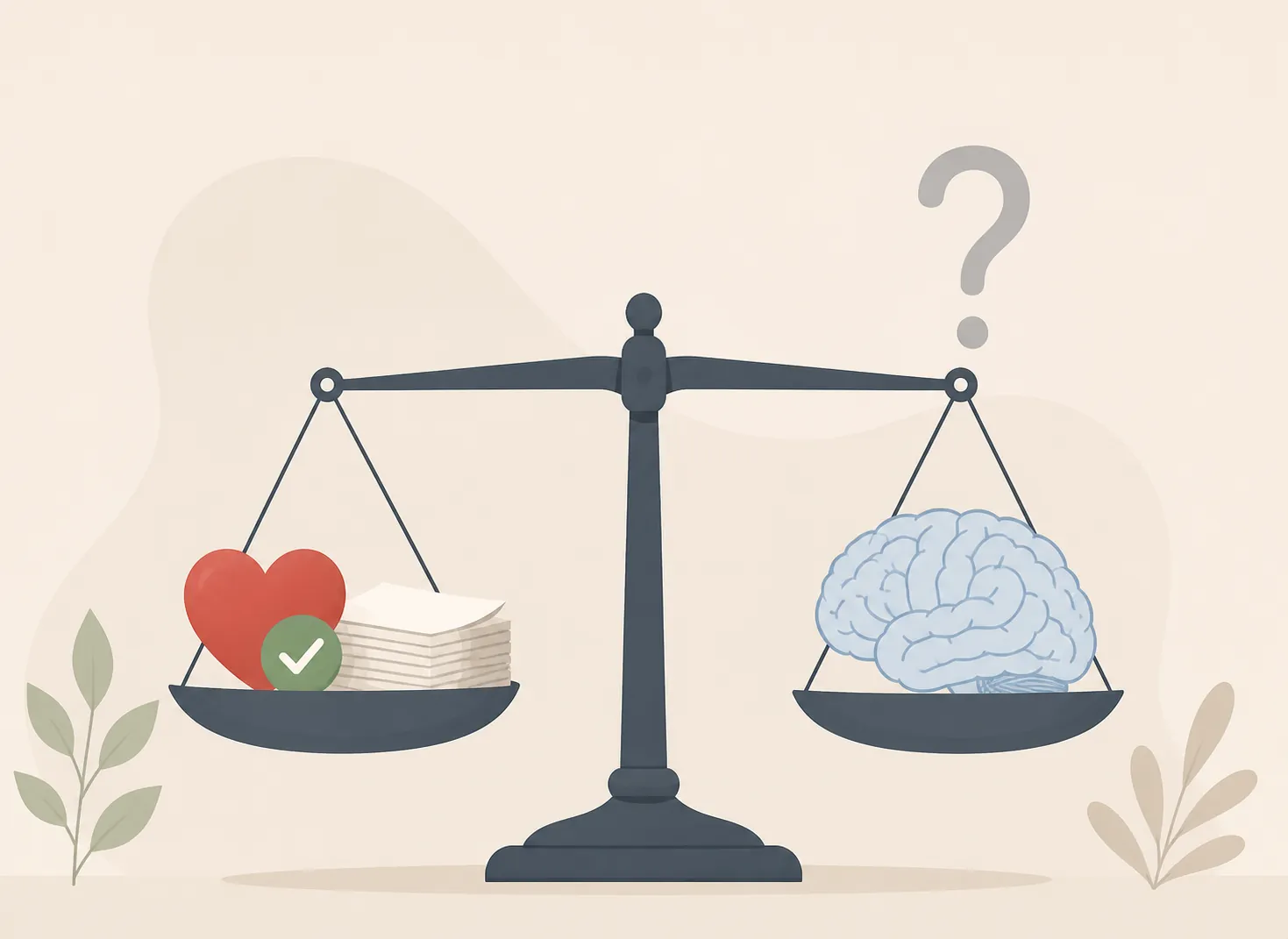
The meta-analysis found a statistically significant benefit for depression, while it found no statistically significant effects on the other mental-health outcomes it examined.[2] The supplied evidence does not provide effect sizes, sample sizes, or confidence intervals, so it cannot support a claim that the benefit is large, likely for every user, or clinically sufficient on its own.
The short intervention periods matter too. One- and two-week endpoint measurements can show whether outcomes differ at the end of a bounded break, but they do not establish long-term maintenance.[2] They also do not tell us how quickly any change should appear on a day-by-day basis.
Fear of missing out may not move in one direction
A social media break is sometimes presented as a guaranteed release from fear of missing out, but the review evidence conflicts. Studies reported no effect, an increase, and—in Brown and Kuss’s 2020 study—a medium reduction in FoMO.[3] Those findings may reflect differences among interventions or participants, but the available material does not establish which explanation is correct.
That uncertainty is useful when planning the break. If restricting access makes you more preoccupied with what you might be missing, it does not necessarily mean you have failed. Record the reaction, protect access to genuinely important information, and avoid expanding one anxious check into an unrestricted evening.
Focus remains an open question
The evidence packet does not contain a verified attention or focus outcome for this 10-minute protocol. That is a research gap, not proof that focus cannot improve. Fewer opportunities to enter a feed may help an individual protect a work session, but “I scrolled less” and “my ability to concentrate improved” are different findings.
Be especially careful with productivity measures that reward mere absence. More time away from Instagram is compliance with the intervention; it does not reveal whether the recovered time went to concentrated work, sleep, conversation, television, or another distraction.
Readers interested in the wider attention evidence can compare this protocol with the site’s evidence-graded analysis of screen time and focus or its examination of binge-watching and focus claims. Those are comparisons, not evidence that the social media cap produces the same outcomes.
Skip the promise of a “dopamine reset”
You do not need a dramatic neurobiological story to justify reducing a behavior that is consuming too much time. Harvard Health described popular “dopamine fasting” as a misunderstanding of science and a maladaptive fad, while noting that the originator’s actual method was based on cognitive behavioral therapy rather than literally lowering dopamine.[5]
That is a critique of how the practice is framed, not conclusive proof that every related interpretation has been debunked by neuroscience. For this break, the plainer explanation is enough: limits alter access and create a pause before a habitual behavior. No biochemical “reset” needs to be promised.
When the one or two weeks end
Review compliance and outcomes separately. First ask whether the records show that you stayed near the platform caps. Then compare your chosen mood measure with baseline. Examine any focus measure as a personal observation, with the understanding that the research does not verify an attention effect.
The available studies do not provide quantitative reversion rates or verified schedules for tapering after a break. Any maintenance plan is therefore gap-informed design rather than an evidence-established continuation phase. You could retain the cap, raise it deliberately, keep only scheduled access, or remove a platform whose necessary functions have moved elsewhere. Change one feature at a time if you want to see what remains workable.
If you return to unrestricted access, the site’s guide to staying productive during a social media outage offers an adjacent perspective on what to do when feeds are unavailable, although an outage is not the same as a deliberate break.
Run the 10-minute cap if you want a bounded, mood-focused experiment that leaves room for necessary communication. Choose full abstinence if you genuinely prefer it, but recognize that it is not the tested format described here. Neither option warrants a promise of restored focus, a complete emotional reset, or a scientifically proven dopamine cleanse.
References
- Effects of restricting social media usage on wellbeing and performance: A randomized control trial among students — PMC
- Impacts of digital social media detox for mental health: A systematic review and meta-analysis — PMC
- Digital detox: An effective solution in the smartphone era? A systematic literature review — SAGE Journals, 2022
- iPhone Screen Time Limits Not Working — Unhookd
- Dopamine fasting: Misunderstanding science spawns a maladaptive fad — Harvard Health, February 26, 2020
Comments
Join the discussion with an anonymous comment.