
The clue may already be sitting in your daily note: “low energy,” “brain fog,” “missed deep work,” “woke up tired,” repeated so often that the words have become background noise. If you have already rebuilt the dashboard, tightened the task list, cleaned up your PARA folders, added protein, cut caffeine, and still lose the first two hours of the workday to a head that will not come online, the system may not be the bottleneck.
This is where sleep apnea misdiagnosis in perimenopause becomes a productivity problem, not just a sleep problem. The usual productivity repair assumes the body is supplying usable inputs. Perimenopause can change that assumption. Obstructive sleep apnea in women is often described less as dramatic snoring and more as insomnia, fatigue, anxiety, fragmented sleep, morning headaches, and unrefreshing sleep after a full night in bed. A commonly cited estimate from the sleep literature says roughly 90% of women with obstructive sleep apnea may be undiagnosed, though that figure traces to older research and should be read as a signal of under-recognition rather than a fresh population count.[1]
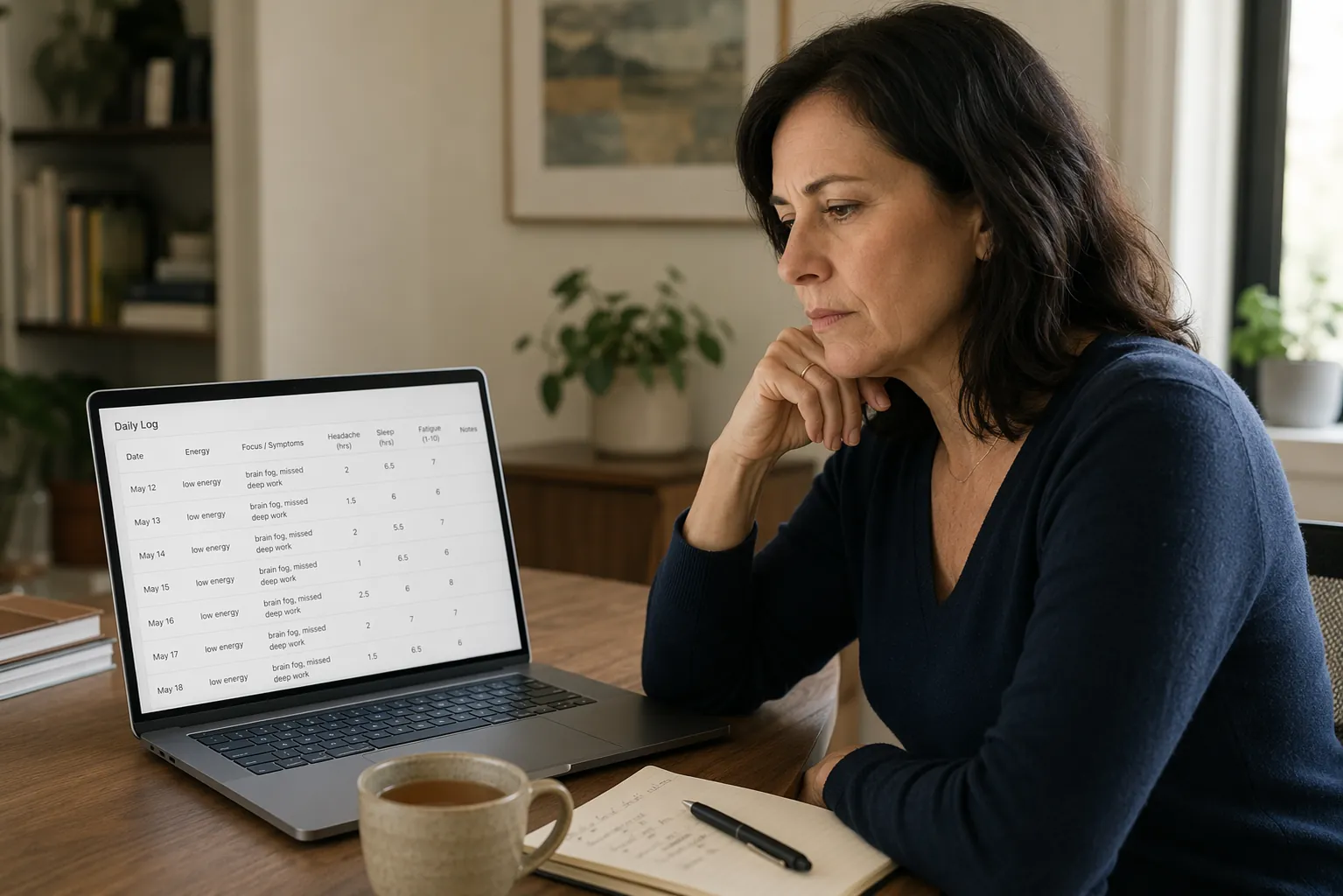
A note system cannot diagnose sleep apnea. It can, however, preserve the pattern that a short appointment may not have time to reconstruct. The purpose of the 14-day log below is simple: collect symptom-level evidence in Obsidian, Notion, or Apple Notes, then hand your clinician a concise record that makes the right testing conversation easier to have.
Why the Standard Screen Can Miss Women in Perimenopause
Many screening conversations still orbit the familiar stereotype: loud snoring, witnessed pauses in breathing, high daytime sleepiness, larger neck circumference, and a higher body weight profile. Those signals matter. The problem is that they are not the only presentation.
STOP-BANG, one of the better-known obstructive sleep apnea screening tools, assigns a point for being male and does not include menopause status. Dr. Jonna Morris of the ResMed Sleep Institute has highlighted that omission as part of the reason women can be falsely reassured by a low-risk score even when their symptom pattern deserves attention.[2]
The female presentation can be quieter and easier to misfile. A review on obstructive sleep apnea in women reports that women may present with insomnia, fatigue, depression, anxiety, morning headaches, and sleep disruption rather than the classic cluster of loud snoring and witnessed apneas. The same review notes that obstructive events in women may be shorter and more REM-related, which can contribute to lower apnea-hypopnea index scores in some testing contexts.[3]
Menopause changes the risk conversation. The same review reports that 20% of women develop obstructive sleep apnea during menopause and that 47% to 67% of post-menopausal women have obstructive sleep apnea.[3] Those numbers do not mean every tired perimenopausal woman has apnea. They do mean that “I do not look like the standard apnea patient” is not a strong enough reason to drop the question.
There is also a practical work reason to take the pattern seriously. A 2026 Thorax analysis reported an estimated $180.2 billion in annual U.S. productivity loss from untreated obstructive sleep apnea, including $3,727 per affected worker per year; because the research was surfaced in early 2026, the exact figures should be checked against the final paper before being treated as settled policy numbers.[4] Separately, an American Academy of Sleep Medicine and Frost & Sullivan report estimated that CPAP treatment reduces workplace absences by about 40% among affected workers.[5]
The 14-Day Log: What to Track and Why
The log should be boring enough to complete before coffee and specific enough to be useful in a medical conversation. Fourteen days is not magic; it is a practical window long enough to show repetition across weekdays, weekends, hormones, workload changes, and sleep schedule variation without turning the project into another abandoned tracker.
| Field | How to record it | Why it belongs in the log |
|---|---|---|
| Sleep hours | Estimate time asleep, not just time in bed | Separates short sleep from unrefreshing sleep after an apparently adequate night |
| Morning headache duration | Record minutes until it resolves or clearly improves | Morning headaches that resolve within about 60 minutes are described as a sleep apnea clue, often linked to overnight oxygen desaturation |
| Nocturia count | Count bathroom trips after trying to sleep | Two or more trips per night can be a relevant signal because apneic events may trigger atrial natriuretic peptide release |
| Dry mouth on waking | Yes, no, or unsure | Supports a pattern of mouth breathing, snoring, or airway-related sleep disruption |
| Unrefreshing sleep | 0 to 5 scale, where 0 is refreshed and 5 is fully unrefreshed | Captures the mismatch between hours slept and recovery |
| Energy score | 0 to 5 score by late morning | Links sleep disruption to the part of the day where work consequences appear |
| Cognition score | 0 to 5 score for focus, word-finding, recall, and decision speed | Captures the productivity complaint in a way a task list alone cannot |
| Insomnia or awakenings | Brief notes: trouble falling asleep, waking often, early waking, panic-like waking | Female OSA may present as insomnia or fragmented sleep rather than obvious sleepiness |
| Context notes | Alcohol, sedatives, illness, travel, intense stress, unusual schedule | Helps a clinician distinguish persistent patterns from one-off disruptions |
Do not over-engineer the scores. A 0-to-5 scale is enough: 0 means no problem, 5 means severe enough to alter the day. The point is not mathematical purity. The point is to stop writing “bad morning” and start capturing whether the same bad morning has the same components.
Morning Headache Duration
Do not record only “headache: yes.” Record how long it lasts. The sleep-apnea-relevant version is often a headache on waking that improves within about an hour, which is why duration matters.[1] If the headache lasts all day, behaves like a migraine, or follows another familiar pattern, that still belongs in the note; it just gives your clinician a different thread to pull.
Nocturia Count
Nocturia is easy to normalize in midlife, especially if you have already blamed hydration, pelvic floor changes, or “just getting older.” For this log, count it anyway. Two or more bathroom trips a night is one of the symptom signals described in clinical sleep-apnea education, with a proposed mechanism involving atrial natriuretic peptide release during apneic events.[1] The note does not prove the mechanism in your case. It makes the pattern visible.
Unrefreshing Sleep After Enough Hours
This is the field that catches the person who slept seven or eight hours and still feels drugged at 9 a.m. If you only track bedtime and wake time, the data may falsely suggest the sleep opportunity was adequate and the problem must be motivation. Add the recovery score. A full night in bed that repeatedly produces low cognition is not the same operational problem as staying up too late.
Energy and Cognition Scores
Track energy and cognition separately. Energy is the ability to initiate and sustain effort. Cognition is the ability to think clearly: focus, word retrieval, working memory, decision speed, and error rate. A person can push through low energy and still know her brain is usable. A cognition score gives language to the more alarming experience: opening the same document five times and not being able to hold the next sentence in mind.
Insomnia, Anxiety-Like Waking, and Fragmented Sleep
If you wake at 3 a.m. with your heart racing, or spend the night in shallow fragments, do not reduce the entry to “insomnia.” Write the form it took. Female obstructive sleep apnea may show up as insomnia, fatigue, depression, anxiety, and sleep disruption, which makes it easier to route the conversation toward stress alone if the overnight breathing question is never raised.[3]
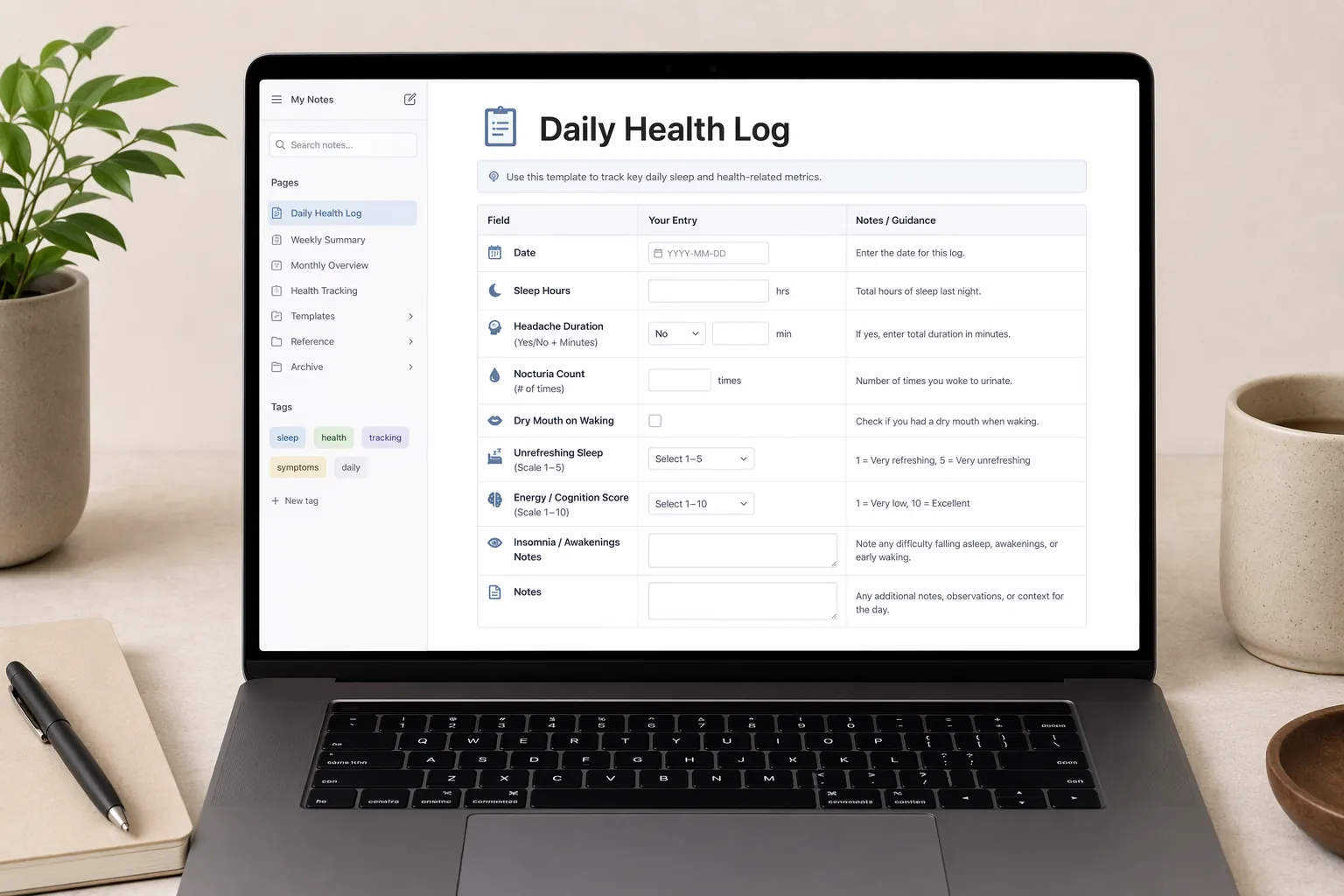
Build It in the Note App You Already Use
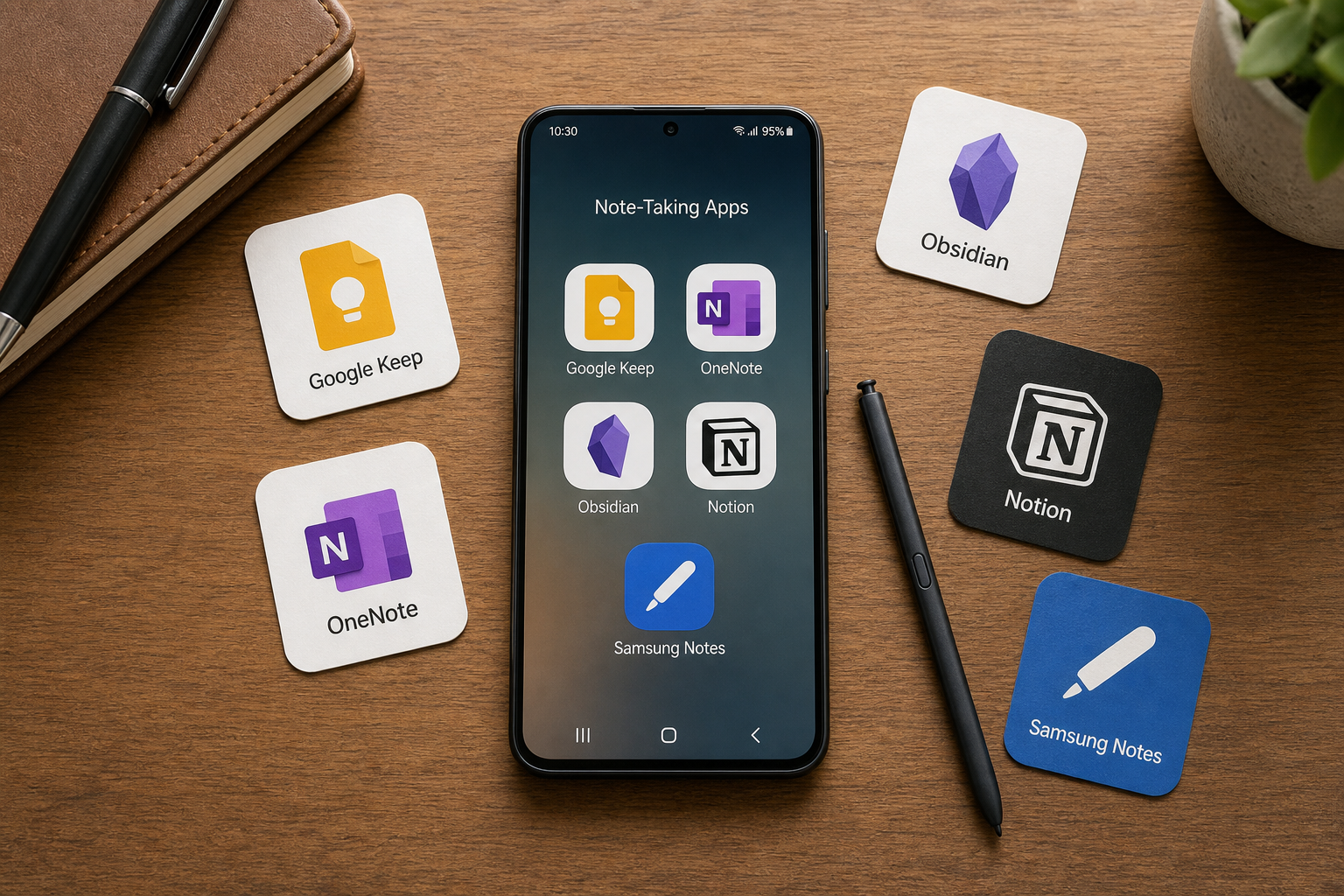
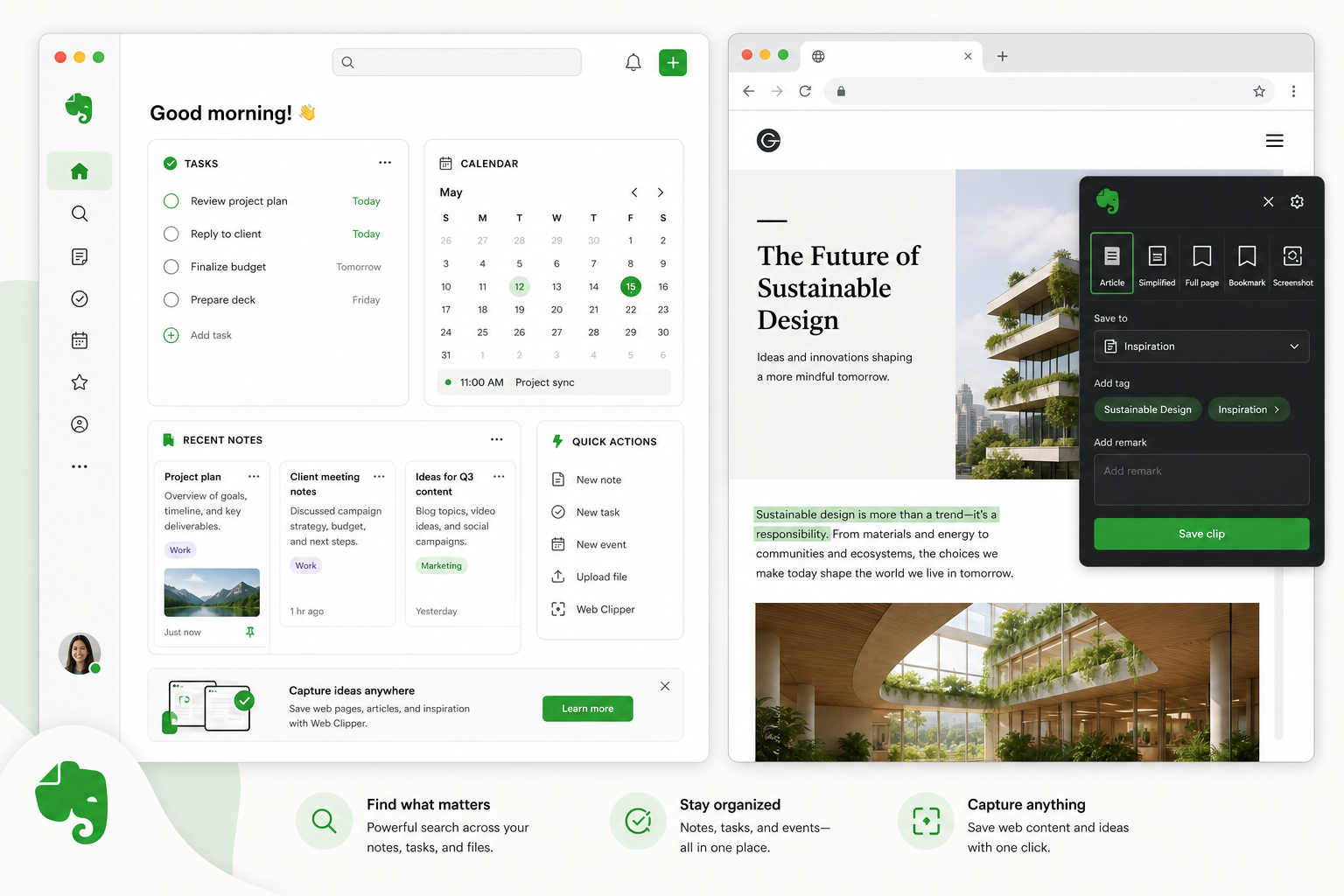
The best tracker is the one you will use while tired. If Obsidian is where your daily notes already live, use Obsidian. If Notion is your dashboard, use Notion. If Apple Notes is the only thing you reliably open before breakfast, use Apple Notes. Migration can wait.
Obsidian Version
In Obsidian, put the log directly inside your daily note template so the health data sits beside the work consequences. That proximity is useful: you can see whether headache duration, nocturia, and low cognition cluster on the same mornings as missed deep work.
## Sleep and Symptom Log

- Sleep hours:
- Morning headache: none / yes
- Headache duration, minutes:
- Nocturia count:
- Dry mouth on waking: no / yes / unsure
- Unrefreshing sleep, 0-5:
- Energy by late morning, 0-5:
- Cognition by late morning, 0-5:
- Insomnia or awakenings:
- Context notes:
- Work impact, if any:
If you use tags, keep them limited. One tag such as #sleep-log is enough. A second tag such as #doctor-summary can mark the days you later include in the appointment packet. Resist the urge to build a full health ontology while symptomatic.
Notion Version
In Notion, use a small database rather than a long page. Each day is one row. Use number properties for sleep hours, headache minutes, nocturia count, unrefreshing sleep, energy, and cognition. Use checkboxes or select fields for dry mouth and morning headache. Use a text property for awakenings and context.
| Property | Type | Suggested values |
|---|---|---|
| Date | Date | Day tracked |
| Sleep hours | Number | Estimated hours asleep |
| Headache minutes | Number | 0 if none |
| Nocturia | Number | Count of bathroom trips after trying to sleep |
| Dry mouth | Select | No, Yes, Unsure |
| Unrefreshed | Number | 0 to 5 |
| Energy | Number | 0 to 5 |
| Cognition | Number | 0 to 5 |
| Awakenings | Text | Brief description |
| Work impact | Text | Missed deep work, late start, errors, nap, none |
Create one view sorted by date and one filtered view for rows where headache minutes are greater than 0, nocturia is 2 or higher, or cognition is 3 or higher. The filtered view is not a diagnosis; it is a fast way to find the days that deserve attention before an appointment.
Apple Notes Version
Apple Notes works best if you make one pinned note called “14-Day Sleep and Symptom Log” and add a new dated entry each morning. Use the same order every day. Consistency matters more than database features.
Date:
Sleep hours:
Headache duration:
Nocturia count:
Dry mouth:
Unrefreshing sleep 0-5:
Energy 0-5:
Cognition 0-5:
Insomnia or awakenings:
Context:
Work impact:
At the end of 14 days, copy the entries into a simple table or export the note as a PDF. Apple Notes will not give you elegant database filters, but it will give you the most important thing: a contemporaneous record written close to the symptom, not reconstructed from memory in an exam room.
What Counts as a Pattern Worth Flagging
You are not looking for one dramatic night. You are looking for repetition. In the summary, flag patterns such as morning headaches on multiple days, headaches that improve within about an hour, nocturia two or more times a night, dry mouth on waking, unrefreshing sleep despite adequate hours, frequent awakenings, and repeated low cognition scores in the morning.
Also flag mismatches. “Slept 7.5 hours, cognition 4/5 impaired, unrefreshed 5/5” is more useful than “tired.” “Nocturia 3, woke with dry mouth, headache 45 minutes” is more useful than “bad sleep.” Clinical conversations improve when the raw experience becomes a pattern with dates attached.
If you have a bed partner who has observed snoring, gasping, pauses, or restless sleep, add that in a separate note. Do not manufacture certainty if no one has observed it. One reason women are missed is that their presentation may not rely on the loud-snoring story in the first place.[3]
Turn the Notes Into a Doctor-Ready Summary
Do not bring your clinician 14 full daily notes and expect them to find the signal. Bring the record, but lead with a one-page summary. The appointment artifact should have three parts: a concise pattern paragraph, a small table, and a direct testing question.
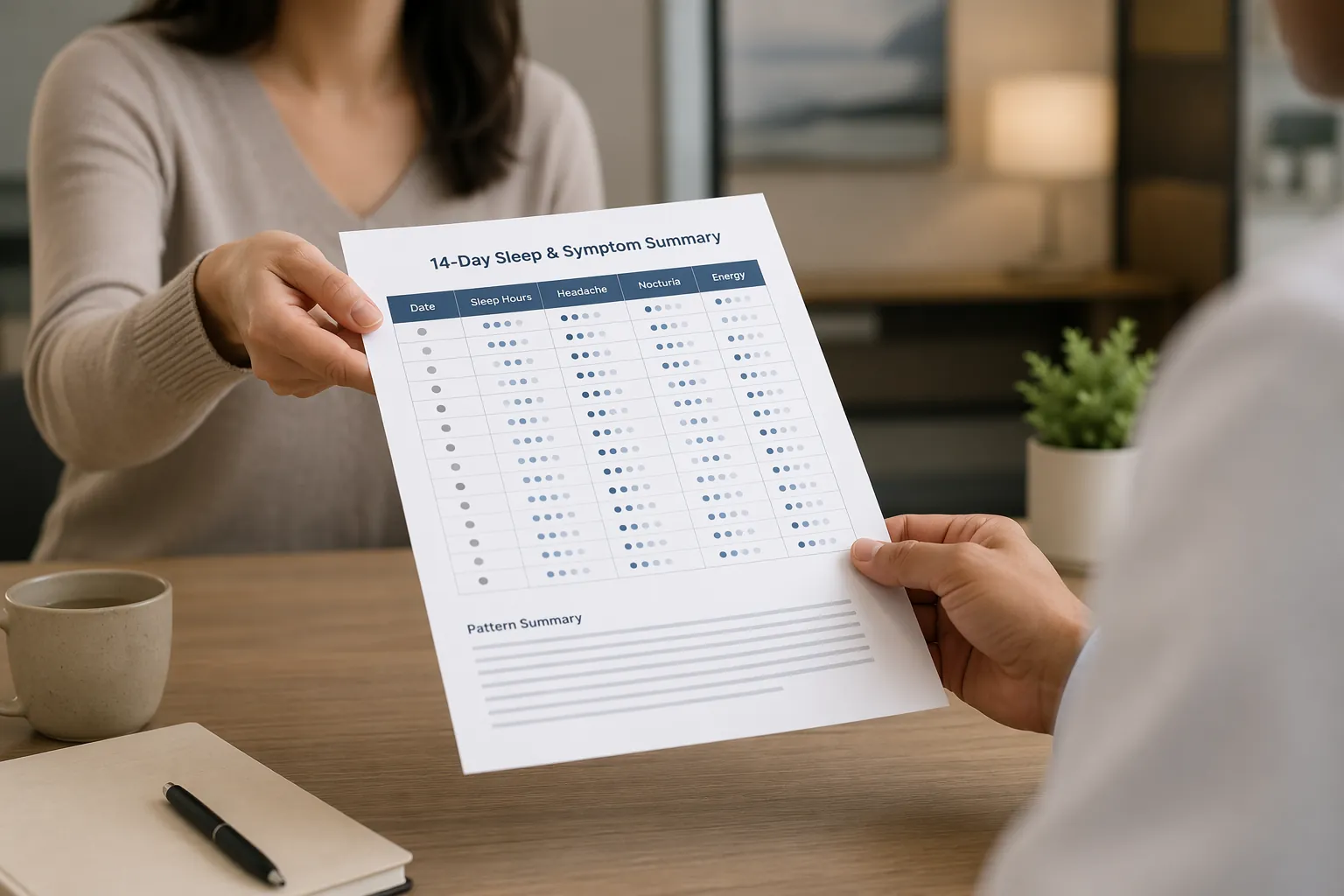
The Pattern Paragraph
Write this in plain clinical language. No diagnosis. No argument. Just dates, repeated symptoms, and functional impact.
Over 14 days, I recorded repeated unrefreshing sleep despite adequate time in bed, morning headaches on several days that improved within about an hour, nocturia of 2 or more trips on multiple nights, dry mouth on waking, and low morning cognition scores that affected work. I am in perimenopause and am concerned that obstructive sleep apnea could be contributing, even though I do not fit the stereotypical presentation.Adjust the sentence to match your actual data. If you did not have morning headaches, do not include them. If nocturia was the dominant signal, lead with that. The strength of the summary is that it does not overclaim.
The 14-Day Table
The table should be scannable in under a minute. Use abbreviations only if you define them. Include the fields that connect symptoms to sleep quality and daytime function.
| Date | Sleep hrs | Headache min | Nocturia | Dry mouth | Unrefreshed 0-5 | Energy 0-5 | Cognition 0-5 | Awakenings / notes |
|---|---|---|---|---|---|---|---|---|
| Day 1 | ||||||||
| Day 2 | ||||||||
| Day 3 | ||||||||
| Continue through Day 14 |
If you are using Notion or Obsidian and can export a clean PDF, do that. If not, print the summary and keep the full log on your phone. The clinician may not need every row, but the existence of the row-level record makes the summary more credible.
The Testing Question
Ask a direct question that leaves the medical decision with the clinician:
Given this 14-day pattern, my perimenopause status, and the fact that women can have insomnia, fatigue, REM-concentrated events, and lower AHI scores, should we evaluate for obstructive sleep apnea? Would an in-lab polysomnogram be more appropriate than a home sleep apnea test in my case?That question matters because a home sleep apnea test can be useful in many situations, but the concern here is a borderline, REM-heavy, or otherwise easy-to-miss presentation. The literature describes women as more likely to have REM-related events and lower AHI scores, so the testing method is part of the diagnostic conversation rather than an administrative detail.[3]
What Not to Do With the Log
- Do not use the log to diagnose yourself with sleep apnea.
- Do not stop or start treatment based on a note-app pattern.
- Do not hide symptoms that do not fit the apnea theory; migraines, depression, thyroid issues, medication effects, anemia, and other conditions can also affect sleep and cognition.
- Do not turn the tracker into a perfection project; missing one day is less important than preserving the overall pattern.
- Do not accept a low screening score as the whole answer if your symptom pattern and perimenopause status still raise concern.
The log is evidence for a conversation. It is not medical advice. Diagnosis, test selection, and treatment belong with a qualified clinician who can evaluate the whole picture.
Why This Is Worth the Small Amount of Friction
There is a reason the productivity angle should not be waved away as vanity. Untreated obstructive sleep apnea is associated with lost work capacity, absenteeism, and cognitive strain, and the workday is often where the damage becomes measurable. If your morning cognition repeatedly collapses after what looks like adequate sleep, the calendar and task manager will register the failure, but they will not explain it.
There are also brain-health reasons not to let the pattern drift indefinitely. UCLA researchers reported in 2012 that women with obstructive sleep apnea showed more severe white matter injury than men in several brain regions involved in mood regulation and decision-making.[6] A later PLOS One study from 2018 reported sex-related differences in brain injury among people with obstructive sleep apnea, but its sample was modest, including 12 women and 36 men, so the finding should be treated as a serious signal rather than a stand-alone prediction for any individual patient.[7]
That is the right level of urgency: enough to track and ask, not enough to panic. The practical failure is not that a person feels tired. The practical failure is that the same symptom cluster can sit inside daily notes for months while everyone keeps optimizing the system around it.
A note system cannot tell you whether you have obstructive sleep apnea. It can make the missing pattern harder to dismiss.
References
- Women and Sleep Apnea, The Sleep Clinic MD
- Women and Sleep Apnea: Closing the Diagnosis Gap, ResMed Sleep Institute, 2025
- Obstructive Sleep Apnea: Women’s Perspective, Journal of Sleep Medicine & Disorders, 2016
- Untreated obstructive sleep apnea and productivity loss in the United States, Thorax, 2026
- Hidden Health Crisis Costing America Billions, American Academy of Sleep Medicine and Frost & Sullivan
- Sleep apnea may affect women more severely than men, UCLA School of Nursing, 2012
- Sex differences in brain injury in obstructive sleep apnea, PLOS One, 2018




Comments
Join the discussion with an anonymous comment.