
The Pomodoro Technique: Popular — But Does It Hold Up?
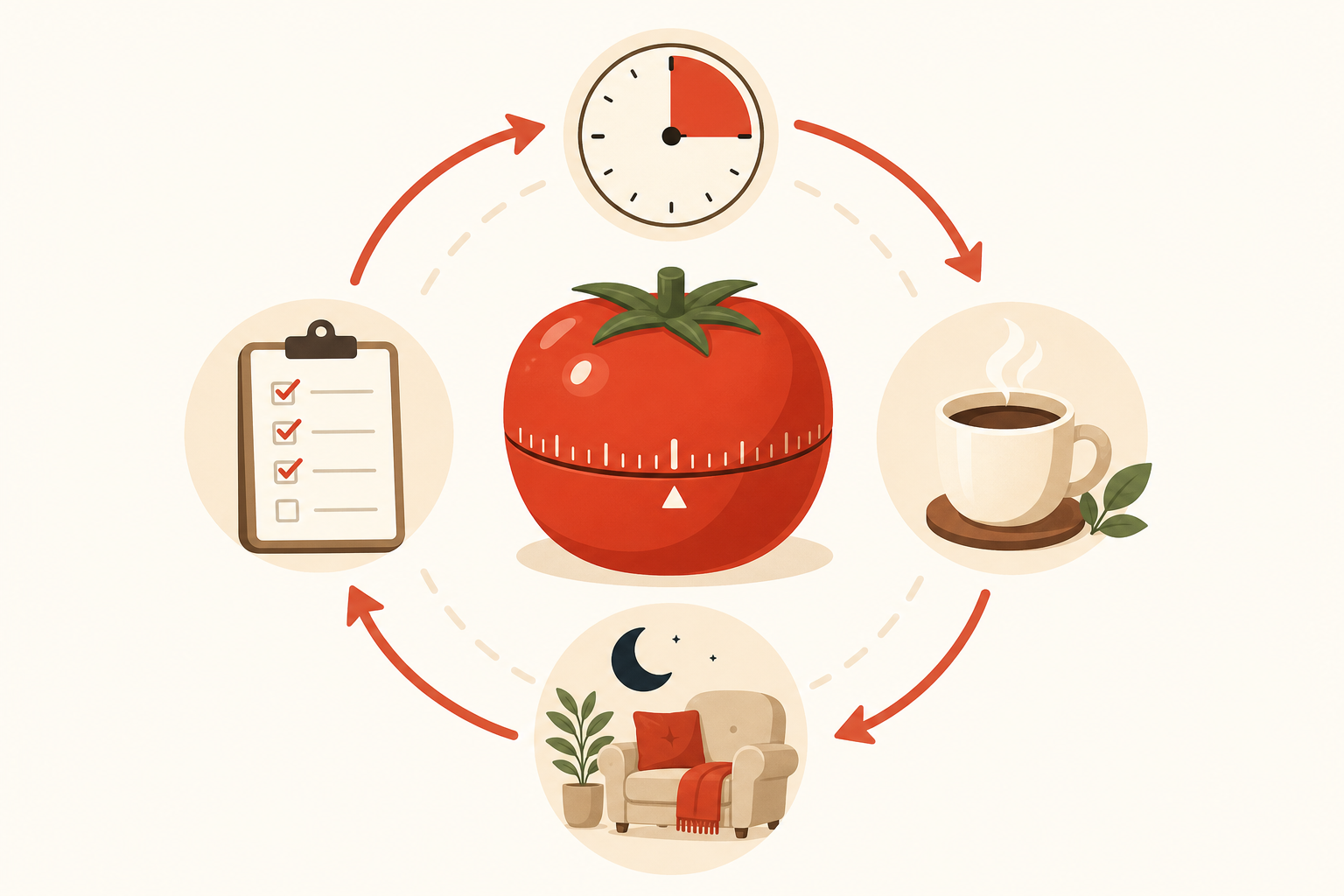
If you've searched for productivity hacks in the last decade, you've encountered the Pomodoro Technique: work for 25 minutes, take a 5-minute break, and after four cycles take a longer break. It sounds almost too simple to be effective. Yet millions of people use it, and a steady stream of research claims it reduces fatigue and improves focus. This article takes a skeptical, evidence-based look at what the science actually says — and whether the technique deserves a place in your workflow.
What the Largest Research Review Found
The most comprehensive analysis to date comes from a 2025 scoping review published in BMC Medical Education by Ogut and colleagues. The review examined 32 studies with a total sample of 5,270 participants (median 87 per study), including three randomized controlled trials (n=87). The findings are striking: 88% of all studies reported positive outcomes for structured Pomodoro intervals compared to self-paced or unstructured breaks.
| Metric | Improvement vs. Self-Paced Breaks | Source |
|---|---|---|
| Fatigue reduction | Approximately 20% lower | 2025 scoping review (Ogut et al.) |
| Motivation (Likert scale) | 0.4-point increase | Same review |
| Distractibility (Likert scale) | 0.5-point improvement | Same review |
| Study designs included | 32 studies (57% with validated measures) | Same review |
It's worth noting that most of these studies were conducted in anatomy education contexts — students learning gross anatomy using timed study sessions. The consistency of results across different student populations is encouraging, but the applicability to other knowledge work domains is an inference, not a direct finding. Still, the magnitude of the reported benefits is large enough to warrant serious attention.
The Cognitive Science Behind the 25-Minute Interval
Why 25 minutes? The interval isn't arbitrary. It aligns with a well-documented phenomenon called the vigilance decrement. In 1948, psychologist Norman Mackworth found that performance on sustained attention tasks drops 15–30% after roughly 20–30 minutes. Cognitive scientist Apoorva Bhandari of Brown University cited this exact finding in a March 2026 fact-check article to explain why the Pomodoro Technique's length makes sense: it schedules a break before attention naturally begins to collapse.
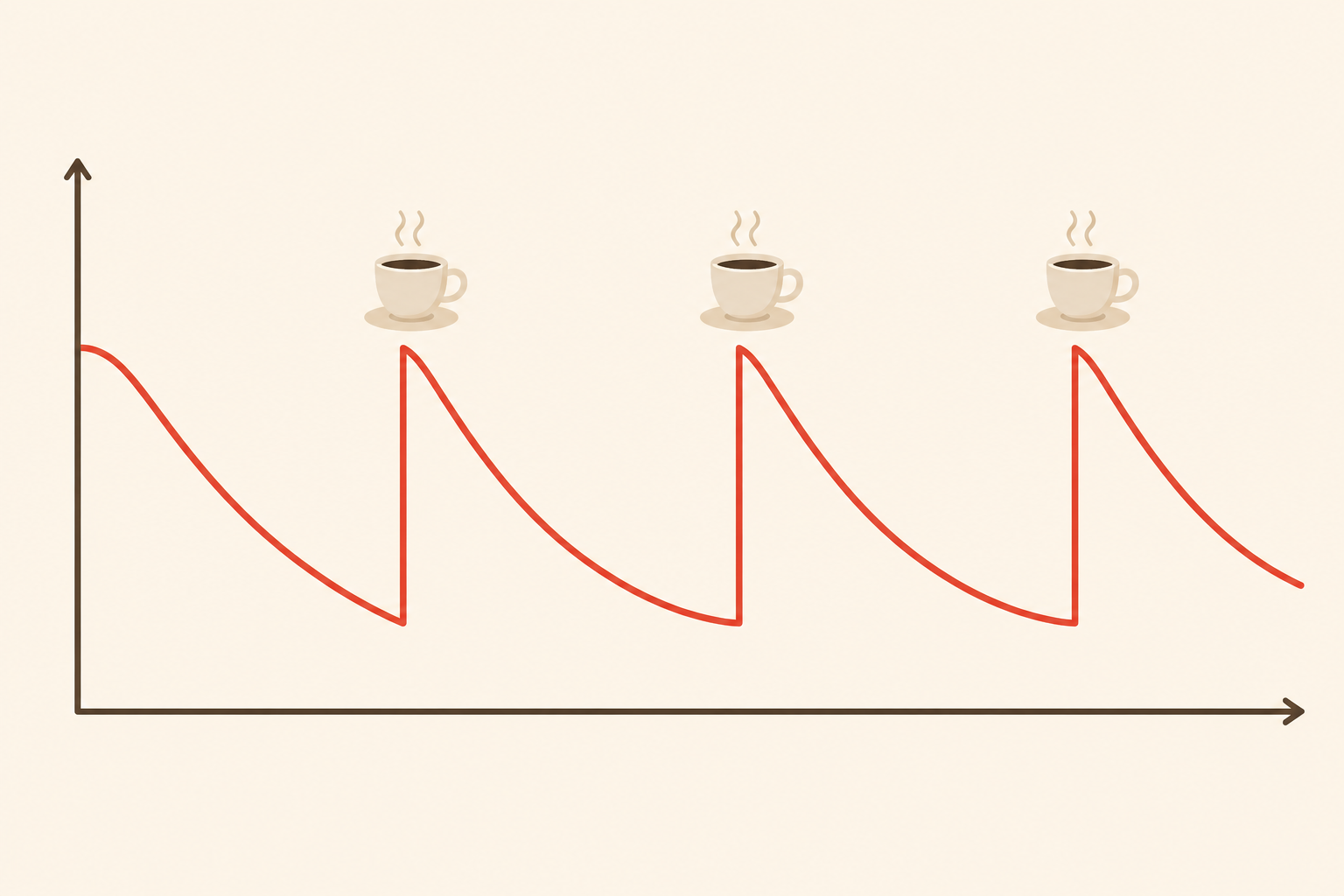
Two other psychological principles support the technique. The Zeigarnik effect — named after Soviet psychologist Bluma Zeigarnik — shows that interrupted tasks are easier to resume than completed ones. A timer-enforced break creates a state of tension that makes returning to work feel more natural. And attention restoration theory suggests that brief, unfocused breaks (especially in natural environments) replenish cognitive resources more effectively than continuing to push through fatigue.
What the 2023 Biwer Study Found (and What It Missed)
Not all evidence is rosy. A 2023 study by Biwer and colleagues (PubMed 36859717) compared 25 Pomodoro users with 35 participants who took self-regulated breaks. The Pomodoro group reported significantly less fatigue and higher concentration and motivation — but there was no meaningful difference in actual task completion or mental effort compared to the self-regulated group. In other words, the technique made people feel better, but it didn't necessarily help them get more done.
What this study suggests is that the Pomodoro Technique may act more as an energy-management tool than a throughput booster. If your main struggle is maintaining focus and avoiding burnout rather than raw output, the technique could still be valuable — even if it doesn't move the needle on the number of tasks finished per day.
The Neuroscience Angle: Dopamine and the Prefrontal Cortex
The 2025 scoping review also noted emerging evidence from neuroscience: the Pomodoro Technique may work by modulating dopamine release and reducing overload in the prefrontal cortex — the brain region responsible for executive functions like planning, decision-making, and impulse control. The structured intervals create predictable start and end points, which can help the brain allocate attentional resources more efficiently and reduce the impulsive urge to switch tasks.
To be clear, direct neuroscientific studies of the Pomodoro Technique are sparse. Most of the evidence comes from broader research on interval training, timed tasks, and break scheduling. But the convergence is plausible: activities that chunk time into short, bounded units tend to sustain engagement by providing frequent reward signals (completing a "pomodoro") and preventing the prefrontal cortex from becoming depleted by prolonged, unstructured effort.
Where the Evidence Gets Thin
Despite the encouraging data, there are significant gaps. No long-term retention studies have been conducted — we don't know whether Pomodoro users retain information better after weeks or months. Most of the research is short-term and lab-based, with tasks that don't resemble the messy, multi-hour projects that knowledge workers face daily. Publication bias is also a concern: studies with null or negative results are less likely to be published, so the 88% positive-outcome rate may overstate the true effect.
Furthermore, the technique's popularity may have outpaced its evidence base. Many articles and app descriptions present it as a universal productivity hack, but the research suggests it's a helpful tool under specific conditions — not a one-size-fits-all solution.
Why 'Just Use a Timer' Isn't the Technique
One of the biggest misconceptions about the Pomodoro Technique is that it's nothing more than setting a timer for 25 minutes. The original system, as laid out by Cirillo, includes daily planning, interruption logging, effort estimation, and a structured review process. The timer is just the starting point.
"Your goal isn't to complete Pomodoros. Your goal is to become aware of what happens in your mind." — Francesco Cirillo, official site

Without the surrounding practices — planning what to work on, recording interruptions, estimating how many pomodoros a task requires, and reviewing completed sessions — you're essentially just using a countdown timer. That might help with pacing, but it won't deliver the deeper benefits of improved time awareness and reduced anxiety that the full technique aims for.
The Verdict: Conditions for Effectiveness
So, does the Pomodoro Technique actually work? The evidence says: conditionally. It's a solid tool for task initiation — that first step that often feels hardest. It helps with sustained attention by preventing the vigilance decrement. It reduces mental fatigue, which can be a game-changer for long study or work sessions. And for people prone to procrastination, the low barrier of committing to just 25 minutes can break the inertia.
| Use Pomodoro When... | Avoid Pomodoro When... |
|---|---|
| You're struggling to start a task | You're in a state of deep creative flow |
| Tasks are routine, bounded, or require sustained focus | Tasks require long, uninterrupted concentration (e.g., coding a complex algorithm, writing a book chapter) |
| You feel mentally fatigued or distracted | You're doing collaborative work that doesn't fit 25-minute blocks |
| You want to build time-awareness and estimate effort | You have only 10 minutes before a meeting — use that time directly |
If you're looking for complementary methods, consider combining it with time-blocking techniques to structure your day, or adopting the PARA method to organize your projects and notes. Neither replaces the Pomodoro Technique — they work at different levels of your productivity system.
Comments
Join the discussion with an anonymous comment.