
Last verified: 2026-08-01. I tested DeepSeek V4 vs ChatGPT for organizing Obsidian notes by sending both models through the same OpenAI-compatible plugin layer, against the same vault sample, with the same instructions and the same review boundary. The short verdict: the plugin layer is not the differentiator. DeepSeek V4 is the better choice when the output stays reviewable — tag plans, folder suggestions, summaries, inbox triage, and merge candidates. ChatGPT is the safer default when the workflow can rename, move, merge, or delete files before you inspect the diff.
That verdict rests on a very practical split. DeepSeek V4’s 1M-token context makes whole-vault or near-whole-vault passes realistic in a way that smaller default ChatGPT contexts do not. DeepSeek V4-Pro is described as a 1.6T-total, 49B-active MoE model with a 1M-token context window and an MIT license, announced on April 24, 2026; V4-Flash is listed separately with a 284B-total, 13B-active configuration and the same 1M-token context direction in secondary coverage.[1][2] ChatGPT Plus is the more natural everyday comparison at roughly 256K reasoning context, while the much more expensive ChatGPT Pro tier is the one described as reaching roughly 1M tokens, or about 680 pages.[3]

What was actually tested
The test was not “which chatbot gives nicer advice about note-taking.” Both models were connected to Obsidian through the same plugin path and asked to work on the same copied vault sample. The sample included the kinds of things that make a real vault irritating to maintain: uneven tags, loose inbox notes, overlapping project notes, older summaries that no longer matched the files around them, and notes that looked similar enough to tempt an AI into a bad merge.
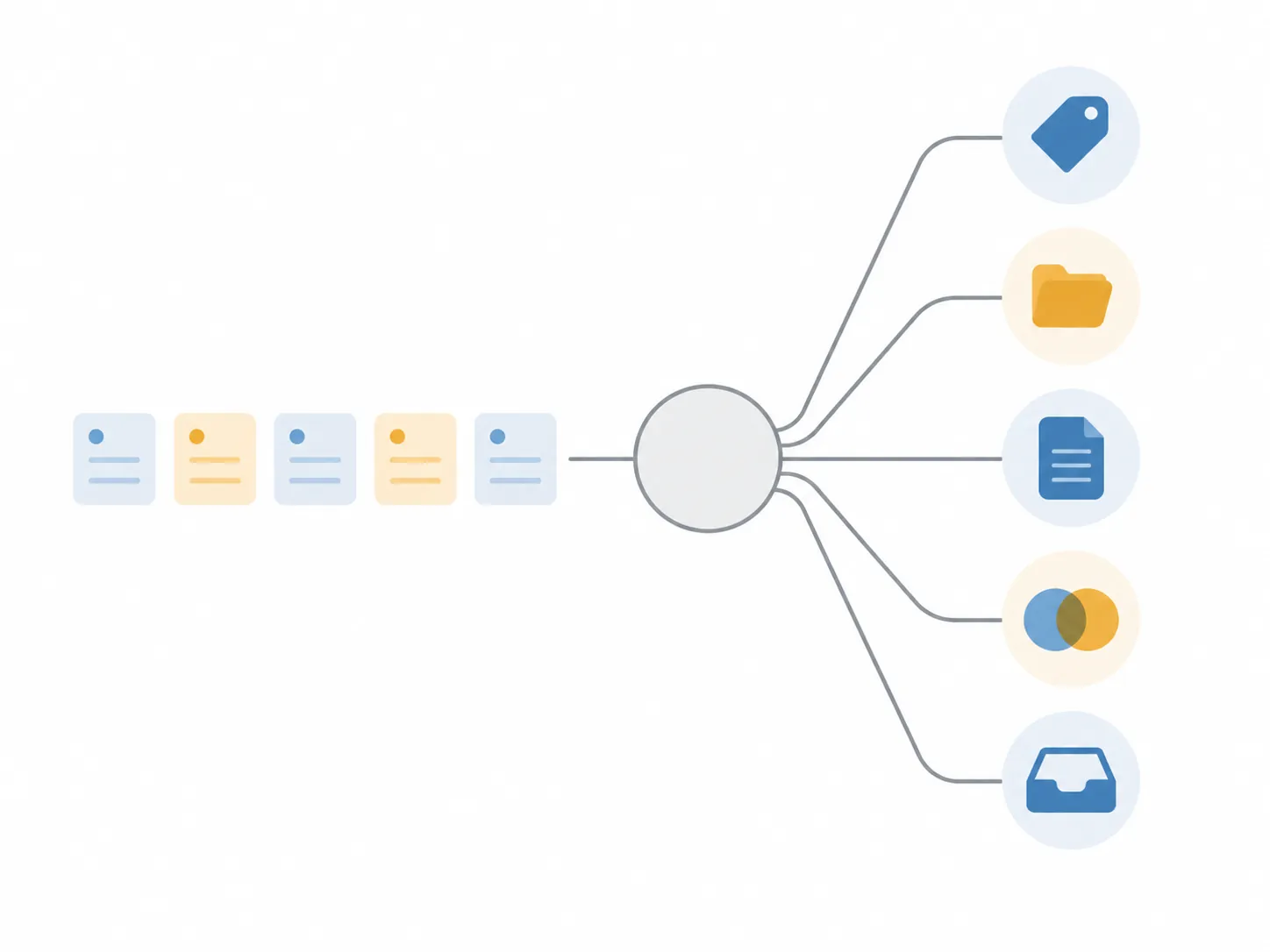
The instructions covered five organization jobs: propose a tag cleanup, suggest folder moves, write or refresh summaries, identify possible duplicates or merge candidates, and triage inbox notes. For destructive operations, the model was asked to produce a proposed change list first. A proposal could pass the test. A direct file change without a clean review path could not.
| Test boundary | How it was held constant |
|---|---|
| Obsidian access | Same OpenAI-compatible plugin layer |
| Vault material | Same copied vault sample |
| Instructions | Same organization instructions for tags, folders, summaries, dedup/merge, and inbox |
| Review rule | Suggestion first; destructive change only after a visible approval step |
| Date | Last verified on 2026-08-01 |
I did not spend the test trying to make one plugin look better than another. Copilot for Obsidian, ChatGPT MD, Text Generator, and Tars matter here because they can turn the model endpoint into a replaceable part of the workflow. ChatGPT MD is especially relevant to the safety discussion because its public repo documents approval-gated tool calling in v3.0 and agents in v3.1.[4] Broader Obsidian AI plugin roundups also treat the ecosystem as a layered stack — capture, composition, retrieval, and automation — rather than as one monolithic “AI notes” feature.[5][6]
Where DeepSeek V4 was better
DeepSeek V4 felt most useful when the job benefited from seeing more of the vault at once. In the tag cleanup pass, it was better at noticing that several tags belonged to the same messy family and should be reviewed together. In the folder pass, it produced broader relocation plans instead of treating each note as an isolated filing decision. In inbox triage, it could keep more surrounding context in view before deciding whether a note looked like a project note, a reference note, or something that should stay in capture.
That matters because Obsidian organization is rarely a single-note problem. A tag that looks fine inside one file may be redundant across fifty related files. A note that looks like a duplicate may actually be a later synthesis of older reading notes. A folder move can be harmless for one file and damaging when it breaks the local logic of a cluster. Large context does not make those judgments automatically correct, but it changes the class of prompt you can reasonably run.
For reviewable work, that is the main reason I would choose DeepSeek V4 first. I would rather ask one model to inspect a large slice of the archive and return a change plan than run a dozen narrow passes that each see too little. The fewer times I have to re-explain the vault’s conventions, the less room there is for the workflow itself to create inconsistency.
The DeepSeek passes that worked best
- Tag consolidation proposals, especially when the model was asked to show “keep,” “merge into,” and “needs human decision” columns.
- Folder placement suggestions where the model had to justify a move using nearby notes, not just the current note title.
- Inbox triage into review queues, because the cost and context window made repeated cleanup passes less painful.
- Cross-note summaries where the output was saved as a draft summary, not written over the original note.
Where ChatGPT was safer
ChatGPT was more comfortable in the parts of the test where the model needed to slow down, expose uncertainty, or follow a tool boundary. It was less exciting for broad vault-wide passes, but it was steadier when the prompt said to separate confident recommendations from items that needed review. That is the behavior I want near destructive operations.
The benchmark picture points in the same direction, though it should not be treated as a vault test. DataCamp’s comparison reports DeepSeek V4-Pro at 83.5 on MRCR 1M retrieval and GPT-5.5 at 74.0 on an MRCR v2 8-needle 512K–1M format, while GPT-5.5 is reported stronger on Terminal-Bench 2.0 tool-calling reliability, 82.7 vs V4-Pro’s 67.9. Those formats differ, so the numbers are directional, not a clean scorecard.[7]
In Obsidian terms, the distinction is simple. Retrieval strength helps when the model needs to find related notes, compare similar concepts, and draft a plan across a large vault. Tool-calling reliability matters more when a plugin can actually touch files. If the next action is “show me a proposed tag map,” DeepSeek’s advantage is valuable. If the next action is “rename these files and move them,” ChatGPT’s conservatism is worth more.
The approval boundary is the real decision point
The risk that matters most in a vault is not a funny hallucinated paragraph. It is false confidence. A model that answers when it should abstain can invent a tag relationship, collapse two notes that should remain separate, or declare that a file is safe to move because it misunderstood a local convention.
That is why DeepInfra’s unknown-answer note is more worrying than a generic hallucination warning. Its V4-Pro overview says the model answers rather than abstains on about 94% of unknown-answer cases on the AA-Omniscience benchmark. This is a single-vendor-sourced benchmark note, not an Obsidian damage rate, but it maps directly to organization work where “I don’t know” is often the safest answer.[8]

| Vault task | DeepSeek V4 permission | ChatGPT permission |
|---|---|---|
| Suggest tags | Yes, with review | Yes, with review |
| Apply tags automatically | Only behind approval and diff | Only behind approval and diff |
| Suggest folder moves | Yes, especially for large context passes | Yes, especially for cautious review queues |
| Move files | No direct write without approval | Prefer ChatGPT if direct tool use is unavoidable, but still require approval |
| Summarize notes | Yes, as drafts or append-only summaries | Yes, as drafts or append-only summaries |
| Merge duplicates | Candidate list only | Candidate list preferred; direct merge only with explicit human confirmation |
| Delete notes | No | No, unless the vault has approval gates, diffs, and version control |
The safer pattern is boring and non-negotiable: ask for a plan, review the plan, apply the plan in small batches, and keep a Git-backed vault or equivalent version history. ChatGPT MD’s approval-gated tool flow is one example of the right shape for this boundary.[4] Sébastien Dubois makes the related point from daily Obsidian practice: AI memory can store information pseudo-randomly and pollute context, while the vault itself should remain the inspectable source of truth, protected by Git when AI workflows touch it.[9]
Cost and context change the cleanup math
For a small vault, model cost may feel abstract. For repeated organization passes over a large Obsidian archive, it becomes the difference between “I can run this whenever the inbox gets ugly” and “I should save this for a special cleanup day.” DeepSeek V4 is attractive because its pricing and 1M-token context aim directly at the annoying middle of PKM work: not one note, not a public web search, but a private archive that needs repeated passes.
There is one pricing caveat I would not bury. Available DeepSeek V4-Pro price records conflict: the launch-level figure of $1.74 input and $3.48 output per 1M tokens, and a later official-page reread that recorded $0.435 input and $0.87 output per 1M tokens, plus peak/off-peak windows and very low cache-hit input rates. DeepSeek’s official pricing page is the controlling source, and its caching is documented as best-effort rather than a guaranteed hit rate.[10]
The comparison still points the same way even if you use the more conservative launch-level DeepSeek number. GPT-5.5 API pricing is listed at $5.00 input and $30.00 output per 1M tokens, and ChatGPT’s consumer tiers separate the more affordable Plus plan from the far more expensive Pro plan that reaches the larger context tier.[3]
| Decision factor | DeepSeek V4 | ChatGPT |
|---|---|---|
| Large-context vault pass | Strong fit: 1M-token context is the headline advantage | Plus is smaller by default; Pro changes the context comparison at a much higher subscription tier |
| Repeated cleanup cost | Strong fit if current official pricing is available for your endpoint; verify before large runs | More expensive on API output in the cited GPT-5.5 pricing comparison |
| Tool-calling safety | Use for proposals; be stricter before writes | Better choice when tools may act on files, but still needs approval |
| Unknown or ambiguous notes | Requires explicit abstain instructions and human review | Still needs review, but was steadier in the tested approval-bound workflow |
| Best use in Obsidian | Whole-vault analysis, tag maps, inbox plans, summary drafts | Approval-heavy operations, cautious merges, tool-mediated edits |
How I would route the same vault tomorrow
For a normal working vault, I would not pick one model globally. I would route by permission level.
- Use DeepSeek V4 for read-heavy and reviewable jobs: tag audits, folder proposals, inbox grouping, cross-note summaries, and duplicate candidate lists.
- Use ChatGPT when a plugin agent may call tools that rename, move, merge, or delete files, especially if the plugin exposes a clean approval step.
- Use neither model for unattended destructive cleanup. If a proposed change cannot be inspected before it lands, the workflow is not ready.
- Keep the vault in Git or another versioned backup system before letting any AI workflow apply file changes.
This also affects adjacent workflows. If you are moving ChatGPT exports into Obsidian, the safer path is still to inspect the imported material before running organization passes; see export ChatGPT history to Obsidian. If you are comparing Obsidian’s plugin-based AI setup with a more native AI workspace, the tradeoff is closer to the one in Obsidian vs Notion AI notes: flexibility buys power, but it also makes the approval boundary your responsibility.
Known issues as of 2026-08-01
DeepSeek V4’s release status still needs date-stamping in any production workflow. DeepSeek’s July 31, 2026 API changelog says the official V4-Pro release will follow soon, and V4-Flash is in public beta.[11] That is not a reason to ignore the model; it is a reason not to pretend release maturity has already been settled.
ChatGPT naming was also in motion at the time of this test, so I treated ChatGPT Plus as the practical default comparison and ChatGPT Pro as the higher-cost large-context comparison. If your plugin is pinned to a specific API model rather than a consumer ChatGPT tier, rerun the same vault sample before trusting the result.
The answer, then, is conditional but usable: DeepSeek V4 wins when the vault work is broad, context-heavy, and reviewable. ChatGPT wins when the workflow crosses into destructive operations and you need better calibration around tools and approvals. If you will not review AI output before it changes files, neither model should be allowed to touch the vault without approval gates and a versioned backup.
References
- DeepSeek V4 — Hugging Face Blog, April 24, 2026.
- DeepSeek V4 Overview — DataCamp.
- How Much Does ChatGPT Cost? — CloudZero.
- bramses/chatgpt-md — GitHub.
- Best AI Plugins for Obsidian 2026 — Shadow.do.
- Best Obsidian AI Plugins 2026 — SystemSculpt.
- DeepSeek V4 vs GPT-5.5 — DataCamp.
- DeepSeek V4 Pro Model Overview — DeepInfra.
- How I Use AI With My Obsidian Vault Every Day: 16 Practical Use Cases — dsebastien.net.
- Pricing — DeepSeek API Docs.
- Updates — DeepSeek API Docs, July 31, 2026.