
The first morning after spring daylight saving time rarely looks dramatic. It looks like a quiz, a bus ride, a hallway full of students who are technically present and not fully online. That is why the effect of daylight saving time on student productivity is easy to miss if you only look for meltdowns. The shift is small on the clock and large in the body.

Where the Drag Comes From
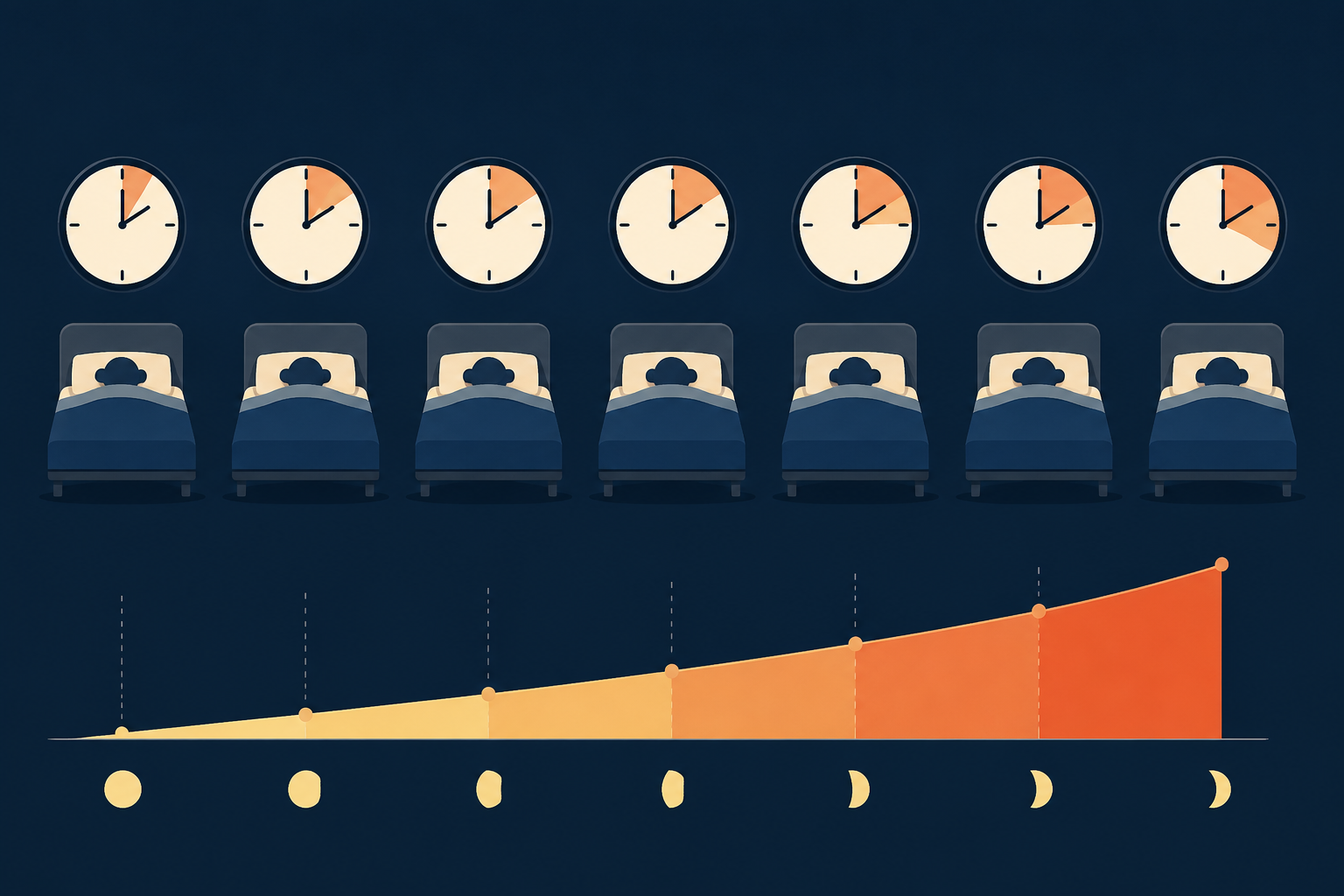
The clearest mechanism is sleep loss. In a small actigraphy study of 35 high school students, the week after spring DST cut average sleep by 32 minutes a night, for 2 hours 42 minutes of cumulative sleep debt across the week [1]. That is enough to make first-period thinking slower, attention shorter, and mistakes more likely, even if the student never feels fully "sleep deprived" in the dramatic sense. The sample was small and local, so the study cannot stand in for every district, but the direction is hard to ignore.
Why the Research Does Not Agree
Some studies do find no measurable academic effect. Herber, Quis, and Heineck tracked more than 22,000 elementary students across six European countries and found no statistically significant DST effect on math, science, or reading scores on TIMSS and PIRLS [2]. That result matters because it keeps the discussion honest: DST does not automatically flatten every score in every setting. But elementary students taking low-stakes tests in Europe are not the same population as tired high schoolers facing a timed US exam.
Other evidence lands much harder. Gaski and Sagarin reported that Indiana counties using DST had SAT scores 16 points lower on average [3]. A later re-analysis found the gap was much larger for the lowest-income students, 49 points, than for the highest-income students, 8 points [4]. Those are county-level comparisons, so they cannot rule out all the structural differences between places. Even so, the pattern is useful: DST seems more likely to show up where students already have less flexibility, less sleep margin, and more pressure to perform on a fixed schedule.
Who Feels It Most
The students most exposed are usually the ones whose clocks already run late. Teenagers often sit closer to the edge of their sleep window, so a spring shift makes the morning mismatch worse just as school demands an early start. Chronotype research supports that uneven recovery: night owls may need seven days or more to adjust, while early birds often settle back in within two to three days [6]. That is the practical reason a one-hour change can linger in first-period focus long after the clock has stopped feeling novel.
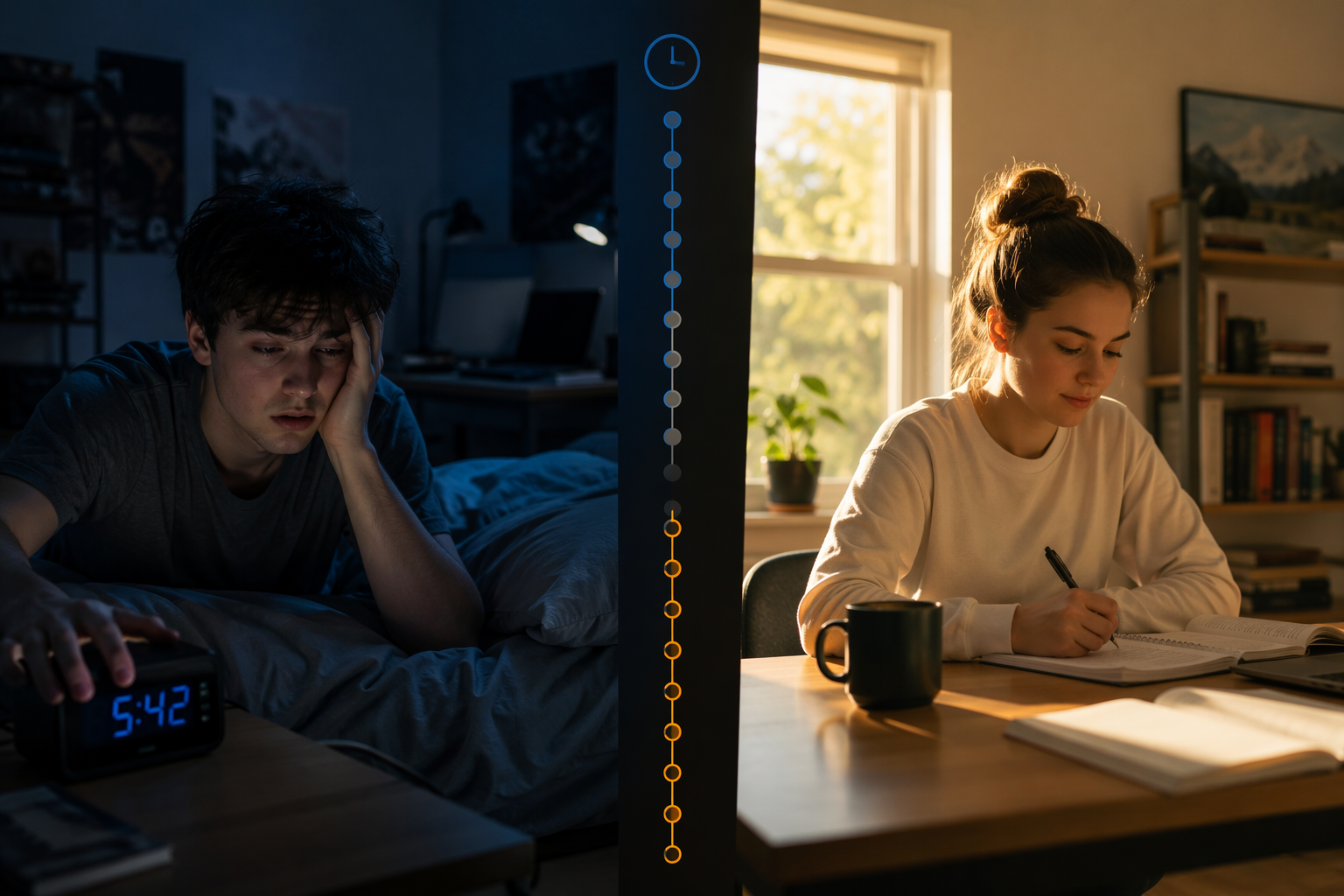
A University of Oregon analysis of 174,505 GitHub users found early-morning activity dropped for up to two weeks after spring DST, with the sharpest pattern in the 8 a.m. to 10 a.m. window [5]. It is worker data, not student data, so it should be treated as an analogy rather than proof. Still, it matches the shape educators recognize: the cost is often not a single bad morning but a short run of slower mornings.
What a Sensible Week Looks Like
The most useful response is modest. Protect sleep in the days around the switch, do not stack the hardest early-morning work right on top of the change when the schedule allows, and treat fatigue as a predictable constraint rather than a personal failure. If you want the bigger sleep-and-focus argument, the broader case is laid out in the 7-Hour Sleep Sweet Spot for Productivity and Brain Health.
That is the bounded answer: spring DST can lower student productivity in a real, measurable way, mostly by building sleep debt and slowing early-morning performance, but the effect is conditional rather than universal. The strongest hit lands on students with later chronotypes and earlier schedules, and the safest assumption is that the first week or two deserves a little extra margin.
References
- Study Shows That Teens Lose Sleep After Change to Daylight Saving Time — AASM
- Daylight Saving Time and School Performance: Evidence from TIMSS and PIRLS — ScienceDirect
- Detrimental Effects of Daylight-Saving Time on SAT Scores — ResearchGate
- What to Expect From Students After the Start of Daylight Saving Time — EdWeek
- Daylight Saving Time Linked to Lost Worker Productivity — University of Oregon
- Daylight Saving Time Affects Night Owls More Than Early Birds — Chronobiology.com
Comments
Join the discussion with an anonymous comment.