
The bag for HBCU band camp has two different jobs. It must carry what a student needs to rehearse in heat, move safely, and handle the instrument; it may also need a separate set of items for time away from the field. Putting those jobs into one vague “pack everything” list makes the note harder to check and easier to overfill.
A more dependable Apple Notes setup uses two layers: a rehearsal-day carry set for the items supported by the available band-camp sources, and a clearly labeled off-field/free-time layer for items that do not belong in the rehearsal bag. The sources used here are high-school day-camp checklists, not residential or HBCU-specific packing policies, so that boundary stays visible.
Start with the rehearsal-day carry set
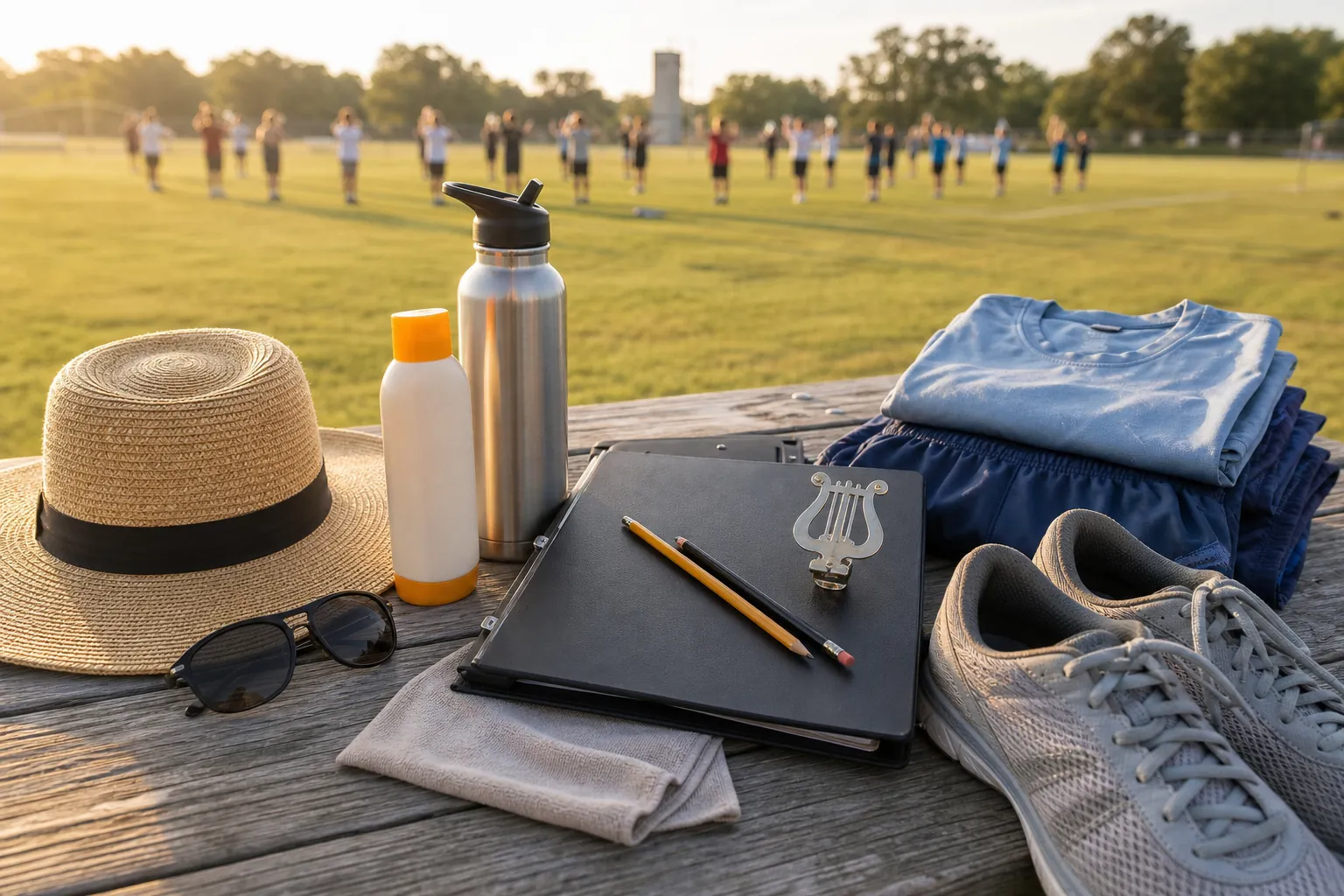
This is the part of the checklist that can be assembled with the strongest support. Kincaid’s Music identifies sun and heat protection, hydration, and instrument accessories; Burlington Public Schools adds rehearsal clothing, footwear, and pre-rehearsal nutrition. Together, those sources support a practical day-carry note rather than a claim about what every HBCU band requires.
Heat, sun, and hydration
- Wide-brim hat or a hat that covers the neck
- Sunglasses
- Broad-spectrum SPF 30+ sunscreen
- Water bottle or other hydration supply
The sunscreen recommendation comes from a music retailer’s checklist, so it is useful packing guidance rather than clinical advice. That source also says sunscreen should be reapplied daily. Follow the camp’s own directions and any medical guidance that applies to the student. [1]
Rehearsal clothing and the footwear decision
Burlington’s checklist calls for DryFit or other lightweight shirts, athletic shorts, socks, and running or cross-training shoes. It specifically excludes sandals and flip-flops. Kincaid’s list makes the useful distinction that shoes suitable for rehearsal may not be the shoes a student wants for free time. [1][2]
- Lightweight, moisture-friendly rehearsal shirts
- Athletic shorts
- Socks
- Running or cross-training shoes for rehearsal
Keep the rehearsal shoes separate in the note from casual or free-time footwear. A student may wear the correct shoes to the field and still want a different pair away from rehearsal; combining those instructions is how the important pair gets overlooked.
Instrument accessories
- At least two pencils
- Flip folder
- Spare flip-folder windows
- Lyre
- Cleaning gear appropriate to the instrument
Two pencils are a small precaution with a large practical payoff: one can disappear, break, or be left with someone else. The available source includes a single anecdote about a forgotten pencil, but it does not establish a ranking of the items students most commonly forget. The safe conclusion is simply that carrying a spare is inexpensive. Kincaid’s instrument-accessory guidance also supports including the flip folder, spare windows, lyre, and instrument-specific cleaning gear. [1]
Before camp, have the instrument checked and make sure the cleaning supplies actually fit that instrument. This is a sensible pre-camp action based on the cleaning-gear requirement; it is not a claim that every program schedules or requires a formal repair inspection.
Food before rehearsal
Burlington advises students to load carbohydrates before rehearsal and avoid heavy dairy in the heat. That is the available source’s nutrition guidance, not a universal meal plan or medical recommendation. Put the instruction in the checklist so it is considered before leaving, then adapt it to the student’s health needs, allergies, and the camp’s rules. [2]
- Eat a carbohydrate-containing meal or snack before rehearsal
- Avoid a heavy dairy meal in hot conditions if that matches the student’s needs
Make the second layer an off-field list
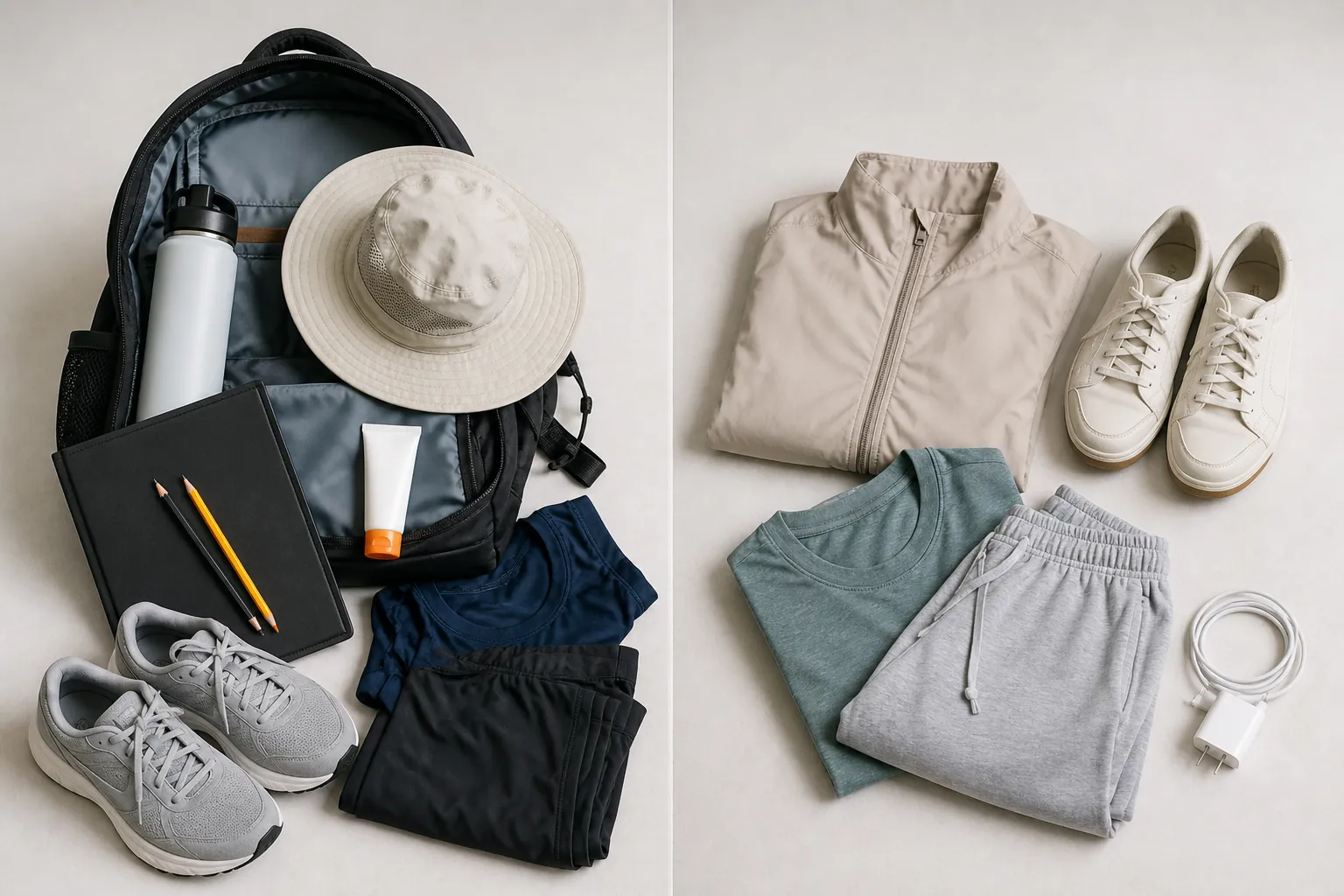
Create a separate section or note called “Off-field / free time.” Its purpose is organizational: it prevents rehearsal-critical items from being mixed with things used later in the day. The materials available for this article do not verify a universal free-time, dorm, uniform, or hygiene list, so the section should not quietly become one.
- Free-time footwear — confirm what the student wants or what the program permits
- Comfortable off-field clothing — confirm the amount needed locally
- Personal items — add only after checking the housing or program instructions
For residential camp, add a visible heading such as “Local confirmation required” beneath this layer. Dorm supplies, laundry expectations, toiletries, bedding, chargers, medications, dress codes, uniform pieces, and instrument-specific policies may matter, but none is established here as standard HBCU band-camp practice. Ask the specific band office, camp coordinator, or housing office before adding those items as requirements.
Build the checklist in Apple Notes
Apple’s documented Notes workflow is enough for this setup. On iPhone, open Notes and create a new note. Give it a specific name, such as “HBCU Band Camp — Rehearsal Day,” then use the checklist control to turn each packing item into a checkable line.
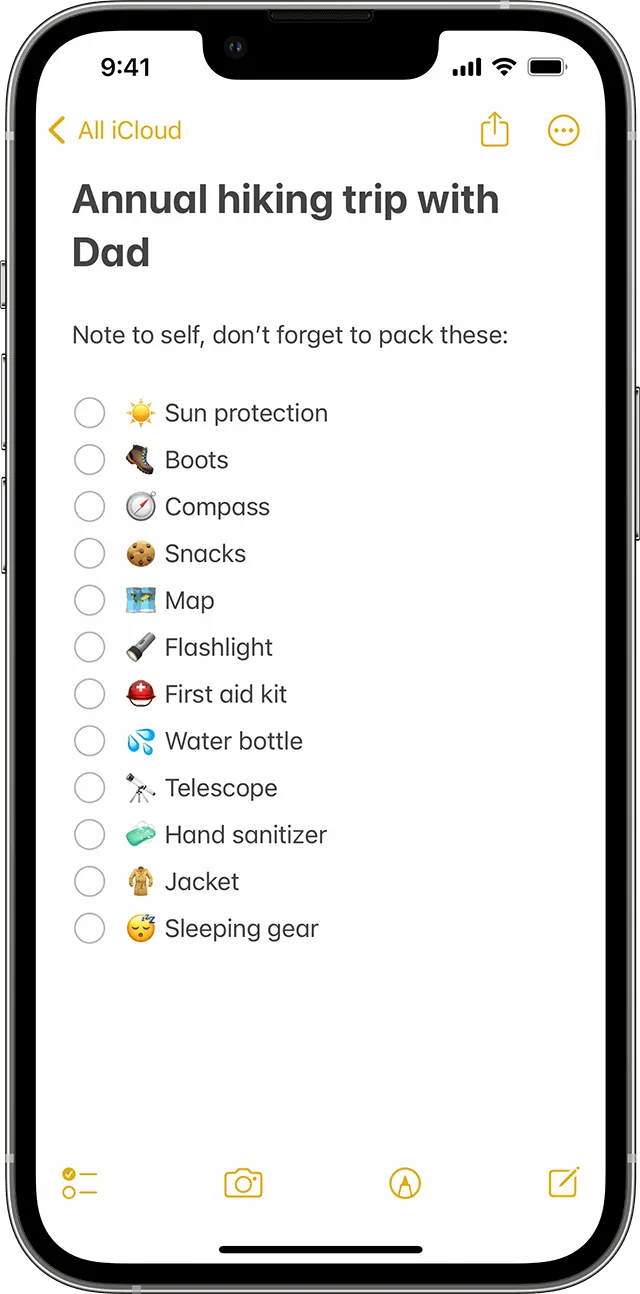
- Open Notes and create a new note.
- Tap the checklist button, then enter the first item.
- Press Return to add the next checklist item.
- Tap a circle when an item is packed or completed.
- Drag items to reorder them so the most important carry items appear first.
- Swipe right on an item to indent it beneath a category when a nested structure helps.
A useful order is heat and hydration, clothing and shoes, instrument accessories, and nutrition. The note then follows the actual preparation sequence instead of treating every item as equally urgent. Apple also documents a Notes setting for sorting checked items: go to Settings, choose Notes, and adjust “Sort Checked Items” if completed lines should move automatically. [3]
The note needs to live in iCloud or an on-device Notes account for the checklist features Apple describes. If the list is stored somewhere that does not support the required Notes behavior, the circles may not work as expected. [3]
Create a reusable version without losing the scope labels
Keep the verified rehearsal-day section intact and place local additions below it. A simple structure is:
- REHEARSAL-DAY CARRY SET
- OFF-FIELD / FREE TIME
- LOCAL CONFIRMATION REQUIRED
That labeling matters when the note is reused for another student or another camp. It shows which lines came from the verified day-camp core and which lines still depend on a particular program’s instructions.
A community forum reports that copied bullet text may appear as markdown such as “- [ ]” rather than become interactive Apple Notes checkboxes. This is a community finding, not Apple documentation, so verify the behavior on the current device and software before relying on pasted templates. The dependable check is simple: each line should display a tappable circle. If it does not, create the checklist with Notes’ checklist control instead. [5]
Share the note after the local rules are checked
Apple Notes can share an iCloud note for collaboration. Open the note, use the share control, choose collaboration, and set whether the invited person can make changes or only view the note. With collaboration enabled, participants can work in the same note and see edits in real time. [4]
This is useful for a parent and student: one person can check the instrument accessories while the other confirms the camp’s arrival, housing, or uniform instructions. Before sharing, check the account and note type. Apple says locked notes and notes stored in device-only accounts cannot be used for collaboration. [4]
If a camp coordinator sends program-specific requirements, add them under “Local confirmation required,” record who supplied the information, and move an item into the main carry set only when the instruction is clear. That preserves the useful part of a shared note without making an unverified dorm or uniform assumption look like a standard.
Use schedules as context, not as universal rules
Burlington’s checklist describes a 2:00 p.m. start and gives special attention to outdoor work during its second week. Those details are useful examples of why timing and conditions should be confirmed, but they are school-specific. They do not establish that every HBCU camp starts in the afternoon, spends a particular week outdoors, or follows the same daily pattern. [2]
Before finalizing the note, confirm the actual reporting time, rehearsal location, water instructions, footwear rules, instrument requirements, and residential arrangements with the specific program. Then the finished note can remain short where the evidence is strong and expandable where the program has supplied information.
The result is a reusable Apple Notes checklist with a clear trust boundary: the rehearsal-day carry set covers heat and sun protection, hydration, clothing and footwear, instrument accessories, and pre-rehearsal nutrition; the off-field and residential additions remain visibly marked until the specific camp confirms them.

Comments
Join the discussion with an anonymous comment.