
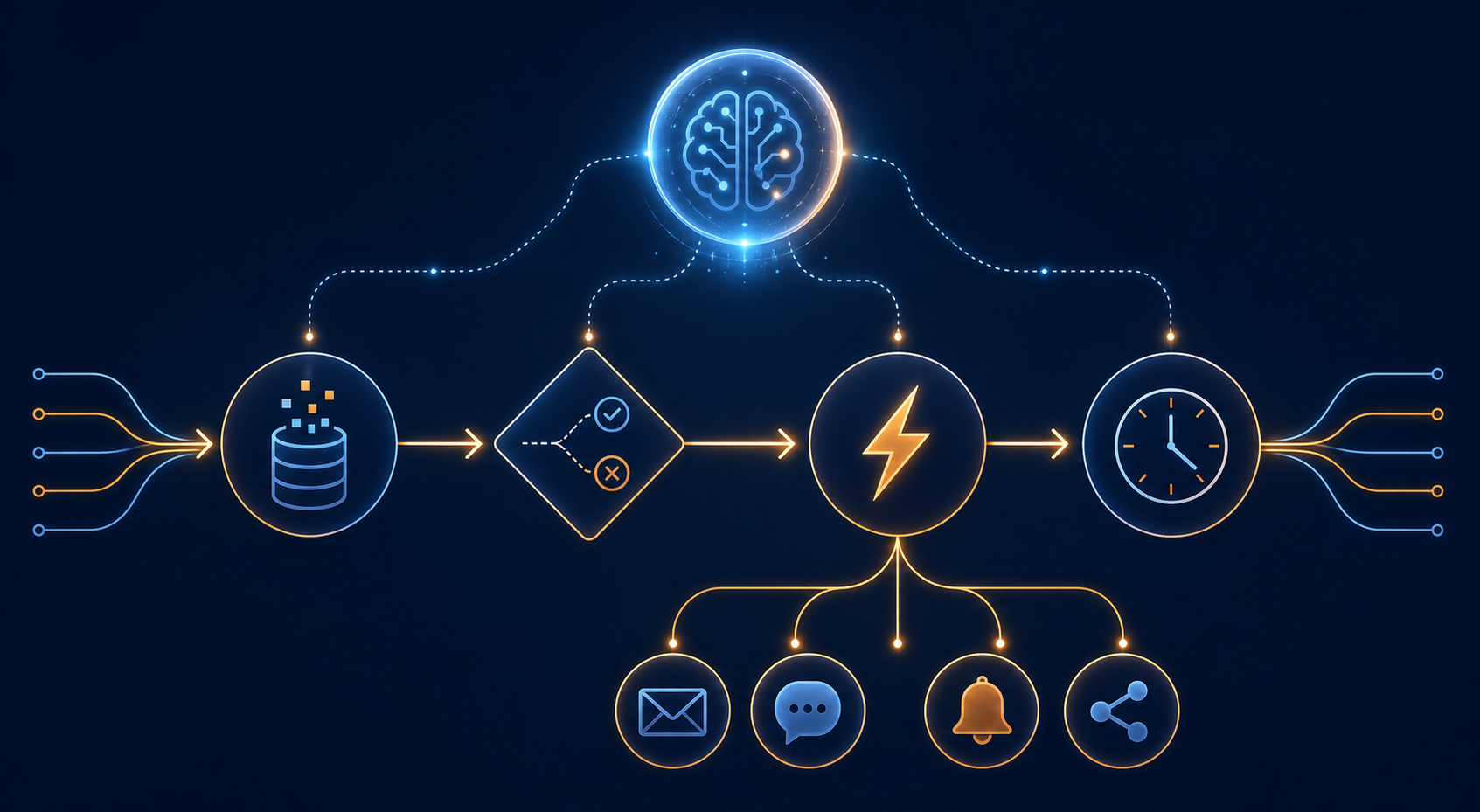
How Traditional Rule-Based Workflows Work (And Where They Fall Short)
Most marketing automation platforms still operate on a deterministic model: when a specific trigger occurs, the system checks a set of predefined conditions, executes a fixed action, and waits for a scheduled timer before moving to the next step. This trigger → conditions → actions → timing loop is the backbone of classic welcome series, abandoned-cart sequences, and lead-nurture tracks. It is reliable, easy to audit, and has served marketing teams well for over a decade.
But the limitations of this model are becoming harder to ignore. Static segments — built from a one-time export or a fixed set of rules — grow stale the moment new customer data arrives. Send-time optimization, if it exists at all, relies on manual A/B testing of a few time slots rather than real-time behavioral signals. Personalization is limited to inserting a first name or a product category into a template. And when a customer's behavior changes mid-journey, the workflow has no mechanism to adapt; it simply continues along the predefined path.
The data backs up the frustration. According to Salesforce, 96% of organizations say modifying and rebuilding automation is a challenge because systems and business requirements change. Meanwhile, 55% of organizations don't use certain features of their marketing automation tools simply because they lack the staff to oversee them. The rule-based model was built for a world where customer journeys were linear and predictable. That world no longer exists.
What AI Adds: From Fixed Sequences to Adaptive Systems
AI transforms the rigid trigger-conditions-actions-timing loop into a self-optimizing system. Instead of a marketer manually defining every branch and timer, the platform learns from historical and real-time data to make decisions about who gets what message, when, and through which channel. The key capabilities that make this possible include:
- Predictive send-time optimization: Instead of testing two or three send times manually, AI models analyze each recipient's past engagement patterns — open times, click times, session start times — and schedule delivery at the moment that individual is most likely to convert.
- Dynamic cohort segmentation: Audiences are no longer static lists. AI agents can analyze millions of customer attributes, identify high-value segments that a human analyst might miss, and keep those segments current as new behavioral data flows in — without a marketer touching the segment definition.
- Generative content personalization at scale: Rather than writing ten variants of a subject line, marketers provide a brief and a brand voice guide, and the AI generates personalized message bodies, product recommendations, and subject lines for each segment — or even for each individual recipient.
- Channel affinity detection: The system learns which channels (email, SMS, push notification, in-app message, social) each customer prefers and automatically routes the message through the highest-probability channel for that specific interaction.
- Campaign agents: The most advanced platforms now offer natural-language agents that can build a complete multi-step workflow from a single prompt. The marketer describes the goal — "create a re-engagement flow for lapsed customers who haven't purchased in 90 days" — and the agent generates the sequence, selects the segments, sets the timing, and drafts the messages.
The speed difference is dramatic. Bloomreach's Campaign Agents, for example, allowed the collectibles brand Sideshow to go from campaign idea to launch in under 15 minutes. A single campaign built this way drove $10,000 in revenue. That kind of velocity is simply not possible with a manual, rule-based approach.
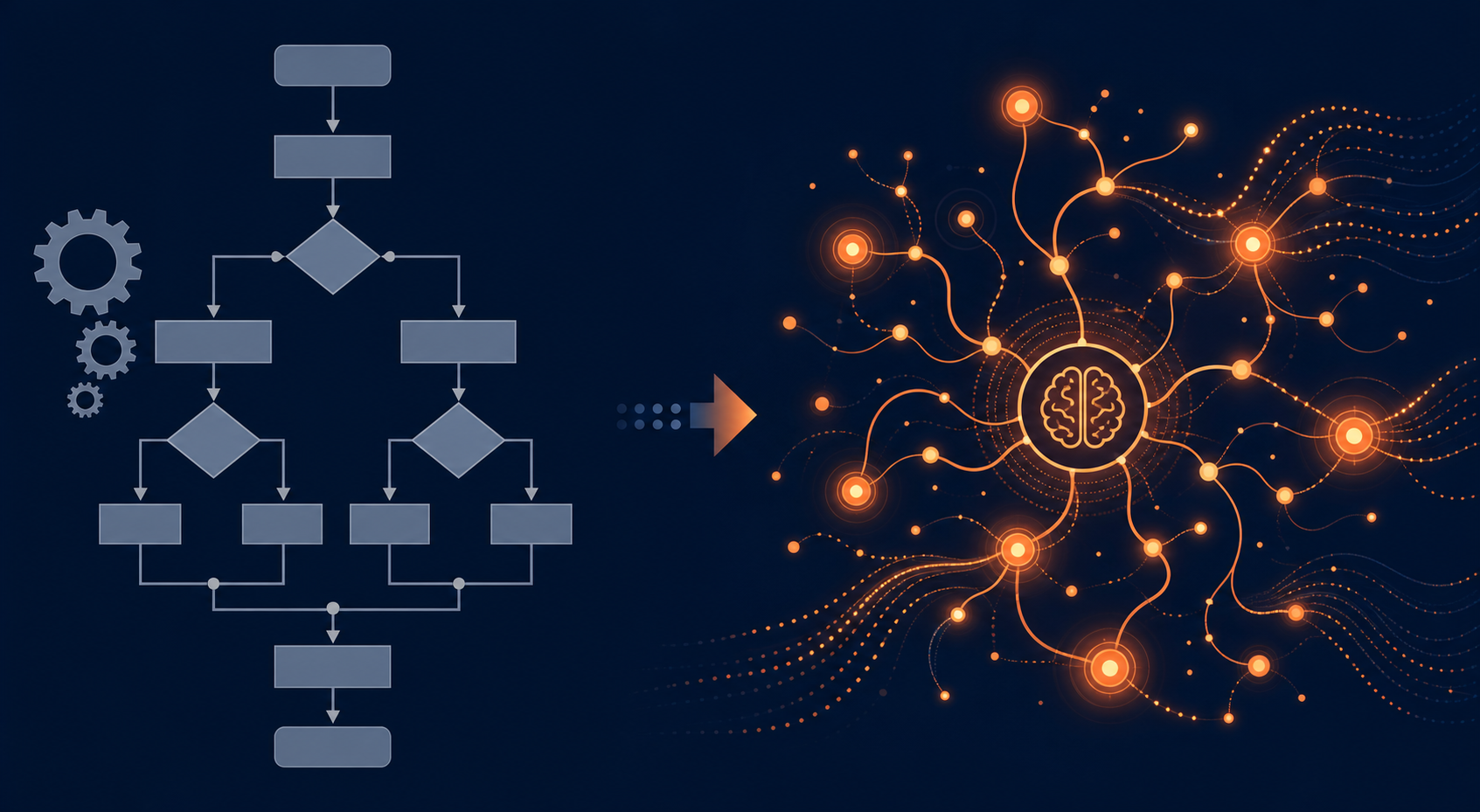
The Data Prerequisite: Why First-Party Data Infrastructure Comes First
Here is the counterintuitive truth that separates the 2026 winners from the rest: AI features are not the differentiator. Data readiness is.
The numbers paint a clear picture. According to MoEngage's Omnichannel Trends report, 95.4% of B2C marketers are already utilizing AI in their campaigns, with 73% specifically leveraging it to create personalized experiences. HubSpot reports that 91% of marketers say AI and similar automation tools have already impacted how they work. The adoption race is over — nearly everyone is using AI.
But using AI and getting value from AI are two different things. A predictive send-time model trained on sparse or low-quality data will produce unreliable recommendations. A dynamic cohort built on incomplete customer profiles will segment people into the wrong groups. A generative content engine without rich behavioral signals will produce generic copy that reads like every other brand's AI-generated email.
The gap in 2026 won't be between brands using AI and brands not using AI. It'll be between brands with rich customer data and brands guessing at what their customers want. — Marika Tselonis, Kulin
This means the first investment should not be a new AI module or a flashy campaign agent. It should be a customer data platform (CDP) that unifies first-party data from every touchpoint — website visits, email engagement, purchase history, support interactions, mobile app activity — into a single, resolvable customer profile. Without that foundation, AI models are operating on a fraction of the signal, and the outputs will reflect that incompleteness.
Real-World Outcomes: What AI-Powered Workflows Deliver Today
The available outcome data, while still emerging from specific vendor environments, points to significant improvements for organizations that have both the data infrastructure and the AI capabilities in place.
| Organization | AI Capability Used | Outcome |
|---|---|---|
| Sideshow (via Bloomreach Campaign Agents) | Natural-language campaign agent that builds complete workflows from a prompt | Campaign idea to launch in under 15 minutes; single campaign drove $10K in revenue |
| Hornby Hobbies (via Bloomreach Loomi Analytics) | AI-powered analytics and audience segmentation | 70% reduction in analytics design time; 34% increase in email campaign revenue within four months |
These examples are not isolated. HubSpot reports that 64% of marketers already use automation and AI, and 51% say they are piloting or scaling the use of AI-powered automation. The trajectory is clear: the teams that see the strongest returns are those that combined AI features with a deliberate data strategy, not those that adopted AI in isolation.
Practical Steps to Transition from Rule-Based to AI-Powered Workflows
Moving from fixed sequences to adaptive AI workflows does not require a complete rebuild overnight. The most successful transitions follow a phased approach that preserves existing revenue-generating sequences while gradually introducing AI capabilities.
| Phase | Action | Key Consideration |
|---|---|---|
| 1. Audit data readiness | Assess the quality, completeness, and unification of your first-party customer data. Do you have a CDP or a unified customer profile? Are event tracking and identity resolution in place? | Skip this step and AI outputs will be unreliable. This is the most important phase. |
| 2. Select one high-volume workflow | Choose a workflow with clear baseline metrics — typically a welcome series or abandoned-cart sequence — where the impact of optimization is measurable and the risk of disruption is low. | Do not start with a complex multi-step nurture track. Start where the data is cleanest and the success metric is unambiguous. |
| 3. Enable predictive send-time first | Activate the platform's send-time optimization feature on the selected workflow. Measure open rates and conversion rates against the previous fixed-schedule baseline. | Predictive send-time is the lowest-risk AI feature because it changes only the delivery moment, not the message content or the audience. |
| 4. Introduce dynamic cohorts | Replace the static segment in the workflow with an AI-powered dynamic cohort that updates in real time. Monitor segment size and performance stability for two full cycles. | Dynamic cohorts can behave unexpectedly if the underlying data has gaps. Keep the original static segment as a fallback during the pilot. |
| 5. Add generative personalization | Enable AI-generated subject lines or message body variants for the workflow. Set clear brand guardrails and review a sample of outputs before full deployment. | Generative content requires ongoing human review. Plan for a content editor to audit AI outputs weekly. |
| 6. Scale to complex workflows | Once the pilot workflow shows sustained improvement over the rule-based baseline, apply the same pattern to higher-complexity sequences: re-engagement flows, cross-sell tracks, multi-channel nurture programs. | Each new workflow should be monitored independently. What works for abandoned cart may not work for win-back. |
Before starting this transition, it is worth reviewing the common pitfalls that undermine workflow performance. Our guide on 7 Marketing Automation Workflow Mistakes That Kill ROI (And How to Fix Them) covers the structural issues — over-segmentation, insufficient testing, broken attribution — that can sabotage even the most advanced AI-powered sequences.
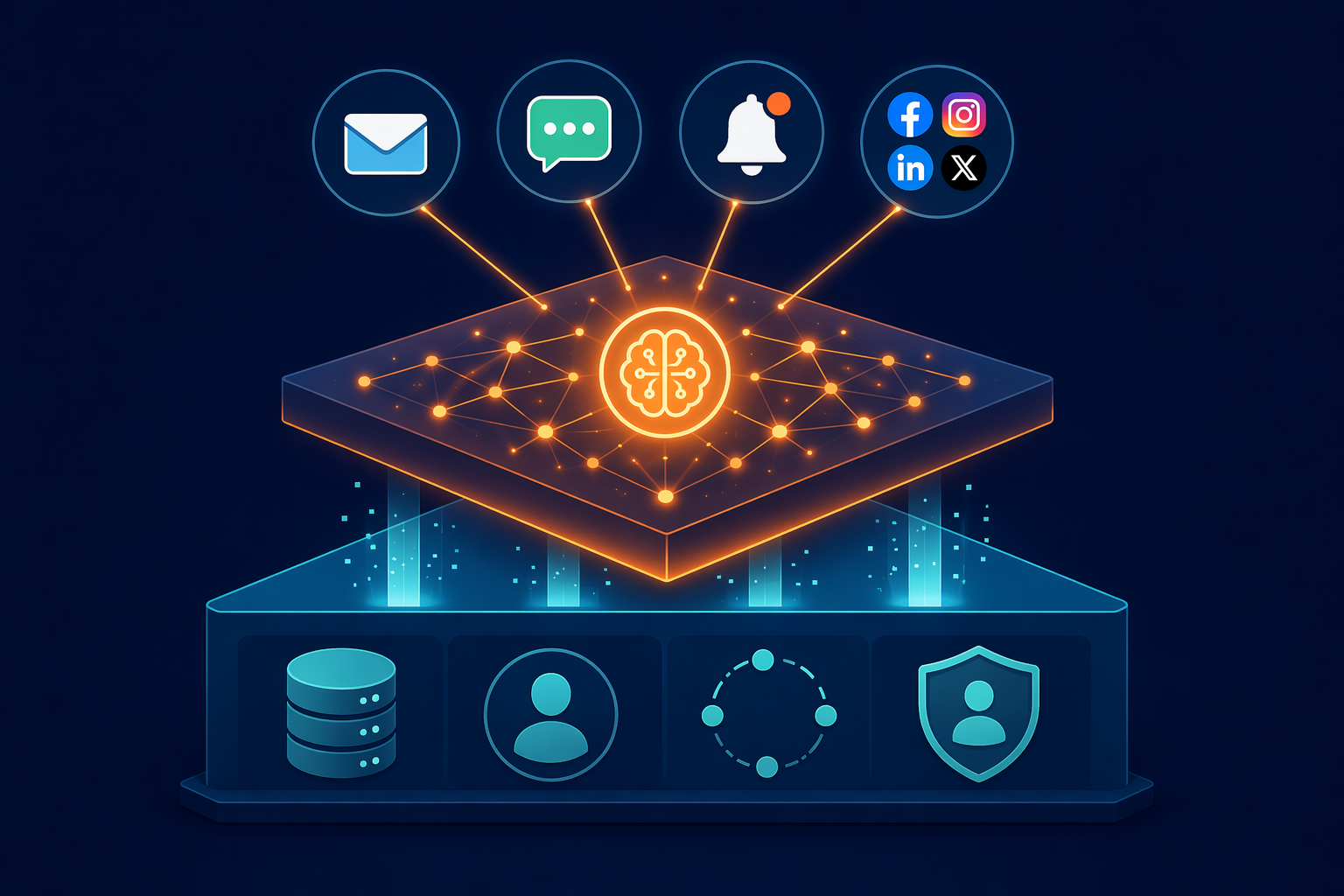
Evaluating AI Capabilities: What to Look For in a Platform
Not every AI feature labeled "predictive" or "intelligent" delivers real value. Marketing operations leaders evaluating platforms in 2026 should focus on four criteria that separate genuine capability from marketing veneer.
- Data integration depth: Can the platform ingest and resolve data from your existing stack — CRM, ecommerce platform, mobile SDK, support ticketing system, offline events — without requiring a custom integration for every source? The best AI models are only as good as the breadth of signals they can access.
- Model transparency: Does the platform explain why a particular segment was created or why a specific send time was chosen? Black-box AI that surfaces recommendations without rationale is difficult to trust, audit, or improve.
- Ease of setup without engineering support: Can a marketing operations manager enable AI features — predictive send-time, dynamic cohorts, campaign agents — through the platform's UI, or does each feature require a data science team to configure? The 55% of organizations that lack staff to oversee automation features will struggle with platforms that require heavy technical setup.
- First-party data infrastructure quality: Does the vendor provide its own CDP or identity resolution layer, or does it rely on the customer to bring a fully unified data set? Platforms that include data infrastructure as part of the package reduce the integration burden significantly.
For a deeper comparison of how specific platforms handle these criteria — and which ones deliver genuine AI value versus surface-level features — see our detailed analysis in AI in Workflow Management Software 2026: What's Actually Worth Paying For.
Comments
Join the discussion with an anonymous comment.