
Declaration Desk
Comparisons
Head-to-head comparisons between two apps (rarely three) on a fixed set of decision axes: pricing, offline/local-first support, export format and lock-in risk, collaboration, and platform coverage. Every comparison carries a visible last-verified date, an honest 'not for you if' section, and a note confirming pricing was checked directly against vendor pages with no undisclosed affiliates. Serves readers who know roughly what they're choosing between but haven't committed to a move yet. Does not walk through the mechanics of an actual migration (Migrations) and does not describe a single app on its own (Profiles). Every comparison links to the matching migration guide(s) in either direction and to both apps' Profiles.

Which Note-Taking App Should You Use on Mac? A Workflow-Based Decision Guide
Not sure which note-taking app to use on your Mac? This decision guide helps you narrow down the best app based on your workflow style — quick capture, long-form writing, structured databases, local-first PKM, or team collaboration.

Obsidian vs Notion vs Logseq vs Tana vs Capacities: Which PKM App Fits Your Thinking Style?
A head-to-head comparison of the five leading personal knowledge management apps, organized by cognitive thinking style rather than feature checklists. Learn which tool matches how your brain organizes information — and why the wrong choice leads to abandonment within weeks.

Online Note-Taking Apps Compared: 7 Apps for Every Use Case (2026)
A head-to-head comparison of the leading online note-taking apps — OneNote, Apple Notes, Google Keep, Notion, Obsidian, Evernote, Bear, and Joplin — organized by use case so knowledge workers, students, and professionals can choose the right tool without wasting time on apps that don't fit their workflow.
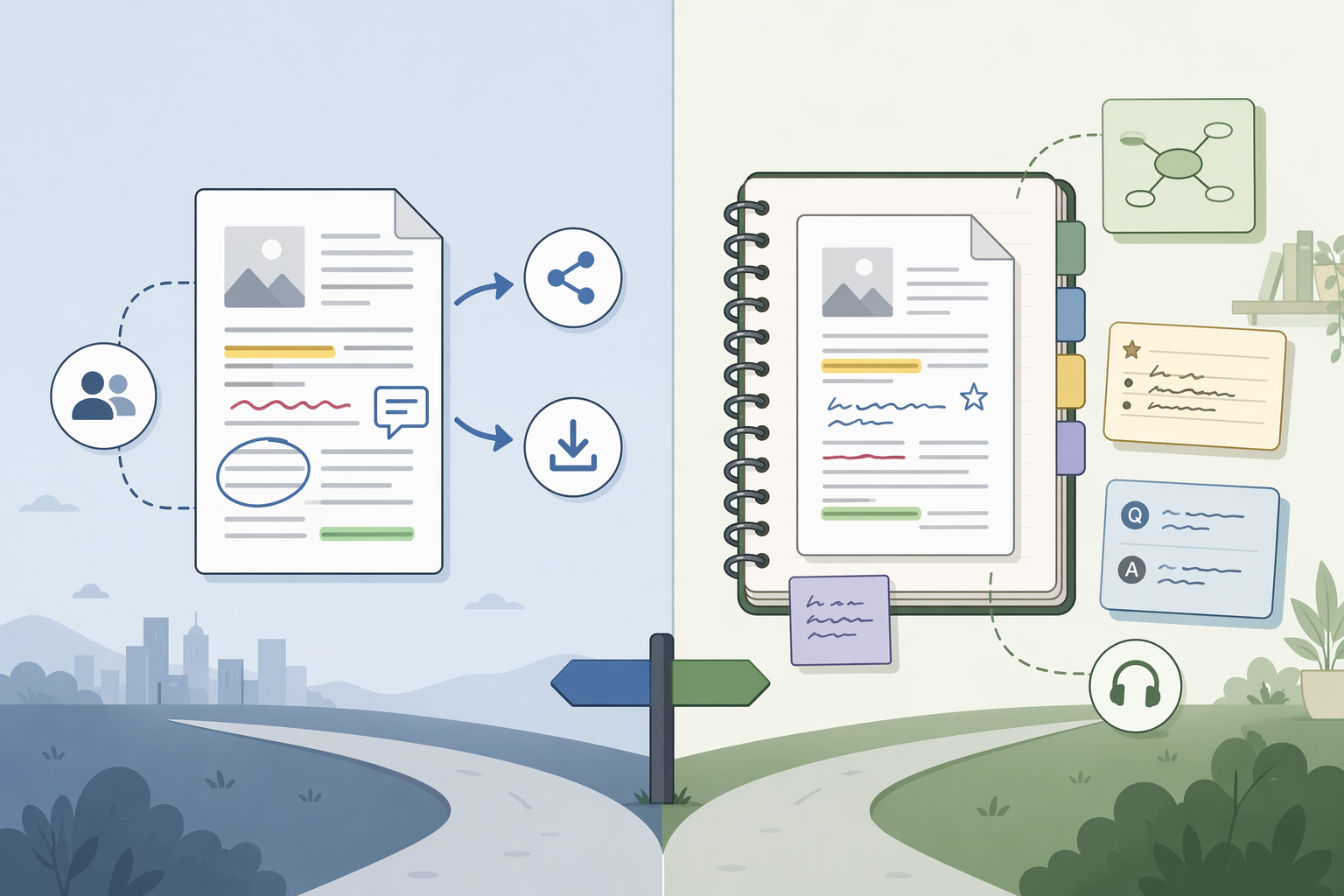
Dedicated PDF Annotators vs. Note-Taking Apps: Choosing the Right Approach for PDF Notes
Choosing between a dedicated PDF annotator and a note-taking app with PDF import comes down to one question: where should your notes live after you finish? This comparison explains the structural tradeoffs and helps you pick the approach that fits your workflow.

Process Automation Tool Buyer's Guide 2026: What to Look For, What to Avoid, and How to Calculate ROI
A repeatable framework for operations leaders and IT managers to evaluate process automation tools across five dimensions, decode pricing models, avoid hidden pitfalls, and build a financial justification with a concrete ROI formula.
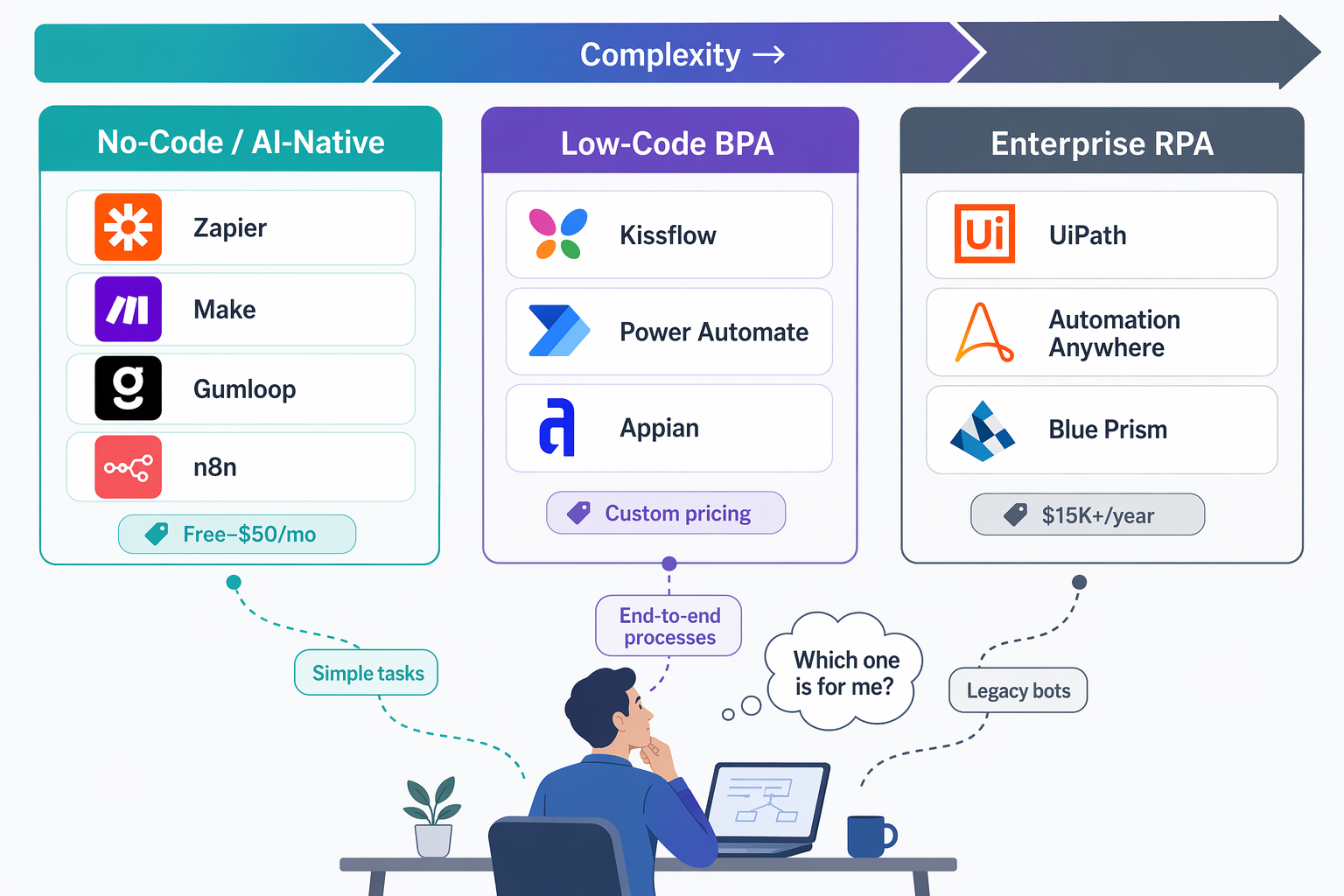
Zapier vs. Make vs. Gumloop: Which No-Code Automation Tool Is Right for Your Team in 2026?
Zapier, Make, and Gumloop all promise no-code automation, but their learning curves, pricing models, and AI capabilities differ significantly. This comparison helps operations managers, marketing leads, and small business owners choose the right tool based on workflow complexity, budget, and AI needs.

Time Management Software in 2026: Tools Compared for Freelancers, Small Teams, and Enterprises
Choosing time management software in 2026 means matching the tool to your team size, budget, and desired automation level. This comparison evaluates Toggl Track, Clockify, Harvest, and AI-powered options like Memtime to help you find the best fit for freelancers, small teams, and enterprises.

Workflow Automation Tools in 2026: A Comparison by Category
A structured comparison of the top workflow automation tools in 2026, organized by tier — from simple app connectors to AI-native builders — with honest trade-offs, pricing, and picks for different team sizes and technical levels.

n8n vs Zapier vs Make: The Definitive Workflow Orchestration Tool Comparison for 2026
This head-to-head comparison of n8n, Zapier, and Make reveals that each tool caps at a different level of workflow complexity. We help technical and semi-technical teams identify which platform's 'orchestration ceiling' matches their needs — from simple multi-step automation to full state-aware orchestration — with real pricing examples and sample workflows.
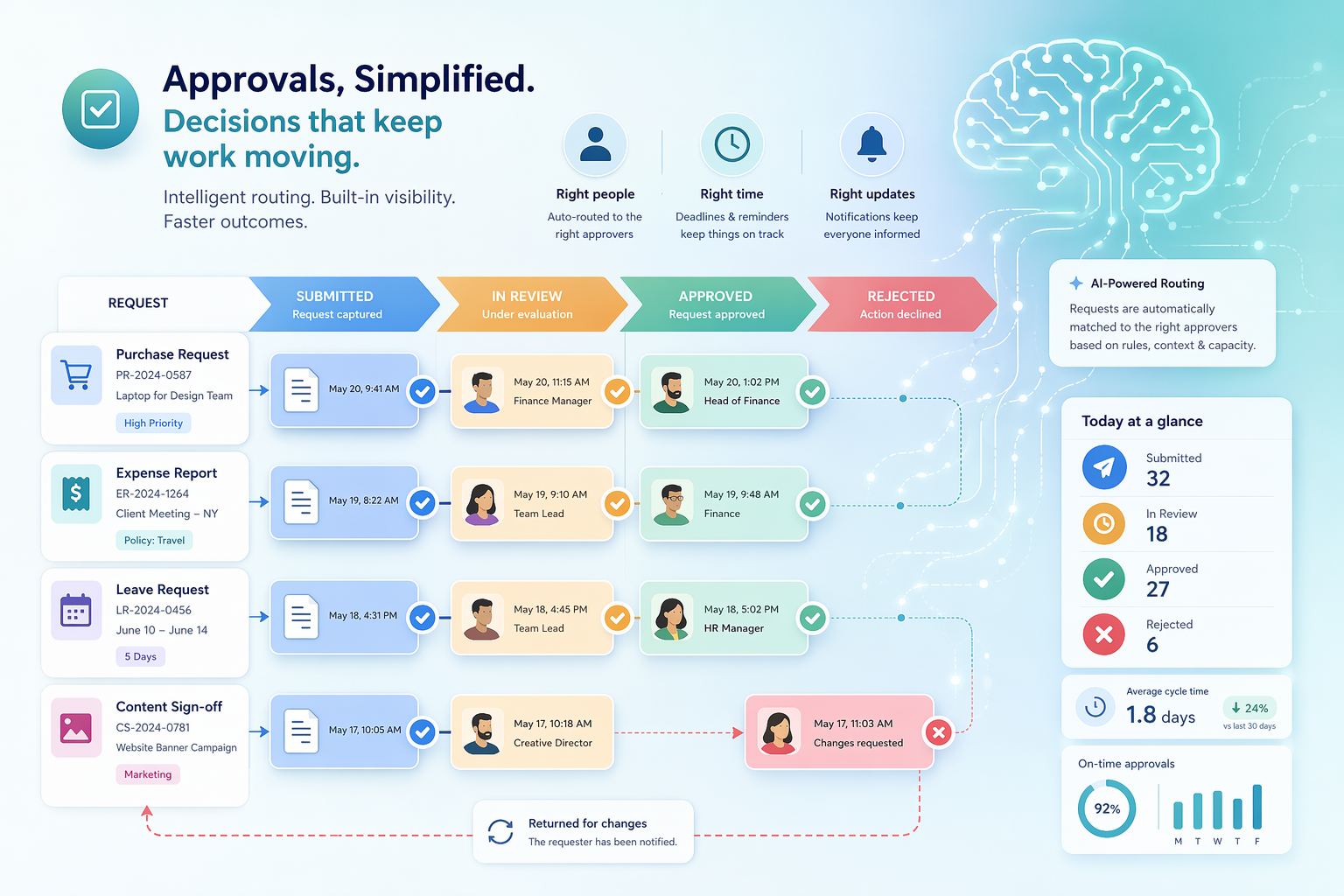
How AI Is Reshaping Approval Workflows in 2026: Intelligent Routing, Predictive Analytics, and No-Code Automation
This article explores how AI is transforming approval workflow software from passive routing engines into intelligent decision-support systems. It covers five key AI capabilities — intelligent routing, predictive bottleneck detection, natural language workflow creation, anomaly detection, and automated document processing — with a vendor showcase and implementation considerations for tech-forward ops leaders and IT decision-makers.

Approval Workflow Software by Department: Best Tools for Marketing, Finance, IT, and Operations
Not all approval workflow tools fit every team. This guide helps department heads in marketing, finance, IT, and operations find the right tool for their specific workflow pattern — proofing, invoice routing, change management, or form intake — with honest pros, cons, and pricing.
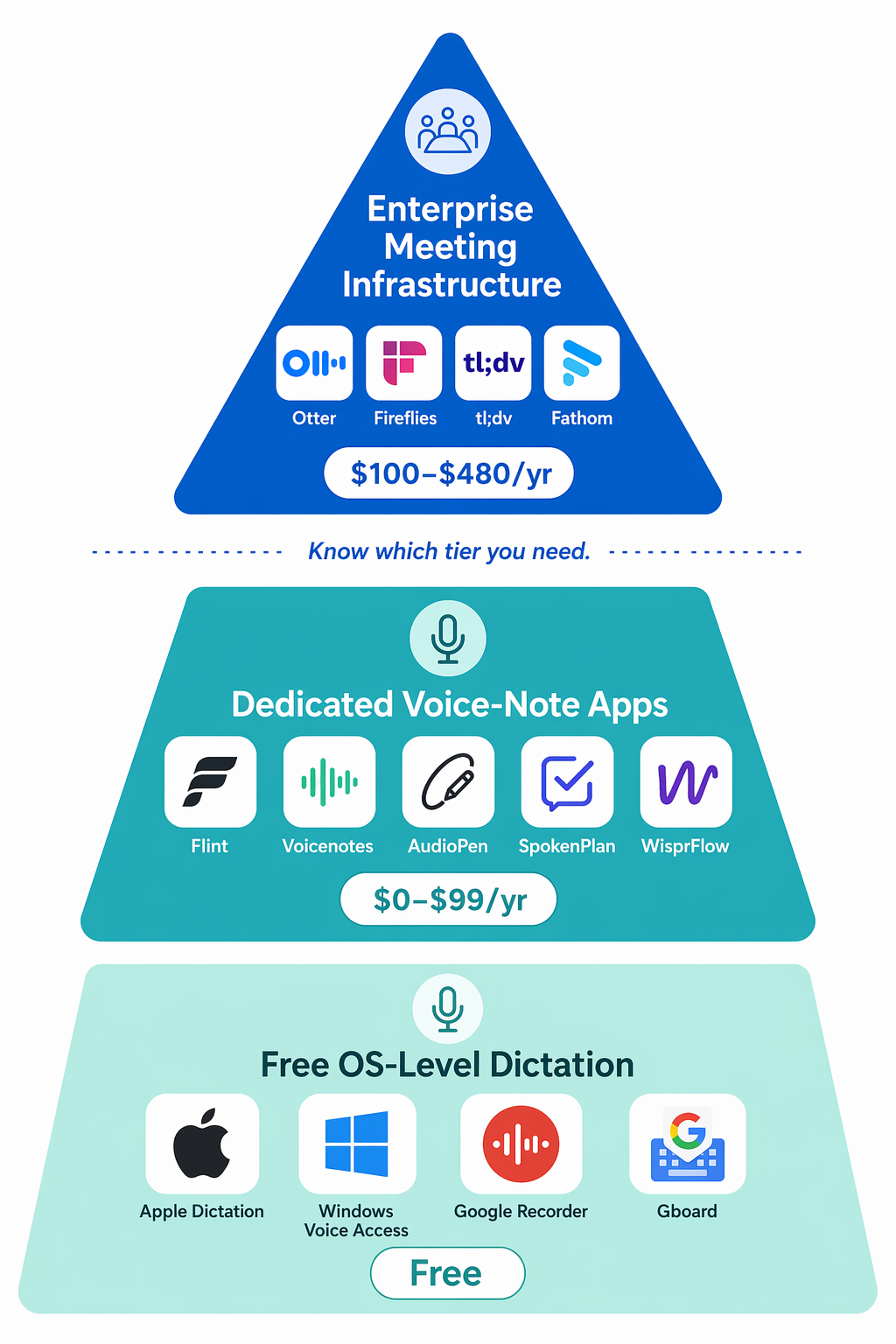
Apps That Take Notes From Voice: 12 Best Tools Compared in 2026 — From Free Dictation to AI Meeting Assistants
The voice-to-note market has split into three distinct tiers. This comparison maps every major tool by use case, pricing, platform, and AI capability so you can pick the right tier without paying for features you will never use.