The Real Cost of a Bad Tool Fit
You have probably felt it: the sinking realization that your carefully curated note-taking system has become a digital graveyard. You are not alone. Research cited by McKinsey indicates that knowledge workers spend an average of 9.3 hours each week searching for information, and 80% report experiencing information overload. Nearly 20% of every workweek disappears into hunting for internal data or chasing down colleagues — time that the right knowledge-sharing tools could return, alongside a potential 20 to 25 percent productivity lift.
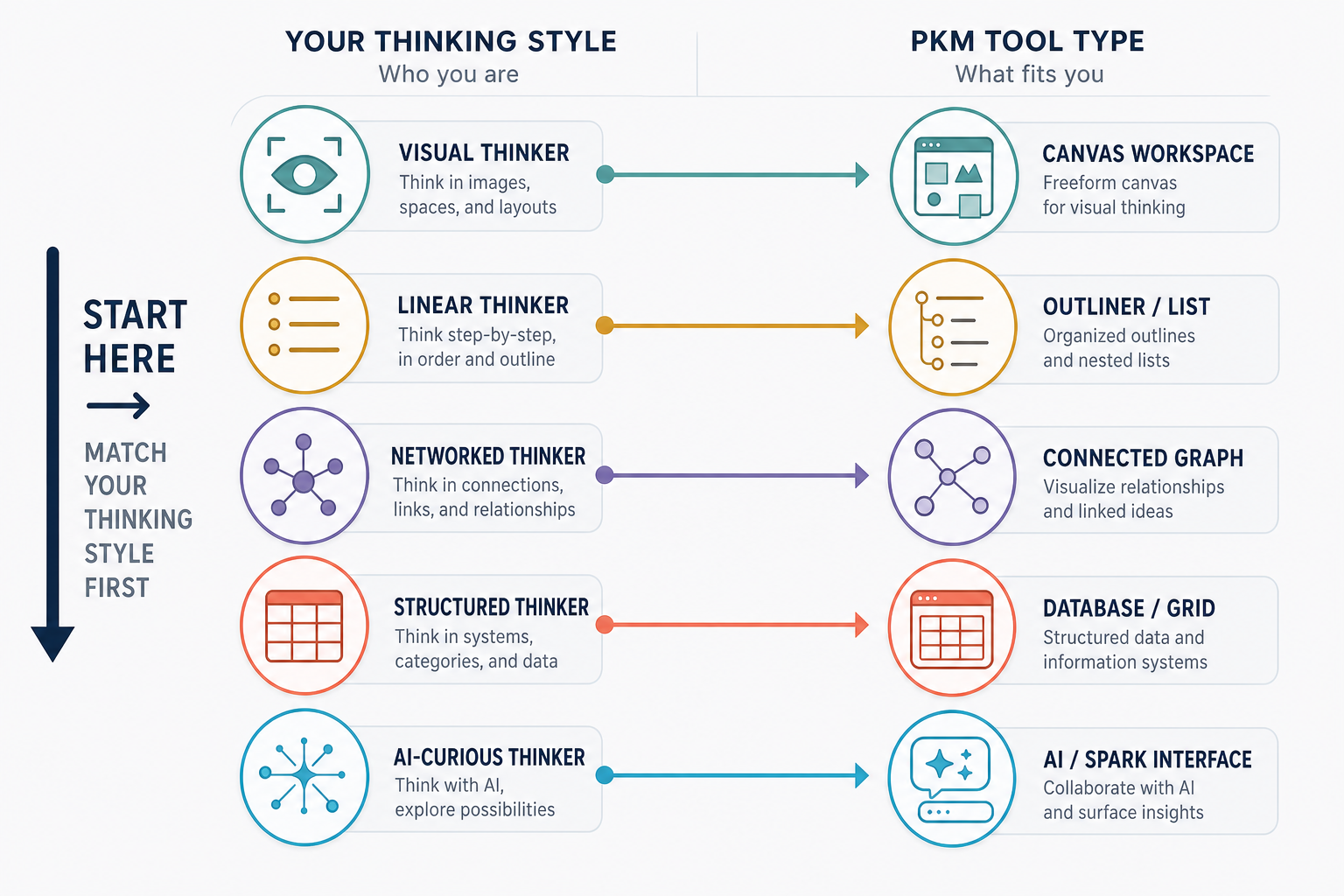
The problem is rarely that the tool is bad. The problem is that the tool does not match how you think. Most users abandon a personal knowledge management (PKM) app within six weeks not because the app lacked features, but because its core workflow clashed with their natural cognitive style. A visual thinker forced into a rigid outliner will feel constrained. A structured thinker dropped into a free-form canvas will feel lost.
This article flips the typical approach. Instead of starting with a list of apps and asking which one has the best features, we start with you. By diagnosing your thinking style first, you can narrow the field to the tools that actually fit your workflow. The result is less time spent tool-hopping and more time actually building a knowledge system that works.