
The best cross-platform note-taking app depends on the devices you actually use. A Mac+iPhone app can feel seamless and still be a poor choice once Android or Windows enters the picture, and Linux narrows the field even more [3][4].

Which device mix points to which app
| Device combo | Best fit | Why it fits | Main trade-offs |
|---|---|---|---|
| Windows + Android | OneNote | Native apps on both platforms, full feature parity, and free built-in sync [1][2]. | Best when you want the strongest no-cost default, especially for mixed work-and-phone setups. |
| Linux in the mix | Obsidian or Joplin | The serious Linux options; Obsidian is local-first with optional paid sync at $48/yr, while Joplin is free, open-source, and uses end-to-end encryption [3][4]. | Notion, OneNote, and Evernote do not have native Linux apps [3][4]. |
| Mac + Windows + iOS + Android | UpNote | Native apps on all four platforms, good sync, and a low price at $1.99/mo or $39.99 lifetime [5]. | No web client, no Linux support, a 20MB file upload cap, and no collaboration [5]. |
| Privacy-first across all platforms, including Linux | Standard Notes | Default end-to-end encryption with XChaCha20 on iOS, Android, Mac, Windows, Linux, and web [1][6]. | Proton's 2025 acquisition makes the long-term direction worth watching [6]. |
| Apple-only ecosystem | Apple Notes or Bear | Excellent on Mac, iPhone, and iPad [7][8]. | Skip them if Android or Windows is a primary device, because the web fallbacks are limited [7][8]. |
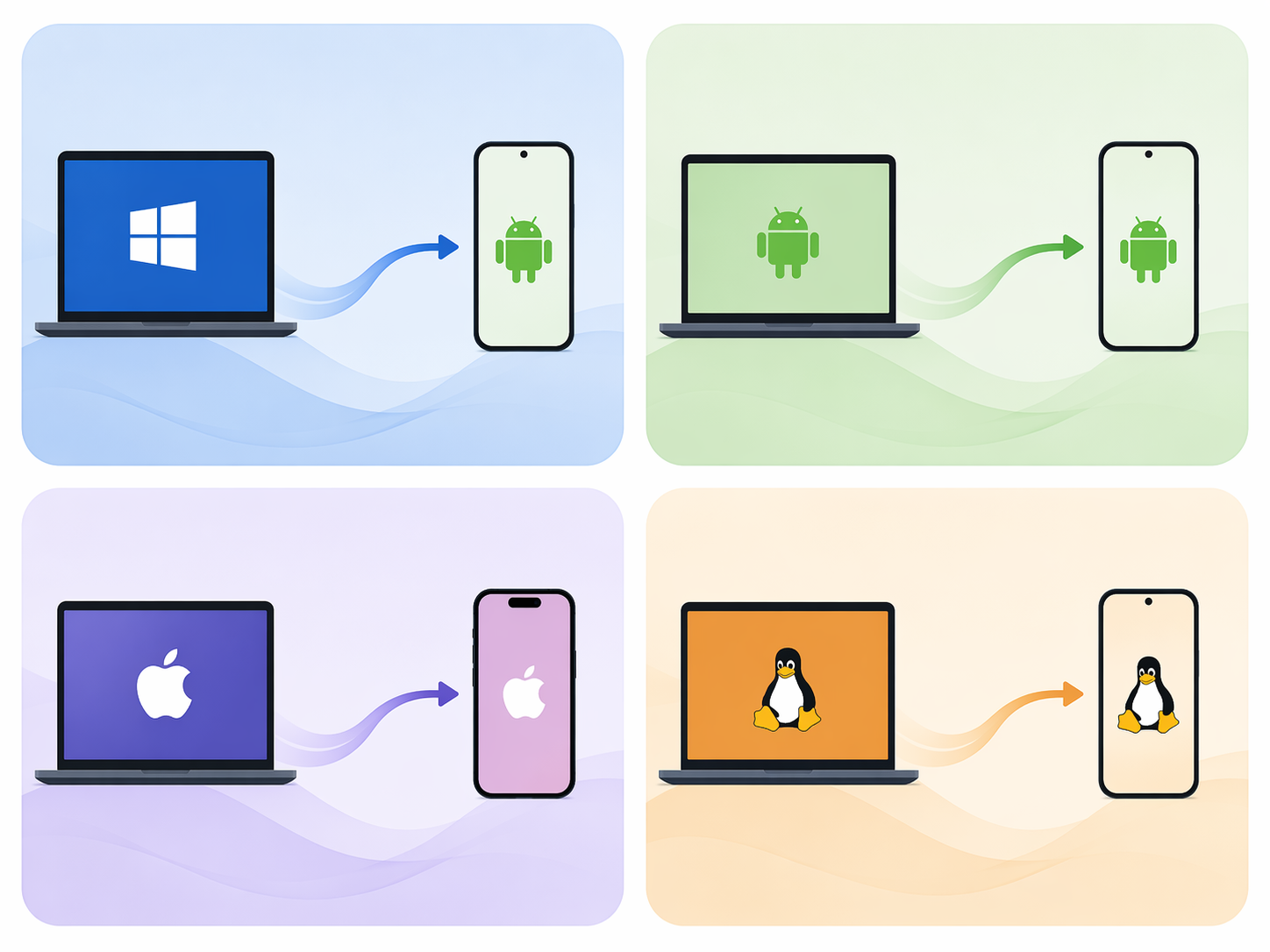
Why the same app feels different on different devices
The gap is mostly about sync model, not branding. Server-authoritative apps like Notion depend on the vendor's app and cloud behavior; on Android, Notion's app is a web wrapper with no offline mode. File-based apps like Obsidian behave more consistently across platforms, even if conflict files can appear [2].
Pricing only matters after the platform fit is right. Notion Plus plus AI can reach $240 a year, Evernote's free tier is effectively capped at 50 notes and one device, and UpNote's $39.99 lifetime plan is the cheapest cross-platform option in this group [6][5].
If privacy is the deciding requirement, Standard Notes is the narrow fit to watch: default end-to-end encryption with XChaCha20 across iOS, Android, Mac, Windows, Linux, and web, with Proton's 2025 acquisition adding some uncertainty about the long-term product direction [1][6].
References
- 1. Best Cross-Platform Note-Taking Apps — Atlas Workspace
- 2. Best Note-Taking Apps — Zapier
- 3. Comparison of note-taking software — Wikipedia
- 4. Best note taking apps 2026 — noteapps.info
- 5. UpNote Review: The Cross-Platform Notes App That Doesn't Break the Bank — Medium
- 6. Best Cross-Platform Note-Taking Apps 2026 — ROIpad
- 7. The Best Note-Taking Apps — PCMag
- 8. I Replaced My Note-Taking Apps With a Plain Text Stack — XDA Developers