
Lightning Lane Multi Pass is easiest to misunderstand when it is treated like a coupon: buy it, pick a few rides, hope the day gets shorter. It works better when you treat it like a small time-management system. You hold work in progress, clear a slot, replace it immediately, and avoid checking the app unless there is a clear reason to check.
That distinction matters because Disney’s own fine print, as cited by Frommer’s, says the average guest enters only 2–3 attractions per day through Lightning Lane. That is not a fatal argument against buying it. It is an argument that many people under-operate the thing they just paid for. A family that uses the system deliberately can plausibly save 60–90+ minutes of standing in line on a useful day, but the saved time only feels like a win if the person managing the app is not silently running a help desk from breakfast to fireworks. [1]

Two guardrails come first. Pricing is surge-based, and the ranges here were last verified in July 2026: Walt Disney World Lightning Lane Multi Pass commonly falls around $18–$45 per person per day depending on park and season, while Disneyland pricing sits around $32–$40. Always check the live price in My Disney Experience or the Disneyland app before making the purchase decision. [2][3]
The second guardrail is mechanical: Walt Disney World and Disneyland do not run the same workflow. Walt Disney World uses advance selections, tiers at some parks, and a Rolling 3 rule. Disneyland has no tiers and leans more heavily on same-day booking rhythm, including the 120-minute rule between bookings. Mixing those systems is how good advice turns into park-day nonsense.
The Five Rules, Before the Park Gets Loud
The whole system can fit on one screen. You do not need to memorize every eligible ride before coffee. You need to know which behavior comes next.
| Rule | What it does | When it matters most |
|---|---|---|
| Rolling 3 pipeline | Keep up to three Lightning Lane selections active and replace one immediately after you tap in. | All Walt Disney World Multi Pass days |
| Tier-Unlock shortcut | Use an early lower-tier ride to clear the first scan-in and unlock broader booking options. | Tiered Walt Disney World parks, especially Magic Kingdom and Hollywood Studios |
| Refresh Game | Modify an existing selection repeatedly to surface better times without giving up the slot you already hold. | When the app shows weak times or a desirable ride appears unavailable |
| Grace periods | Use the 5-minute-early and 15-minute-late window to tighten the day without sprinting. | When stacking nearby attractions or avoiding unnecessary backtracking |
| Skip Decision | Do not buy Multi Pass when the park, crowd level, or group priorities give it too little leverage. | Animal Kingdom, EPCOT, and low-to-moderate crowd days |
The table is the clean version. The real version happens with a child asking for a snack, one adult ready to march across the park, and another adult wondering why vacation now has a dispatcher. That is why the rules below are built around sequence, not perfection.
At Walt Disney World, Keep the Rolling 3 Pipeline Alive
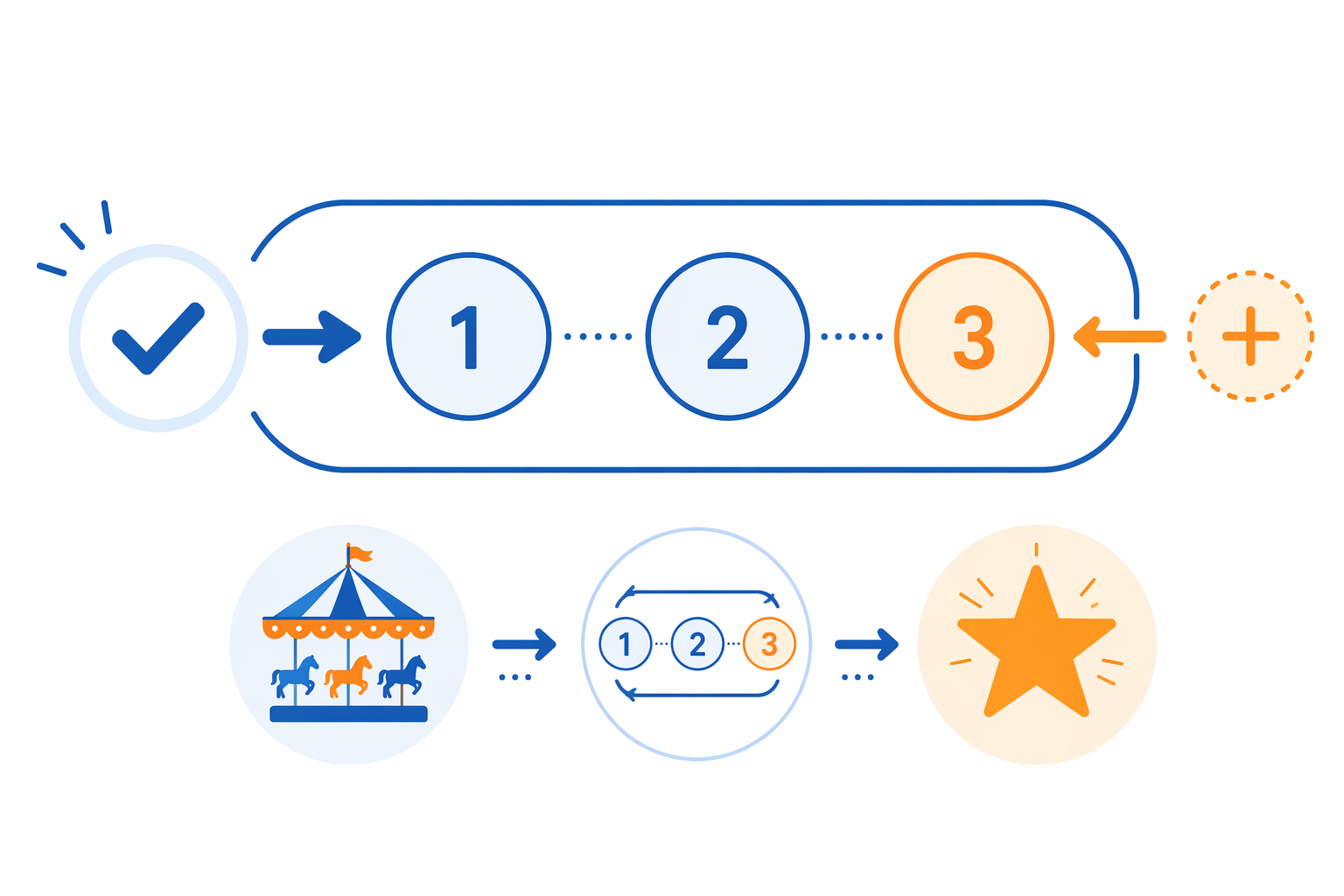
At Walt Disney World, the core operating rule is simple: you may hold up to three Lightning Lane Multi Pass selections, and after you tap into one, you can book another. Disney Tourist Blog’s FAQ describes this as the Rolling 3 rule, and it is the rule that turns Multi Pass from a morning purchase into a day-long queue-management system. [4]
Before arrival, your job is not to build a fantasy itinerary. It is to start the day with three useful cards in hand. If you are staying at an eligible Disney resort, your advance booking window opens earlier than for off-site guests; when you have multiple park days, Disney Tourist Blog recommends booking in reverse order of difficulty when the window opens: Hollywood Studios farther out first, then Magic Kingdom, then EPCOT, then Animal Kingdom. The point is not that every trip must follow that exact ranking. The point is that high-demand parks later in the trip usually give you a better shot at stronger advance inventory. [5]
On the park day itself, the important moment is not when you book your first three selections. It is the minute after you scan into the first one. That is when a tired group tends to drift: bathroom, water, stroller, photo, debate. The system-minded move is to make the replacement booking before the group fully changes context.
- Tap into the ride.
- Step out of the merge area so you are not blocking the line.
- Book the replacement while everyone is still mentally on the same task.
- Then decide whether the next move is the ride, food, a show, or a break.
That tiny order of operations prevents the most common Multi Pass leak: finishing one attraction, walking away with only two active selections, and remembering the app 25 minutes later when the better return windows have moved.
Why an Early Tier 2 Burner Can Be Worth More Than It Looks
The burner strategy sounds counterintuitive until you see the workflow. At tiered Walt Disney World parks, pre-arrival selections can restrict how many top-tier attractions you hold at once. Disney Tourist Blog and Disney Food Blog both describe a workaround: book one low-demand Tier 2 attraction with a very early return time, tap in, and use that completed scan to unlock broader booking options for the rest of the day. Examples cited include lower-demand Magic Kingdom attractions such as The Barnstormer or The Magic Carpets of Aladdin, with an 8:00–8:30 a.m. return time potentially unlocking tier-free booking around 8:05 a.m. after scan-in. [5][6]
The burner is not chosen because it is your family’s dream ride. It is chosen because it is operationally cheap: early, nearby, easy to scan, and unlikely to create a long detour. It turns a tier rule into a first domino.
A practical Magic Kingdom morning might look like this: hold one desirable advance selection, hold another useful mid-morning selection, and make the third slot an early Tier 2 burner. Scan into the burner near opening. Before the group starts wandering, replace it with the best available high-value attraction. You are not trying to make the burner magical. You are using it to open the booking board while the day is still young.
This is also where restraint matters. If the burner requires crossing the park, waking up earlier than your group can tolerate, or starting the day with resentment, it has failed the vacation test. The best burner is usually the one that disappears into the morning.
The Refresh Game Is a Controlled Loop, Not Doomscrolling
The app often shows a time that looks mediocre or claims a desirable return window is gone. That does not always mean the window is truly gone for the day. Inventory moves as other guests change plans, abandon holds, or modify their selections. Disney Food Blog’s refresh method is useful because it gives the checking behavior a beginning and an end: tap “Modify Plan” on the review screen, select an available time, then toggle “Close” and “Modify Time” repeatedly to surface better slots without losing the reservation you already have. [7]
That last clause is the whole reason the method is safe. You are not canceling your current selection to chase a rumor. You are asking the system whether a better version of the same plan has appeared, while preserving the floor you already hold.
A sane refresh loop has a threshold. Try it when the payoff is meaningful: a headliner, a return time that prevents backtracking, or a slot that lets the group take a real lunch instead of grazing through the afternoon. Do not run it for every five-minute improvement. A park day can be optimized into something nobody enjoys.
- Refresh hard for rides your group actually cares about.
- Refresh briefly when a better time would avoid a long walk.
- Stop when the next improvement would change the spreadsheet more than the day.
There are more aggressive variants, including trying to benefit from Multiple Experience Passes when rides go down. That can work in specific conditions, but it depends on current reliability patterns. Tiana’s Bayou Adventure downtime has been discussed in 2025–2026 strategy coverage, but ride reliability changes over time, so this belongs in the opportunistic bucket, not the core system. [5]
Grace Periods Change the Shape of the Day
Lightning Lane return windows are more flexible than they look. Disney Tourist Blog’s FAQ notes a commonly used grace period of 5 minutes early and 15 minutes late. A nominal one-hour reservation therefore functions like an effective 1-hour-20-minute window, which matters when you are chaining nearby attractions or absorbing the normal friction of a group moving through a park. [4]
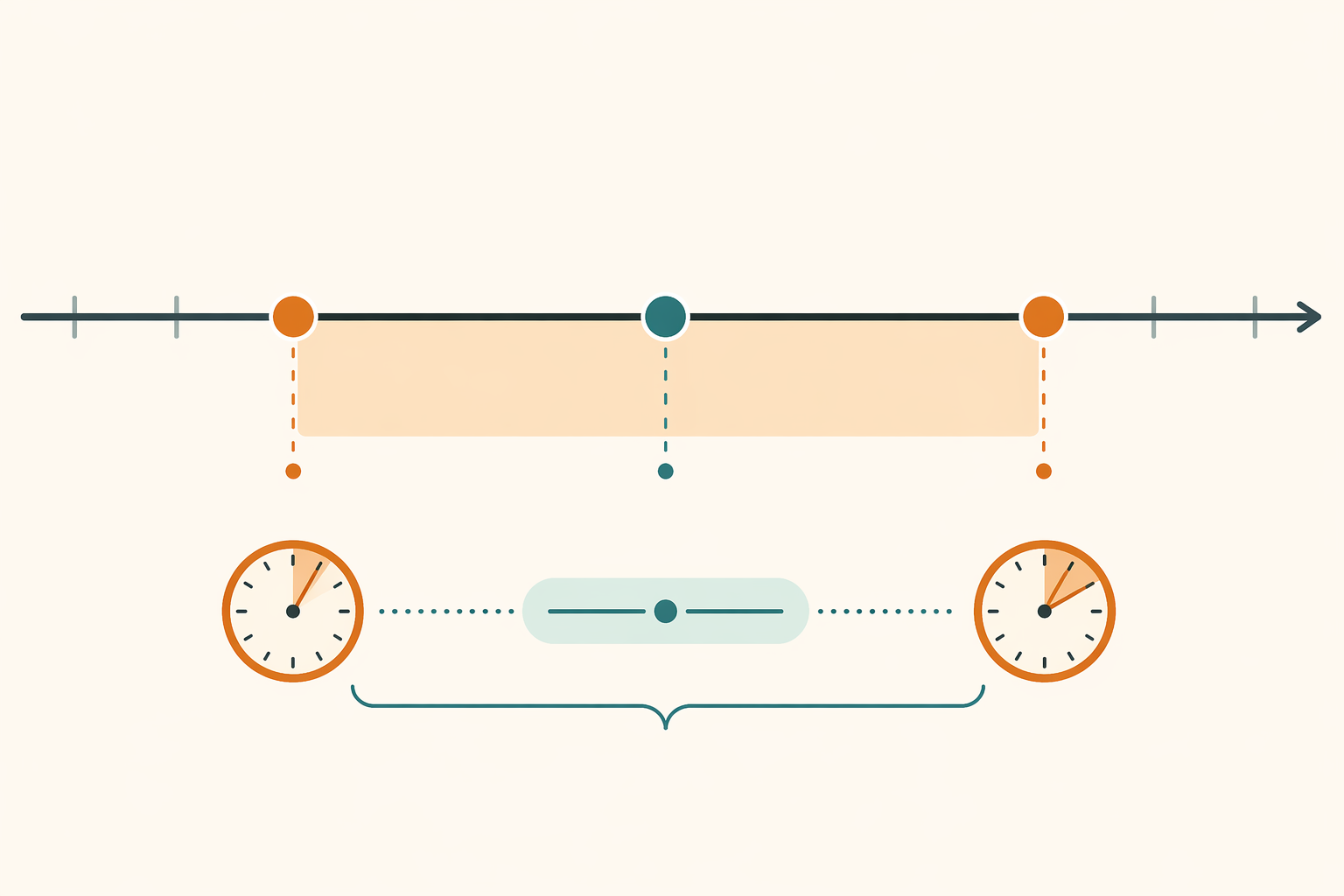
This does not mean you should build a day that constantly depends on the last possible minute. It means you can stop treating the posted window like a brittle meeting invite. If a ride is scheduled for 10:00–11:00, the usable shape may begin at 9:55 and stretch to 11:15. That extra margin can let you finish a nearby standby ride, avoid walking away from a mobile order, or scan into two attractions in a tighter sequence.
The calendar-brain move is to use grace periods to reduce transitions, not to create stress. If you are already in Fantasyland and your next Lightning Lane is nearby, the early grace can pull the day forward. If a show ran long or someone needed a break, the late grace can save the plan from a needless reset. It is buffer, not permission to run every hour at maximum tension.
A Walt Disney World Operating Loop That Survives 2 P.M.
Put the pieces together and the Walt Disney World version becomes a repeatable loop. It is deliberately boring, which is a compliment. Boring systems are the ones you can still run when it is hot.
- Before the trip, book harder parks later in the vacation when possible, especially if your booking window covers multiple days.
- Before arrival, hold three selections that create a useful morning, not a perfect day.
- Use an early Tier 2 burner only if it is geographically and emotionally cheap.
- After every scan-in, replace the completed selection before the group changes context.
- Use modify-and-refresh when the payoff is meaningful, while keeping your current slot protected.
- Use grace periods to compress nearby moves or protect breaks, not to overpack the day.
Notice what is missing: no requirement to chase every eligible attraction, no need to win a social media scoreboard, no assumption that everyone in the group wants to be managed by an app. The operating standard is simply that the pipeline should not sit empty while you are paying for it.
Disneyland Uses the Same Principle With a Different Rhythm
Disneyland is not just Walt Disney World with different ride names. There are no tiers, and the system leans more heavily on same-day booking and the 120-minute rhythm between Lightning Lane bookings. That makes the Disneyland version less about unlocking a tiered board and more about stacking return times while the parks’ compact geography works in your favor. [8]
The high ceiling is real. Disney Tourist Blog field-tested a Disneyland and Disney California Adventure day with 32+ Lightning Lane rides, and Trips With Tykes has reported 40+ attractions over two days using Disneyland-specific Lightning Lane strategies. Those examples prove the system has capacity in skilled hands; they should not become the emotional target for a family vacation. [8][9]
For most groups, the Disneyland adaptation is simpler: book early, keep the next eligible booking time visible, stack when return times push later, and refresh when a better slot would materially improve the route. Because the parks are close together, a good Disneyland stack can feel less like dispatching a logistics network and more like keeping the next two hours from going mushy.
When to Skip Lightning Lane Multi Pass
The cleanest way to save money with Lightning Lane is to not buy it on days when it has too little leverage. That sounds obvious until the app price is sitting there and everyone is already emotionally committed to “not waiting in lines.” At Walt Disney World’s July 2026 range of roughly $18–$45 per person per day, a family-size purchase can become a serious line item quickly. Disneyland’s roughly $32–$40 range makes the same point in a different market. [2][3]
Animal Kingdom and EPCOT are the first parks to scrutinize on low-to-moderate crowd days. The issue is not that Multi Pass can never help there. It is that fewer must-book Lightning Lane opportunities and more manageable standby conditions can shrink the gap between buying and skipping. If your group mainly wants shows, food, animals, atmosphere, or a slower EPCOT day, Multi Pass may be solving a problem you do not have.
A useful skip decision has three inputs:
- Park leverage: Are there enough attractions your group wants where Lightning Lane meaningfully beats standby?
- Crowd pressure: Are posted waits likely to make the purchase save real time, not just make the buyer feel safer?
- Operator capacity: Is someone in the group willing to run the system lightly throughout the day without becoming irritated?
That third input is easy to ignore and expensive to learn. The person holding the phone is doing work. If buying Multi Pass turns one adult into the group’s unpaid air-traffic controller for eight hours, the wait-time savings need to be large enough to justify that attention cost.
The Practical Standard
Buy Lightning Lane Multi Pass when the park, crowd level, and group priorities give the system enough leverage. Then run it with five rules: keep the Rolling 3 alive, use an early burner only when it is cheap, refresh without surrendering your current slot, treat grace periods as buffer, and skip the purchase when the math or the mood does not support it.
The goal is not to prove you can complete the most attractions. The goal is to convert less standing around into more vacation, without making the day feel like a dashboard.
References
- Disney's Lightning Lane Passes Explained: 10 Tips to Save Money and Time, Frommer's
- Lightning Lane Tips & Strategy, MouseSavers
- Disney's Lightning Lane Multi Pass: A Complete Guide, WDW Magazine
- Lightning Lanes at Disney World Guide (FAQ), Disney Tourist Blog
- Top 10 Tips & Tricks for Lightning Lanes at Disney World, Disney Tourist Blog
- I've Tried Every Lightning Lane Hack — The 2 That Work Every Time, Disney Food Blog, January 2026
- We Found a Trick To Get the BEST Lightning Lane Reservations, Disney Food Blog, July 2024
- We Did Every Lightning Lane Ride at Disneyland & DCA In One Day, Disney Tourist Blog
- 11 Advanced Strategies & Tips to Maximize Lightning Lane on a Disneyland Trip, Trips With Tykes
Comments
Join the discussion with an anonymous comment.