
The useful question in a Light Flip phone review for productivity and focus is not whether the phone looks charming. It is whether the device makes interruption harder to begin.
On that narrow question, the Light Flip starts with a clean answer: there is no outside screen to glance at, no touchscreen to drift across, no browser to open, no email client to refresh, no social feeds, no news feed, and no ad-supported app layer waiting behind the lock screen. To use it, you have to open it. That hinge matters less as a retro gesture than as a small physical checkpoint between intention and habit.
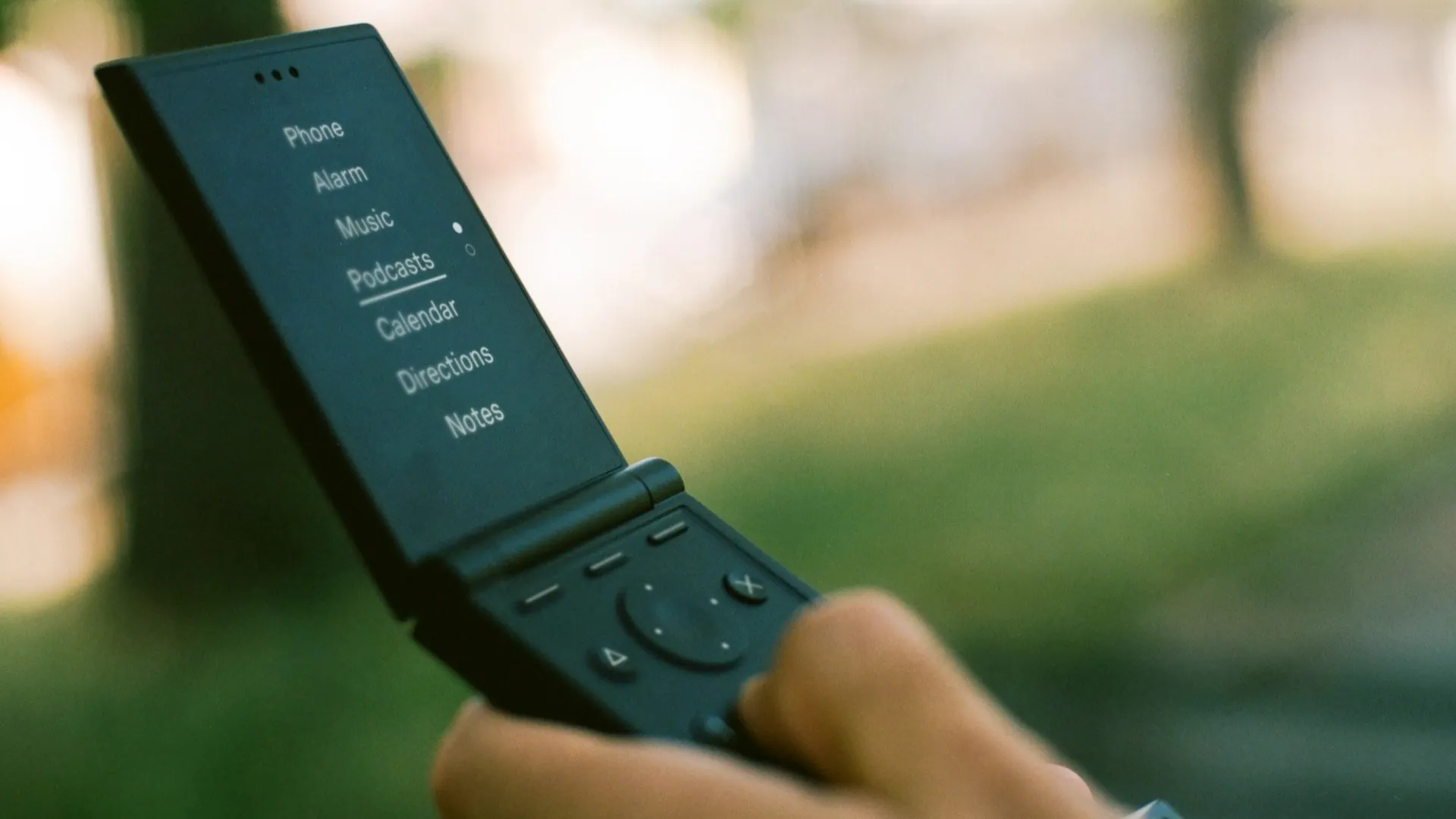
That also makes the phone easy to overpraise. The Light Flip has not shipped yet. It was announced on July 21, 2026, pre-orders are open, and first units are expected to ship in April 2027, with pre-launch specifications still subject to change.[1] There are no long-term independent Light Flip reviews because no ordinary buyer has lived with one for months. What can be tested now is the design claim: whether the phone removes the triggers that usually turn a useful check into a broken work block.
What The Hardware Actually Removes
The Light Flip is a $299 unlocked clamshell phone with a 2.8-inch non-touch matte OLED display, T9 keypad, D-pad navigation, MediaTek Dimensity 7300 processor, 3GB of RAM, 64GB of storage, 1,800mAh user-replaceable battery, USB-C, 5G and 4G LTE, eSIM and nano-SIM support, an 8MP rear camera, IP54 dust and water resistance, and an all-plastic body available in Dawn, Dusk, Midnight, and Sage.[1][2][3] It can also be bought through Light service for $39 per month with 1GB of data.[2]
The missing pieces are the more important part of the productivity profile: no NFC, no front camera, no SD card slot, no touchscreen, and no external display.[1][2][3] Those omissions are not minor if your phone is how you pay, scan boarding passes, join video calls, type long replies, approve banking logins in an app, or manage messaging apps that do not exist on LightOS.
| Feature | What It Changes In A Workday |
|---|---|
| No outside screen | You cannot glance at caller details or notifications without opening the phone. |
| No touchscreen | Scrolling and fast app-hopping are physically unavailable; typing is slower. |
| T9 keypad and D-pad | Short replies remain possible, but long text entry becomes a deliberate task. |
| No browser, social feeds, email, news, or ads | Common attention traps are absent rather than blocked by a setting. |
| No NFC | Tap-to-pay and many wallet-dependent routines need another device or card. |
| No front camera | Selfies and video calls are not part of the device’s job. |
The phone is therefore not a weaker smartphone. It is a smaller permission set. That distinction matters because a weaker smartphone still invites the same loops with worse performance. A smaller permission set changes what is possible before willpower has to enter the room.
LightOS Is The Focus System, Not The Flip Hinge Alone
LightOS includes practical tools: Alarm, Calculator, Calendar, Camera, Directions based on HERE Maps, Hotspot, Music, Notes and Voice Memo, Podcasts, Weather, and Authenticator for two-factor authentication.[1][3] It does not include a traditional app store, browser, email, social media, news, or ads.[1][3]
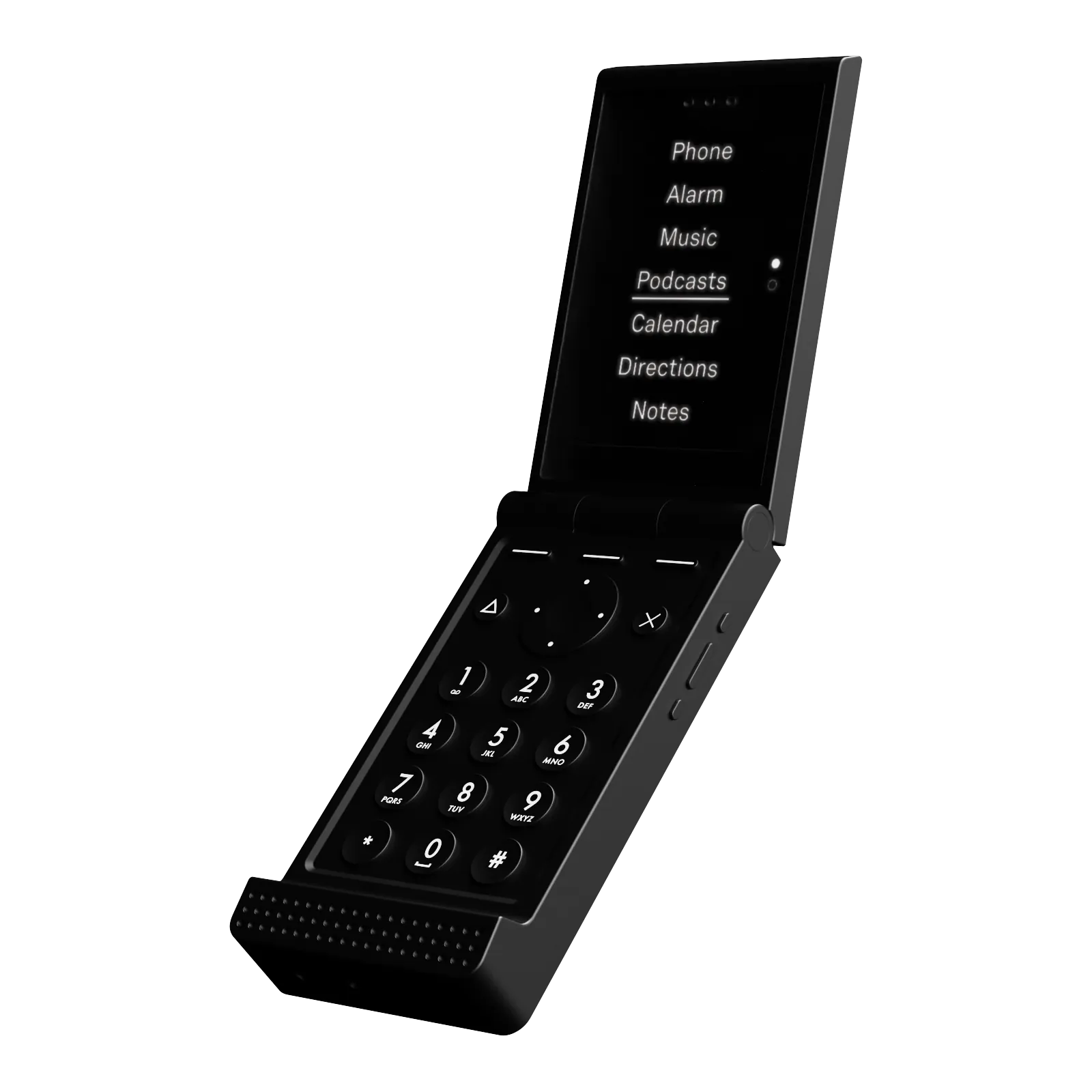
That list is almost exactly where the device becomes interesting for knowledge workers. Maps, calendar, hotspot, 2FA, voice notes, music, weather, and a camera are the functions many people still need when they leave a smartphone behind. The Light Flip tries to keep those workday utilities while refusing the services most likely to stretch a 30-second check into 12 minutes of recovery time.
The notification LED is a similar choice. It can tell you that something happened, but it does not turn the outside of the phone into a small status dashboard.[1][3] If you want more context, you open the device. That is an inconvenience by design, and it will irritate anyone expecting the phone to be both invisible and fully informative.
Light is also leaving a controlled path for expansion. More than 2,000 developers have reportedly signed up for its SDK, with tool-library principles that rule out ads, endless feeds, and user tracking; examples in development include a field recorder, language keyboards, and local subway maps.[1] That ecosystem could matter, but only if it stays boring in the right way. The value of this phone depends on utility being allowed in without reintroducing the feed logic that made the second device attractive.
The Best Evidence Comes From A Different Light Phone
The strongest focus evidence available does not come from the Light Flip. It comes from an April 2026 Stanford preprint that used the Light Phone II as the test device.[4] That distinction should stay visible. The Light Phone II is not the Light Flip, and the Light Flip’s clamshell body, T9 keypad, and lack of touchscreen may change daily behavior in ways the study did not measure.
Still, the overlap is meaningful because the core constraint model is LightOS: no browser, no social media, no news feed, no email client, and no ad-driven app environment. In the Stanford work, participants who chose the experiment showed a sharp and immediate decline in social media checks, greater perceived control, and less phone dependency.[4] They also reported reduced fear of missing out and social comparison, with no drop in perceived closeness to friends.[4]
That is the kind of result worth taking seriously because it measures behavior and perceived agency, not just preference. The phone did not have to make people happier in every moment to be useful. In fact, the same reported evidence did not find reliable changes in moment-to-moment positive mood, alertness, or depression.[4] The narrower claim is better: enforced limitation appears to reduce certain checking behaviors and improve users’ sense of control when they have chosen the constraint themselves.
Motivation is doing real work there. The reported benefits were strongest for intrinsically motivated participants.[4] That makes the Light Flip a poor rescue device for someone who wants hardware to impose a value they do not actually hold. It is better understood as a boundary device for people who already know what they are protecting: drafting time, reading blocks, client work, study sessions, sleep, or weekends without a slab phone within reach.
Where The Productivity Claim Breaks In Normal Life
A focus phone fails quietly when one missing convenience forces the smartphone back into your pocket all day. The Light Flip’s most important trade-offs are not abstract. No NFC means no tap-to-pay.[1][2][3] No front camera means no selfies or video calls.[1][2][3] No touchscreen means slower text input.[1][2][3] No external display means you must flip the phone open before seeing who is calling or what needs attention.[1][3]
The app gaps are sharper. If your day depends on banking apps, WhatsApp, Signal, rideshare apps, mobile boarding passes, heavy photo workflows, or a full smartphone replacement, the Light Flip is likely to create workarounds rather than focus.[1][2][3] That does not make the device poorly designed. It means the design is pointed at a narrower job than “be my only computer-shaped object.”
There are workarounds, but they are not free. You can carry a physical card instead of using tap-to-pay. You can print or save travel documents elsewhere. You can schedule rides from a laptop before leaving. You can keep a smartphone in a bag, drawer, or at home. Each workaround either strengthens the boundary or defeats it, depending on how often you need it.
Carrier compatibility is at least less exotic than the device itself. Reported supported U.S. carriers include T-Mobile, Verizon, AT&T, Boost, Mint, Ting, and US Mobile via eSIM or nano-SIM.[5] That helps the Light Flip function as a secondary phone rather than a weekend-only novelty, especially for people who want maps, hotspot, and calls without moving their entire life into a minimalist device.
The Secondary Phone Case Is Stronger Than The Replacement Case
Light’s own positioning points toward a secondary-device role: an easy way to leave the smartphone at home.[1] That is the cleaner productivity use case. The Light Flip can cover calls, texts, navigation, calendar checks, hotspot, authentication, music, podcasts, notes, and voice memos while leaving behind the apps that usually colonize spare attention.
For deep work, that role is more believable than total replacement. A writer can take it to a library session. A product manager can use it during a strategy block while keeping a laptop nearby for real work. A student can carry it on campus for calls, directions, music, and 2FA. A consultant can use it on a travel day only if boarding passes, rides, payments, and client messaging have already been handled elsewhere.
The Flip Your Life program, with community resources, newsletters, and screen-time challenges, is a useful signal that Light understands the transition as behavioral rather than purely technical.[2] But community scaffolding cannot remove the everyday dependency question. If your work culture treats instant WhatsApp replies, mobile banking approvals, and rideshare availability as baseline infrastructure, the Light Flip will push costs onto you.
A Conditional Verdict Before Long-Term Reviews Exist
The Light Flip is promising because its constraints are physical, visible, and difficult to negotiate with in the moment. It removes the browser, feeds, email, ads, touchscreen scrolling, and glanceable outside display that often turn useful phone access into interruption drift. The Stanford Light Phone II evidence supports the broader idea that this kind of enforced limitation can reduce social media checking and increase perceived control for people who choose it willingly.[4]
It is not yet proven as a Light Flip-specific productivity upgrade. The device will not ship until April 2027, its specifications remain pre-launch, and the available focus evidence comes from a different Light device.[1][4] The practical purchase case is strongest for intrinsically motivated users who can wait roughly 10 months, want a secondary focus phone, and are prepared for deliberate inconvenience. Anyone expecting a $299 flip phone to preserve every smartphone convenience while quietly curing distraction should skip the pre-order.
References
- Light Flip announcement and hands-on coverage — The Verge, July 2026.
- Light Flip announcement coverage — TechCrunch, July 2026.
- Light Flip coverage — Engadget, July 2026.
- Stanford preprint on Light Phone II behavior changes — PsyArXiv, April 2026.
- Light Flip carrier compatibility coverage — The Gadgeteer, July 2026.