
The practical question is not whether time-restricted eating sounds tidy. Many tidy habits fail the moment real work begins. The better question is whether narrowing the eating window can help preserve the mental operations that aging knowledge workers notice first: planning a sequence, comparing alternatives, remembering why a decision was made, and keeping a long-running body of work coherent.
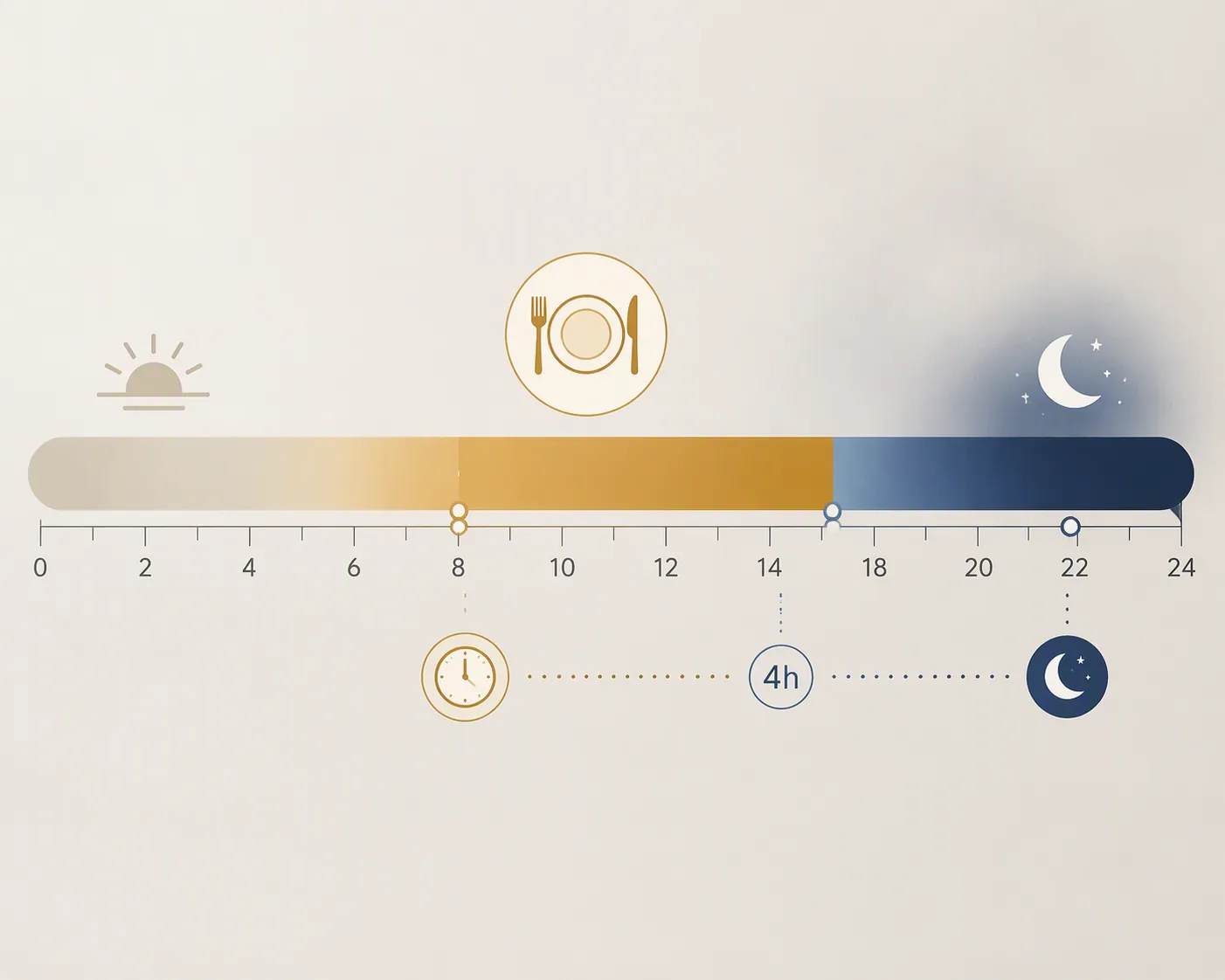
That is why the 2026 Rutgers pilot is worth taking seriously, though not yet treating as settled advice. In a small trial presented at NUTRITION 2026, 47 women aged 50 to 79 followed either a calorie-restricted diet with a daily 10am-to-6pm eating window and a four-hour food stop before bed, or calorie restriction without the same time restriction. Both groups lost about 15 pounds. The time-restricted eating group, however, showed greater improvement in spatial planning and problem-solving — the kinds of executive functions that matter when work depends on organizing context rather than merely staying busy.[1]

The equal weight loss matters. If one group had simply lost more weight, the cognitive result would be easier to dismiss as a weight-loss effect. Instead, the pilot suggests that when food is eaten may have contributed something beyond the pounds lost. That does not prove that time-restricted eating prevents cognitive decline. It does make the habit more interesting than another vague wellness rule.
What the Rutgers Trial Actually Tested
The Rutgers protocol was plain enough to be tested in ordinary life: eat during an eight-hour daytime window, stop food intake several hours before sleep, and reduce calories. The reported window was 10am to 6pm, which has a useful feature often missing from popular fasting talk: it avoids turning the habit into a late-night eating permission slip.[1]
For someone whose workday still requires sustained judgment, the cognitive outcomes are also better chosen than a generic memory score would have been. Spatial planning and problem-solving are not ornamental abilities. They are what allow a person to map a project, spot contradictions in a notes archive, remember which version of an idea superseded another, and recover after interruption.
The limits are just as important. This was a pilot study, not a large trial. It involved 47 women, not a broad cross-section of adults. The findings were presented at a scientific conference and, as described in the available reports, should be treated as preliminary until the full peer-reviewed paper is available.[1]
Still, preliminary does not mean useless. A small, well-aimed trial can identify a pattern worth watching. Here the pattern is not “fasting makes you smarter.” It is narrower: among older women in a structured weight-loss setting, adding a daytime eating window was associated with greater gains in certain executive-function tasks than calorie restriction alone.[1]
Will Fasting Make Work Feel Foggy?
The first practical fear is not longevity. It is Wednesday afternoon. If a person has to compare documents, make a careful decision, or reconstruct the logic behind old notes, even a small daily drop in mental clarity is too expensive.
A 2025 review discussed in The Conversation pooled 71 studies with 3,484 participants across seven decades of research and found no meaningful cognitive performance difference between healthy adults who were fasted and those who were fed.[2] That finding does not show that fasting prevents decline. It answers a more immediate concern: in healthy adults, fasting itself does not appear to reliably dull cognitive performance.
For a working adult considering time-restricted eating, that distinction is useful. The evidence is better at saying “this may be tolerable for healthy people” than at saying “this will protect your brain over decades.” A habit can pass the tolerability test and still fail the prevention test. At this stage, time-restricted eating has cleared more of the first than the second.
Why the Result Is Biologically Plausible
The mechanisms usually proposed for time-restricted eating are not random. Eating earlier in the day may better align food intake with circadian rhythms. Longer nightly fasting periods may improve insulin sensitivity, reduce inflammatory signaling, increase brain-derived neurotrophic factor, and encourage metabolic switching toward ketones as an alternative fuel source. Cellular and animal models support pieces of this explanation, which helps make the Rutgers findings coherent without making them conclusive.[1]
That distinction matters because mechanisms are often where early evidence gets oversold. A plausible pathway is not the same as a demonstrated outcome in older adults living with medications, sleep disruption, blood-pressure variation, and uneven meals. The pathway says why a result might happen. It does not tell us whom it helps, how much it helps, or when the trade-offs become unacceptable.
The Longer Study Points in the Same Direction, with a Different Kind of Fasting
The most encouraging longer-term human evidence comes from a three-year study of adults over 60 with mild cognitive impairment. In that study, about 25% of regular intermittent fasters reverted to normal cognitive status, compared with less than 4% of non-fasters.[3]
Those numbers are hard to ignore, but the protocol is not the same as choosing a 10am-to-6pm eating window. The fasting pattern in the study was Ramadan-style religious fasting, which brings different timing, cultural context, social structure, and likely dietary patterns than voluntary daily time-restricted eating.[3] It supports the possibility that fasting patterns can interact with cognitive aging. It does not license a direct claim that a standard daily eating window will reverse mild cognitive impairment.
For the healthy 50-plus worker, the study functions as background support rather than operating instructions. It gives the Rutgers pilot a longer horizon, but it should not be treated as the same intervention under another name.
The Boundary Case: Frailer Older Adults May Not Fit the Same Rule
The strongest restraint on enthusiasm comes from a 2022 Scientific Reports study of 1,353 suburban-dwelling older Chinese adults. The mean age was 73, and the population carried a higher burden of frailty-related concerns, including higher rates of hypertension and stroke. In that setting, time-restricted feeding was associated with poorer performance in specific cognitive domains.[4]
That finding should not be brushed aside as an inconvenience. It may be the most practically important result for anyone tempted to universalize the Rutgers pilot. A person in their early 60s, physically stable, sleeping reasonably well, and experimenting with an earlier dinner is not the same case as a frail older adult with vascular history or metabolic instability.
The Chinese study was observational, so it cannot prove that time-restricted feeding caused worse cognition. But association is enough to set a boundary. In older adults with comorbidities, low resilience, medication timing issues, or a history of stroke, shrinking the eating window is not a harmless productivity tweak. It is a health intervention that may change hydration, glucose stability, blood pressure patterns, nutrition adequacy, and medication routines.
A Sensible Test Looks Earlier, Not Harsher
If time-restricted eating belongs anywhere in a cognitive longevity routine, it belongs as a modest timing experiment, not as a contest of endurance. The Rutgers design points toward an earlier eight- to nine-hour eating window and a food stop several hours before bed.[1] That is a different habit from skipping food deep into the workday and then eating late because the calendar finally relents.
| Question | More Reasonable Fit | Poorer Fit |
|---|---|---|
| Baseline health | Relatively healthy adult over 50 | Frailty, recent instability, or multiple unmanaged conditions |
| Medication and glucose stability | No obvious conflict with meal timing | Medication, diabetes, dizziness, or blood-pressure concerns tied to food |
| Eating window | Earlier daytime window, such as the Rutgers 10am-to-6pm model | Late compressed eating after a long workday |
| Goal | Reduce cognitive friction and support long-term brain health habits | Treat fasting as a guaranteed prevention strategy |
The useful version is boring in the best sense. Choose a window that does not interfere with medication, protein intake, social meals that matter, or sleep. Notice whether planning, recall, mood, and afternoon work quality hold steady. If the experiment produces headaches, irritability, poor sleep, dizziness, or a compensating late-night meal, the habit is not succeeding just because the clock looks disciplined.
People with diabetes, frailty, a history of stroke, unstable blood pressure, eating-disorder history, or complex medication schedules should not borrow this habit from a productivity article. The evidence that makes time-restricted eating interesting in healthier adults is not strong enough to override individualized medical risk.
Where It Fits Beside Notes, Sleep, and Memory
There is a reason this question now sits near tool migration and archive maintenance. The same person deciding whether an old note system still serves them is often also deciding which personal routines are worth changing before decline becomes urgent. Reorganizing a digital workspace is one kind of preservation. Protecting the cognitive capacity to use it is another.
Time-restricted eating should not displace better-established brain-health routines. Sleep still has a stronger claim on daily cognitive function, and memory formation remains closely tied to the biology covered in How Tau Protein Improves Memory Formation for Productivity and The 7-Hour Sleep Sweet Spot for Productivity and Brain Health. If someone is sleeping badly, eating late, and migrating years of notes while under stress, the first gain may come from making the day less chaotic rather than from treating fasting as the central intervention.
The demographic overlap is real. Readers comparing Evernote’s 2026 subscription value or working through Evernote alternatives and migration steps are often not just changing software. They are lowering the friction around recall, search, review, and continuity. An eating-window habit belongs in that same practical category only if it improves the conditions under which thinking happens.
The Practical Judgment
Time-restricted eating is credible enough for a relatively healthy adult over 50 to consider, especially in an earlier daytime form that stops food several hours before sleep. The Rutgers pilot gives the idea its most relevant signal: equal weight loss, but stronger gains in planning and problem-solving in the time-restricted group.[1] The larger fasting literature offers reassurance that healthy adults are not generally cognitively impaired by fasting itself.[2]
But this is not yet an evidence-backed prevention strategy for everyone. The strongest positive studies are still limited by size, design, population, or fasting type, and the Chinese study warns that frailer older adults may experience a different risk-benefit balance.[3][4]
For the right person, an earlier eating window is a cheap, repeatable habit worth testing. It is not a guarantee that the mind which built a lifetime of notes will remain intact. The honest case is smaller than that — and more useful because it is smaller.
References
- Eating within 8 hours may help keep the aging brain sharp, ScienceDaily, July 27, 2026.
- Does fasting dull your mental edge? We crunched the data for the best advice, The Conversation, 2025.
- Intermittent fasting enhanced the cognitive function in older adults with mild cognitive impairment, Nutrients, 2020.
- Time restricted feeding is associated with poor performance in specific cognitive domains of Suburb-Dwelling older Chinese, Scientific Reports, 2022.
Comments
Join the discussion with an anonymous comment.