
The strongest Zapier AI agents use cases are not the flashiest ones. They are the workflows where a team already has too much language to sort, draft, research, or repurpose, and where a human can review the output before it reaches a customer, prospect, or manager. That is why the most defensible examples cluster in sales development, customer support, recruiting outreach, churn monitoring, and content operations—not in billing, compliance, or exact data transformation.
The named-company results are useful, but they need to be read for what they are: first-party Zapier case studies, not independent benchmarks. Still, some of the numbers are specific enough to be operationally meaningful. Slate reports more than 2,000 qualified leads per month and a 50% response rate on AI-drafted outreach. Erewhon reports a 70% unmodified acceptance rate on AI-drafted support replies, 1,500 hours saved per year, and 5.5x ROI. Healthie reports more than 60 hours saved per week across AI-assisted call coaching, churn monitoring, and client follow-up workflows.[1][4][6]
| Department | Best-fit agent work | Named example | Reported result | What the metric actually tells you |
|---|---|---|---|---|
| Sales | Lead research, prospecting, outreach drafting, follow-up | Slate | 2,000+ qualified leads per month; 50% response rate on AI-drafted outreach | The agent is affecting both volume and buyer engagement, not just saving rep time.[1] |
| Sales | LinkedIn prospecting and agency replacement | NisonCo | 48% lead increase; about $30,000 per year saved on agency fees | The workflow replaced an external prospecting cost and increased lead flow.[2] |
| Sales | Account and prospect research | egg | Research time reduced from 3 hours to 5 minutes | The agent compressed pre-call preparation, a task where near-complete research can still be useful.[3] |
| Customer support | Ticket response drafting with human review | Erewhon | 70% unmodified draft acceptance rate; 1,500 hours saved per year; 5.5x ROI | The acceptance rate matters because it shows how often the draft was good enough to use as-is.[4] |
| Recruiting and marketing operations | Recruiting outreach and content pipelines | JBGoodwin REALTORS | 37% recruiting lift across workflows covering 900+ agents | The agent supported a repeatable outreach system rather than a one-off content experiment.[5] |
| RevOps and customer success | Call coaching, churn monitoring, client follow-up | Healthie | 60+ hours saved per week | The time savings are spread across several post-sale operating workflows, not a single chatbot.[6] |
Where Agents Beat Ordinary Zaps
A normal Zap is excellent when the work can be written as a rule: when a form is submitted, create a row; when payment succeeds, send a receipt; when a deal enters a stage, notify the account owner. An AI agent becomes more useful when the step in the middle requires interpretation: classify this ticket, summarize this call, draft this reply, research this account, rewrite this post for another channel.
That distinction explains why the better Zapier AI agents use cases tend to be hybrid systems. The deterministic automation still handles the durable plumbing: routing, posting, record creation, validation, and notifications. The agent handles the messier language layer that previously sat with a sales rep, support lead, marketer, recruiter, or customer success manager.
The practical test is simple: if an 80% good first draft reduces the queue and a person can catch the rest, an agent may be worth testing. If one wrong output creates a billing error, compliance exposure, broken entitlement, or misreported metric, use deterministic automation.
Sales: The Clearest Cluster of Agent-Friendly Work
Sales has the cleanest evidence set because the work contains a lot of repeatable language and the outcomes are easy to inspect. A team can see whether qualified leads increased, whether prospects replied, whether research took less time, and whether the cost of a vendor or agency went down.
Slate is the strongest opening example because it combines volume with response quality. The company reports generating more than 2,000 qualified leads per month through Zapier Agents and getting a 50% response rate on AI-drafted outreach.[1] Those are not the same claim. Lead volume tells you the system is finding or processing enough prospects to matter. Response rate tells you the output did not collapse when it met a human inbox.
The important point is not that an agent “does sales.” It does pieces of sales that are expensive to do manually and forgiving enough to review: research a prospect, enrich context, draft a message, prepare a follow-up, or repurpose a successful angle. A sales lead can inspect samples, monitor reply rates, and decide whether the drafts are good enough to represent the company before scaling the workflow.
NisonCo gives a different version of the same pattern. Its Zapier case study reports a 48% lead increase from AI-powered LinkedIn prospecting and about $30,000 per year saved on agency fees.[2] That is more useful than a vague productivity claim because it identifies what changed hands: a prospecting function that had been outsourced became an internal automated workflow.
egg, a UK clean energy brand, narrows the sales use case even further. Its reported prospect research time dropped from 3 hours to 5 minutes.[3] That kind of compression is believable because pre-call research is a classic “good enough with review” task. The rep still owns the judgment. The agent reduces the blank-page and tab-hopping work before the conversation.
- Good sales-agent candidates: prospect research, account summaries, first-draft outreach, follow-up reminders, call recap summaries, lead qualification notes.
- Weak sales-agent candidates: commission calculation, contract terms, discount approval, territory assignment rules, CRM field updates that must be exact.
- Best review layer: sales manager or RevOps review of sample outputs, reply rates, bounce rates, opt-out signals, and CRM hygiene.
Customer Support: Draft Acceptance Is the Metric to Watch
Customer support is where “AI saved time” can become either meaningful or dangerously vague. A support manager does not just need faster replies. They need replies that are accurate enough, empathetic enough, and policy-safe enough to send after review.
That is why Erewhon’s case is more useful than a generic hours-saved statistic. Zapier reports that Erewhon’s AI-drafted support replies reached a 70% unmodified draft acceptance rate, saved 1,500 hours per year, and delivered 5.5x ROI on the agent investment.[4] The acceptance rate is the load-bearing metric. It says the agent’s output was not merely present in the workflow; in most reviewed cases, the human did not need to edit it before sending.
That still does not make the agent autonomous in the way vendors sometimes imply. A support draft can be accepted, edited, or rejected. Someone has to define the escalation boundary: refund requests, medical or legal language, account access issues, threats, VIP customers, or anything involving policy exceptions. The agent should reduce the queue, not become the policy owner.
The most durable support pattern is usually not “let AI answer everything.” It is triage plus drafting. Deterministic Zaps can route tickets by channel, form field, customer tier, or known keyword. The agent can summarize the issue, classify the likely intent, propose a reply, and flag ambiguous cases for a human. That division is easier to defend because it gives the manager a failure boundary: the agent may be wrong in its draft, but it should not be able to silently issue a refund, change an account, or close a sensitive case.
- Track draft acceptance rate, not just response speed.
- Separate auto-routing from AI-generated language.
- Keep high-risk ticket categories out of full automation.
- Review rejected drafts to find missing knowledge-base content or unclear instructions.
Marketing, RevOps, and HR: Useful, but More Uneven
Marketing and recruiting workflows are rich with agent opportunities, but the evidence is a little less tidy than in sales and support. Content repurposing, recruiting outreach, churn monitoring, and customer follow-up can all benefit from AI assistance. The hard part is deciding which metric proves the workflow is better.
JBGoodwin REALTORS reports a 37% recruiting lift using AI-powered outreach and content pipelines across workflows covering more than 900 agents.[5] That is a useful recruiting operations example because it links automation to a specific recruiting outcome, not just faster content production. The agent appears to sit in a pipeline where outreach, content, and follow-up all need to happen repeatedly at scale.
Slate’s Content Booster, described in the same case study as its lead-generation work, points to another common use case: repurposing content across SEO, social, and email.[1] This is where an agent can be helpful even if it does not directly own the final metric. It can turn a webinar, article, or long-form asset into channel-specific drafts that a marketer reviews, edits, and schedules.
Healthie shows the broader RevOps and customer success version. Zapier reports that the company saves more than 60 hours per week across call coaching agents, churn monitoring, and automated client follow-ups.[6] The interesting part is the mix: one workflow analyzes language from calls, another watches for churn signals, and another helps trigger follow-up. That is less like a single magic agent and more like a set of language-aware steps embedded in ordinary operations.
For these departments, the best measurement often sits one level below revenue. Track recruiter replies, content throughput, review time, follow-up completion, churn-risk coverage, or manager coaching capacity. If the team cannot say what improved after the agent entered the workflow, “more content” is not much of an argument.
The Operating Pattern Behind the Better Use Cases
Across the stronger examples, the agent is rarely the whole system. It is one interpretive layer inside a larger workflow. That matters because Zapier’s advantage is not only the AI interface; it is the ability to connect the agent to the tools where the work already lives.
Independent comparisons often describe Zapier’s integration breadth as its main differentiator: more than 9,000 apps, compared with roughly 3,000 integrations for Make and a smaller AI-node footprint for n8n. That does not automatically make Zapier the cheapest or most flexible platform, but it does make it easier for non-engineering teams to put an agent between a CRM, ticketing queue, spreadsheet, Slack channel, email tool, and content system.
If you are comparing platforms rather than validating one Zapier workflow, use a broader automation comparison such as Zapier vs Make vs n8n or an AI workflow automation tools comparison by skill level. The decision is not just “which tool has agents?” It is “which tool lets this team maintain the workflow after the demo?”
| Workflow ingredient | Agent role | Deterministic Zap role | Manager review question |
|---|---|---|---|
| Inbound support ticket | Summarize issue and draft reply | Route by queue, customer tier, and status | How often are drafts accepted without edits? |
| Prospect list | Research accounts and draft outreach | Create CRM tasks and log activity | Do reply rate and lead quality improve? |
| Recorded sales or success call | Extract themes and coaching notes | Post summary to Slack or CRM | Are managers acting on the summaries? |
| Long-form content | Repurpose into channel drafts | Move approved assets into publishing tools | Does review time drop without quality loss? |
| Churn-risk signals | Interpret notes or account context | Notify owner and create follow-up task | Are risky accounts surfaced earlier? |
Pricing and Task Usage Can Change the ROI
The case studies show what is possible, but pricing decides whether the same pattern survives inside a budget. As of Q3 2026, Zapier includes 400 free AI behaviors per month, with Pro at $50 per month for 1,500 AI behaviors. Zapier also moved to model-based pricing for AI steps effective June 15, 2026, which makes it risky to assume an old case-study workflow has the same unit economics now.
The cost issue is not just the monthly plan price. Multi-step agents can multiply billable usage. A workflow that runs 1,000 times and uses five billable steps consumes 5,000 tasks or AI behaviors, not 1,000. Independent cost commentary has also estimated that complex agent flows may cost several times more than equivalent rule-based Zaps. That does not make agents a bad investment; it means the workflow has to earn its extra interpretation layer.
For total cost of ownership, compare the task pattern before comparing feature lists. A low-volume workflow with high labor cost may justify an agent quickly. A high-volume workflow with simple structured rules may be cheaper and safer as a conventional Zap. If you are comparing automation platforms on pricing and fit, a broader workflow automation platform comparison is more useful than judging Zapier Agents in isolation.
A Defensible Decision Threshold
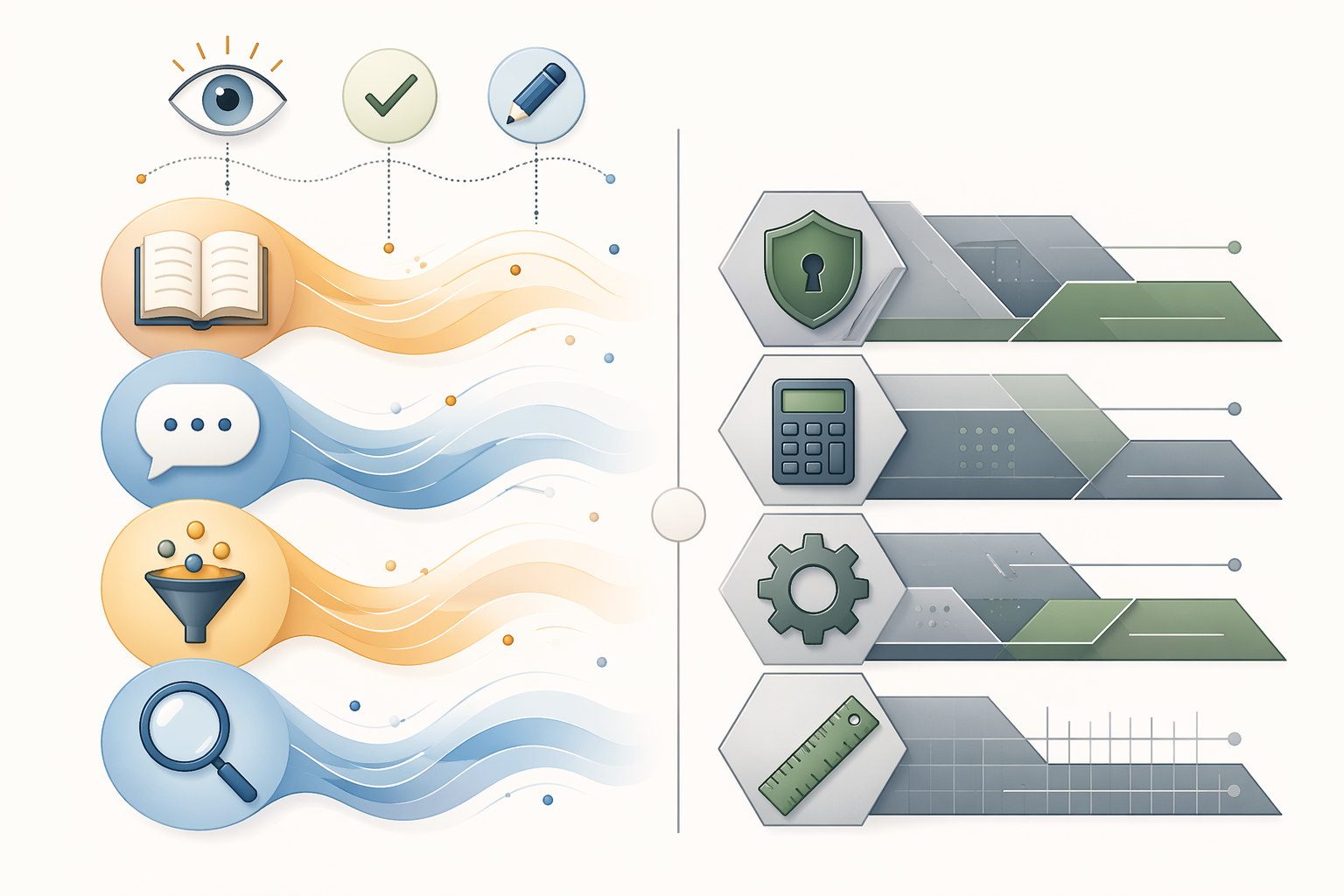
A Zapier AI agent is easiest to justify when four conditions are true: the work has enough language volume to matter, the output can be reviewed, the team can measure throughput or quality, and the task cost is lower than the capacity gained. Sales outreach, support drafting, content repurposing, recruiting outreach, call coaching, churn monitoring, and customer follow-up often meet that standard.
A deterministic Zap is still the better default when precision is the product. Billing, compliance, structured data transforms, entitlement changes, audit logs, approval rules, and regulated customer communications should not depend on a model being probably right. Use agents where interpretation creates leverage. Use rules where correctness is the job.
References
- Slate generates 2,000+ leads with Zapier Agents, Zapier
- How NisonCo fuels business growth with Zapier Agents, Zapier
- egg sparks clean energy sales with AI, Zapier
- Erewhon AI automation builder, Zapier
- JBGoodwin REALTORS automates recruiting with Zapier, Zapier
- Healthie saves 60 hours per week with AI Agents, Zapier