
The tested answer is narrower than the keyword makes it sound: use Gemini when the plan depends on live, location-sensitive data; use ChatGPT when the plan depends on clean structure, reconciliation, and repeatable formatting; verify both before acting. “Planning” can mean finding a villa that exists, routing a day around a real map, reconciling flight times with hotel check-in, building a calorie target, or turning a vague work brief into a research plan. Those are not the same test.

That distinction matters because the head-to-head evidence does not produce a satisfying single champion. Gemini has the more useful mechanism for maps, routes, hotels, flights, and current logistics. ChatGPT is often the steadier planner when the output needs to become a clean itinerary, schedule, checklist, meal plan, or research scope. The moment the plan leaves the chat window, though, the more important question is not which assistant sounded better. It is which claim has been checked.
| Planning job | Better first tool | Why | What still needs checking |
|---|---|---|---|
| Live trip routing, nearby places, current travel logistics | Gemini | It can lean on Google Maps-style live context more directly. | Existence, availability, distance, hours, prices, and booking terms |
| Detailed itineraries from a messy brief | ChatGPT | It tends to produce cleaner structure and more consistent sequencing. | Whether every place, timing assumption, and transfer is real |
| Reconciling dates, bookings, and calendar conflicts | ChatGPT | The strongest tests here favored its ability to organize constraints. | Reservation dates, cancellation windows, travel time, and conflicts |
| Villa or hotel discovery in a specific location | Gemini first, then direct verification | Live map context helps, but it still invents properties. | Property existence, official listing, address, reviews, and availability |
| Meal, calorie, or routine planning | ChatGPT | The value is usually in structure: targets, portions, substitutions, and schedule. | Nutrition labels, medical fit, portion assumptions, and arithmetic |
The travel tests show why Gemini looks better — until the task changes
The clearest case for Gemini comes from travel planning because travel exposes the difference between a polished plan and a usable one. StayVista tested ChatGPT, Gemini, and Claude on a villa getaway in India, scoring the assistants across six dimensions. Gemini scored 23 out of 30, while ChatGPT scored 19 out of 30, with the test emphasizing live Google Maps-driven criteria such as location fit and practical trip planning details.[1]
That is not a cosmetic advantage. If the plan depends on where something is, what sits nearby, how a route works, and whether the travel shape makes sense on a map, the assistant with better live location plumbing starts with a different kind of material. It can reduce the amount of manual searching the traveler has to do after the first draft.
Tom’s Guide found a similar kind of advantage in a holiday-planning test: Gemini’s Maps integration could route a real trip from the author’s home address, bringing the planning output closer to the logistics layer where the user actually has to move through the world.[2]
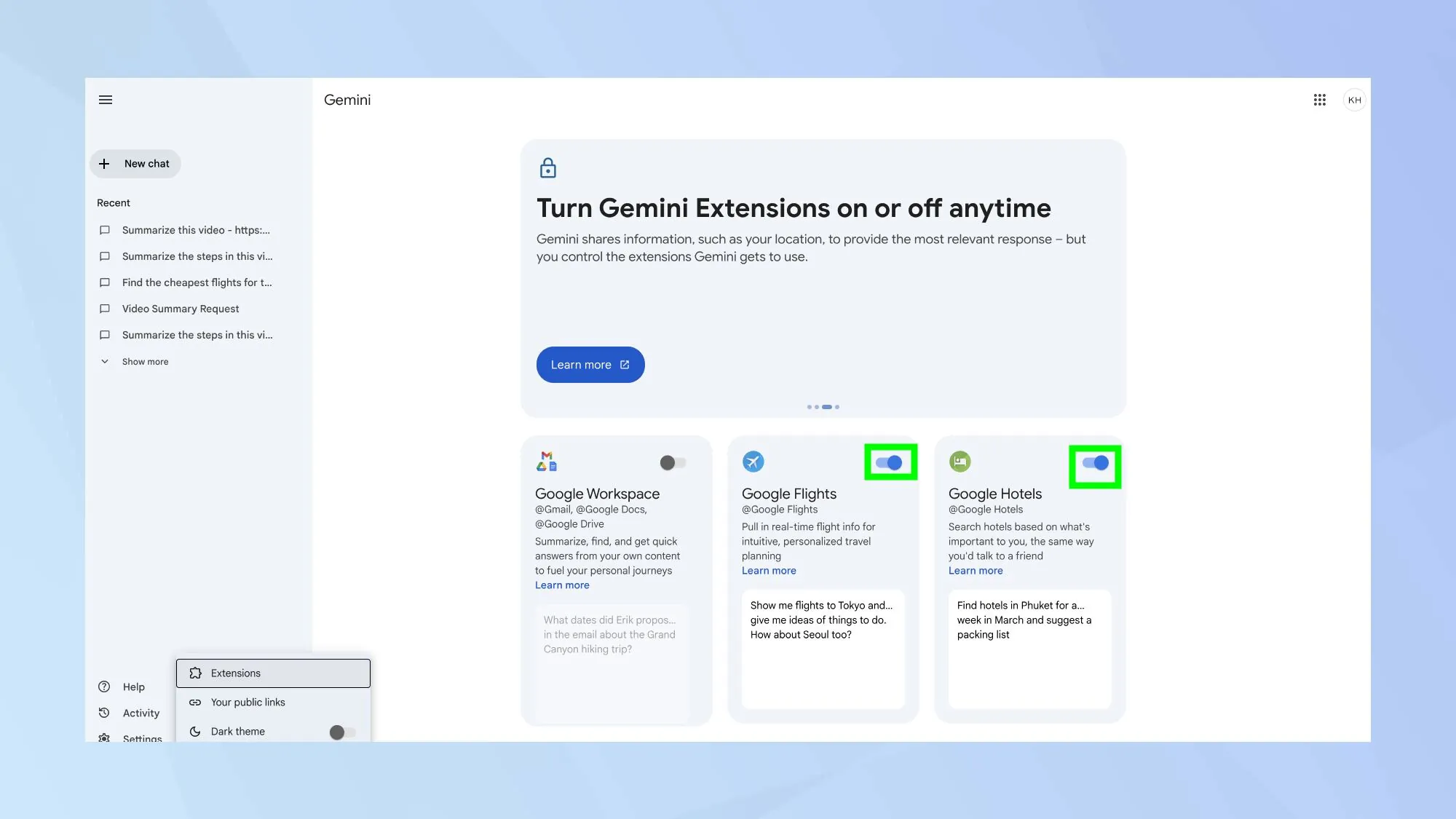
That is the part of the comparison where Gemini earns real credit. The benefit is not that its prose is more charming or that it seems more travel-savvy. The benefit is that maps, routes, and current place context can change the workflow. A user can start closer to the map, not just closer to a prettier paragraph.
But “travel planning” is already too broad. Once the problem shifts from finding and routing to reconciling commitments, ChatGPT’s case improves. XDA’s vacation-planning comparison found ChatGPT strongest at reconciling dates, bookings, and calendar conflicts — the kind of planning where the assistant has to keep constraints aligned rather than discover the freshest nearby option.[3]
Journo’s 20-query travel test complicates the ranking even more. In that test, ChatGPT scored 35 out of 50 and Gemini scored 33 out of 50. That is a narrow ChatGPT lead, not a landslide, and it points to a different reading of the evidence: Gemini’s live-data edge is most persuasive when the request needs live logistics, while ChatGPT can edge ahead when the request rewards completeness, structure, and consistency across many travel-planning questions.[4]
The failure log is where the comparison gets useful
The uncomfortable part of these tests is that both assistants failed in ways that a user would have to clean up. StayVista recorded Gemini inventing a non-existent “Lakeview Manor Pawna” villa. The same test recorded ChatGPT recommending a Vagator hotel that had closed in 2023.[1]

Those are not minor style problems. A non-existent villa means the user may waste time chasing a booking that cannot happen. A closed hotel means the plan has crossed from suggestion into false operational detail. In both cases, the assistant has produced the shape of certainty without the underlying confirmation.
Journo’s test found the same kind of problem in a different travel niche. Gemini fabricated a June 15, 2026 credit-card refresh with a 100,000-point bonus, while ChatGPT gave wrong Maldives points-and-miles advice.[4]
That failure category matters more than the small score gap between the tools. If a traveler asks for a points strategy, the wrong bonus or transfer advice can send them toward the wrong card, the wrong redemption path, or a plan that collapses when they try to book. If a family asks for a villa shortlist, a hallucinated property makes the assistant look efficient while moving the real work onto the person who has to verify it.
Live data access reduces some kinds of friction. It does not make the answer self-verifying. Structured output makes a plan easier to read. It does not make the claims inside it true. That is the practical line running through all four travel tests.
Where ChatGPT is the better planning tool
ChatGPT’s strongest planning use case is the moment when the user already has messy inputs and needs a coherent plan. Dates, preferences, constraints, dependencies, meal targets, workstreams, and fallback options all benefit from structure. ChatGPT is often better at turning that mess into something that looks like a schedule, table, checklist, or staged plan.
That makes it a strong first draft tool for a detailed itinerary after the traveler has already chosen the destination and rough dates. It can turn “three days, two adults, one child, no late nights, one museum, one food market, avoid long transfers” into a usable day-by-day shape. The checking burden then shifts to opening maps, official sites, booking pages, and transit options.
The same logic applies outside travel. For a calorie plan, ChatGPT’s value is usually not that it magically knows the perfect nutrition answer. Its value is that it can make the plan legible: target ranges, meal timing, substitutions, shopping categories, and a weekly rhythm. The user still has to check nutrition labels, serving sizes, dietary needs, and any medical constraints. A clean meal plan can still be wrong by assumption.
For deep-research scoping, ChatGPT is useful for decomposing the work: what to investigate first, which claims need evidence, what belongs in a comparison table, which terms may be ambiguous, and where the final decision points are. It should not be treated as the source of record. The planner can organize the research path; the citations and facts still need to come from actual documents.
Where Gemini is the better planning tool
Gemini is the better first stop when the plan’s usefulness depends on current places and routes. That includes building a short list of neighborhoods, understanding whether two stops are realistically close, shaping a day around a map, comparing broad travel logistics, or checking whether a suggested route feels plausible before deeper planning begins.
The strongest Gemini workflow is not “ask it to finish the trip.” It is “ask it to ground the trip.” Start with live constraints: where you are staying, what areas are reachable, what clusters make sense, what order avoids backtracking, and what options deserve a closer look. Then move the confirmed pieces into a more structured itinerary if needed.
For hotels and villas, Gemini’s map-aware advantage is useful but dangerous if treated as confirmation. A shortlist is not a booking page. The checks are simple and non-negotiable: open the property’s official listing or a trusted booking platform, verify the exact name and address, check current availability, compare recent reviews, and confirm cancellation terms before making plans around it.
A practical routing rule
The easiest way to choose between Gemini and ChatGPT for planning is to identify what would break the plan first.
- If the plan breaks because a place, route, hotel, flight, distance, or local option is wrong, start with Gemini.
- If the plan breaks because dates, dependencies, sequence, constraints, or formatting are confused, start with ChatGPT.
- If the plan involves money, bookings, nutrition, health, legal obligations, or irreversible commitments, use either assistant only as a draft and verify externally.
- If the plan needs both live logistics and clean structure, split the job: use Gemini to ground the options, then use ChatGPT to organize the confirmed pieces.
A travel example makes the split obvious. Let Gemini test whether a hotel area works, whether the day’s stops cluster sensibly, and whether a route seems realistic. Then give ChatGPT only the verified hotel, dates, selected stops, opening windows, and constraints, and ask it to turn those into a day-by-day plan. If either assistant adds a new restaurant, property, bonus, rule, or transfer assumption, treat that addition as unverified until checked.
For a work plan, the order may reverse. Give ChatGPT the objective, deadline, stakeholders, risks, and deliverables, then ask for a structured plan. Use Gemini later only if the work depends on current external context, live location information, or fresh public materials. The tool choice follows the weak point in the plan.
So, which is better tested?
Gemini is better tested as the stronger first tool for live-data planning: trips, routing, current logistics, and map-shaped decisions. ChatGPT is better tested as the stronger first tool for structured planning: reconciling constraints, building clear itineraries, shaping calorie or routine plans, and scoping research work.
The tested difference matters. Gemini’s live-data advantage can save real planning time. ChatGPT’s structure can turn a vague request into something a person can actually follow. But the verification gap matters more. Both assistants have produced confident, specific, wrong planning details in published tests. The best planner is the one assigned to the right planning job, then checked before anyone books, buys, eats, travels, or reports based on it.
References
- ChatGPT vs Gemini vs Claude: Which AI Planned the Best Villa Getaway in India? — StayVista
- I made five chatbots plan my holiday — it wasn’t ChatGPT or Gemini that gave me the best response — Tom’s Guide
- I let Claude, ChatGPT, and Gemini plan my vacation — XDA Developers
- ChatGPT vs Perplexity vs Gemini for Travel — Journo