
An HR team can feel the productivity change before it can measure it. A federal form disappears from the calendar, but the work does not simply vanish; it either comes back as open time or reappears as smaller obligations scattered across states. The EEOC's own burden estimate puts the revised form at 17.1 hours per firm [1], while the National Academies put the national cost of the Component 2 pay-data cycle at $614 million to $622 million [2]. The 2025 filing window was only 35 days, from May 20 to June 24, which is why even a modest annual task can turn into a concentrated interruption [3]. The savings are also conditional: Colorado and California are already building their own versions of the workload back into the calendar [4][5].

The Work Behind The Form
The filing cycle is easier to budget when it is broken into the handoffs that actually consume time. Fisher Phillips breaks the process into five steps: snapshot selection, job categorization, self-ID work, account ownership, and final filing [6]. Each step has a different interruption pattern, which is why the annual task is larger than the hours on the form itself suggest.
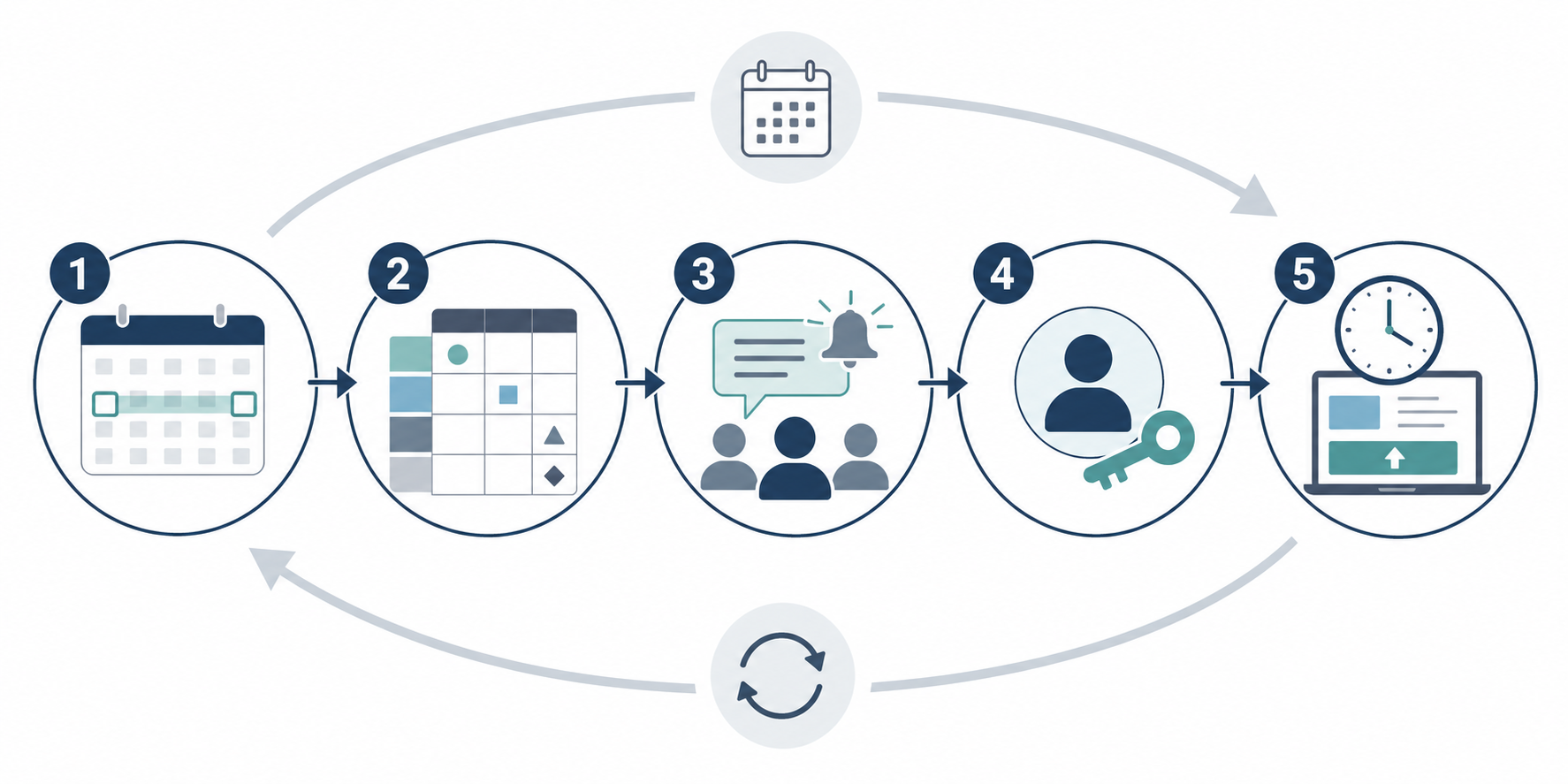
| Step | Where the time goes | What changes if federal filing ends |
|---|---|---|
| Snapshot selection | Choosing the reporting period and reconciling who counts in the workforce snapshot. | The review still matters if the same headcount feeds state reporting or internal audits. |
| Job categorization | Mapping employees into the right job buckets and cleaning up mismatches with payroll records. | The mapping can stay alive if a state uses different categories or a different reporting format. |
| Self-ID work | Chasing missing race, ethnicity, and gender responses and answering employee questions. | The outreach does not disappear if the data still supports state submissions or internal reporting. |
| Account ownership | Designating who owns the form, who approves it, and who can get into the portal. | The governance layer often remains because state portals and audit trails still need a responsible owner. |
| Deadline filing | Compressing review, signoff, and corrections into the final submission window. | The federal deadline may go away, but separate state deadlines can replace one clean window with several smaller ones. |
That is why the National Academies' $614 million to $622 million figure still matters even though it reflects the 2017-2018 Component 2 cycle, not the ongoing annual Component 1 filing: it shows how quickly a compliance process expands once pay data enters the picture [2].
Where The Savings Shrink
The biggest risk to a productivity forecast is treating the federal change as a clean subtraction. Colorado's HB 26-1207, signed June 4, 2026 and effective July 1, 2027, would require EEO-1-style data reporting to the state even if the federal program ends [4]. California's SB 464 goes further in a different direction: it sets $100 per employee penalties for a first violation and $200 per employee for later violations, and it shifts pay-data reporting from 10 EEO-1 categories to 23 SOC groups in 2027 [5]. For multi-state employers, the unified federal window can turn into asynchronous state deadlines, changing formats, and separate signoff paths.
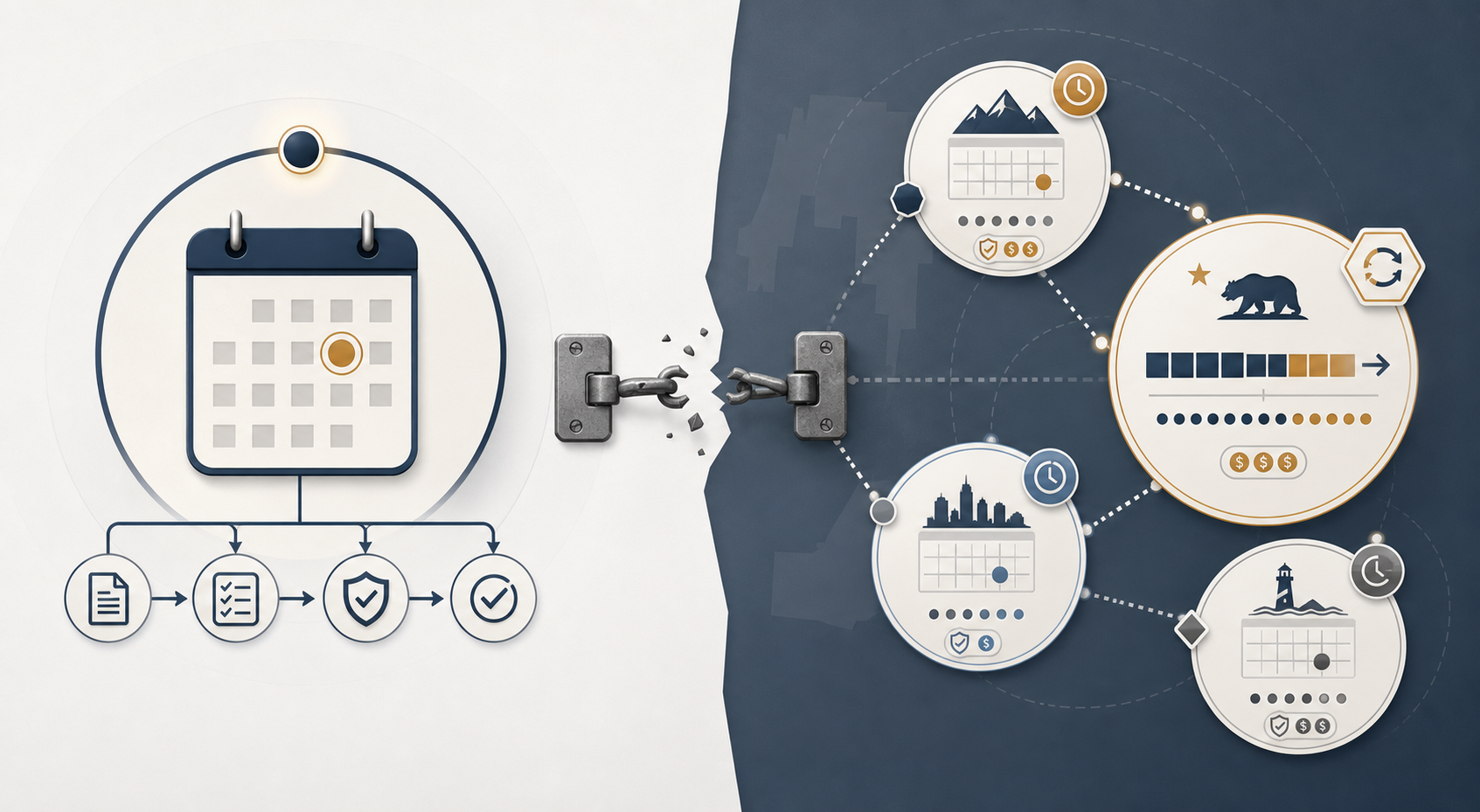
Illinois and Massachusetts matter here less as headline stories than as reminders that the calendar may stay fragmented even after the federal portal goes quiet. That is the difference between eliminating one task and retiring the underlying process.
The wind-down itself also needs caution. Littler notes that the EEOC could still be sued over the 2025 collection even if it does not reopen the portal, and disclosure rulings mean older reports should not be treated as harmless leftovers [7]. For 2027 planning, the defensible move is to keep the federal process warm until the rule is final, map state obligations by workforce footprint, preserve the data pipeline where state reporting still exists, and treat any recovered time as conditional capacity rather than instant headcount relief.
References
- EEO-1 Revised Form Burden Estimate. Crowell & Moring. 2016.
- Evaluation of Compensation Data Collected Through the EEO-1 Form. National Academies. 2023.
- EEO-1 Reporting in 2025. Niural.
- Colorado Mandates State EEO-1 Data Reports. Jackson Lewis. June 4, 2026.
- California's 2026 Pay Data Reporting Rules. Thomson Reuters. 2026.
- EEO-1 Filing Workflow and Administrative Burden Framework. Fisher Phillips. May 19, 2026; updated July 6, 2026.
- EEOC Filing Signals Likely End of EEO-1 Reporting. Littler. May 18, 2026.