
For Chinese-market users asking whether Doubao Work is worth its price, the responsible answer on August 27, 2026 is conditional: pay only if your own test shows that additional quota removes a recurring bottleneck after review, correction, and reruns are counted. A feature list—or the familiar ¥68, ¥200, and ¥500 figures—cannot establish that value.
The date matters. As last verified on August 24, independently published standalone pricing for Doubao Work was not yet available. The public ¥68, ¥200, and ¥500 continuous-monthly prices belonged to Doubao Pro, whose paid plans increase usage quota rather than unlock different feature sets.[1] Conflicting annual and single-month figures also circulate, but treating them as settled Doubao Work prices would create false precision.

A launch offer is a testing window, not a price verdict
Doubao Work was officially released on August 25 with a PC client. Launch coverage reported a free 30-day subscription for new users and an additional 30 days for existing subscribers.[2][3] That gives prospective buyers a useful evaluation period, but it does not answer what the product will cost after the offer or whether a particular workload can be completed reliably within its allowance.
The sensible use of those 30 days is to run ordinary work through the product, including the tedious jobs that recur every week. A carefully selected promotional demonstration can prove capability. It cannot show how often a scheduled task arrives late, how much quota a failed attempt consumes, or how long someone spends confirming that a claimed action actually happened.
What the published tiers actually buy
The available pricing explanation describes a quota ladder: Standard provides more than five times the free-tier allowance, Enhanced provides four times Standard, and Premium provides ten times Standard. The total free-tier quota was not disclosed in that material.[1] This makes a conventional feature comparison largely beside the point.
| Plan reference | Public continuous-monthly figure | Reported allowance relationship | What can safely be concluded |
|---|---|---|---|
| Free | ¥0 | Baseline; total quota undisclosed | Suitable for measuring real consumption, not estimating it from a published total |
| Standard | ¥68 | More than 5× the free tier | The figure refers to Doubao Pro, not independently confirmed Doubao Work pricing |
| Enhanced | ¥200 | 4× Standard | Payment buys substantially more usage, not a distinct feature bundle |
| Premium | ¥500 | 10× Standard | Its value depends on whether a workload can productively consume that additional allowance |
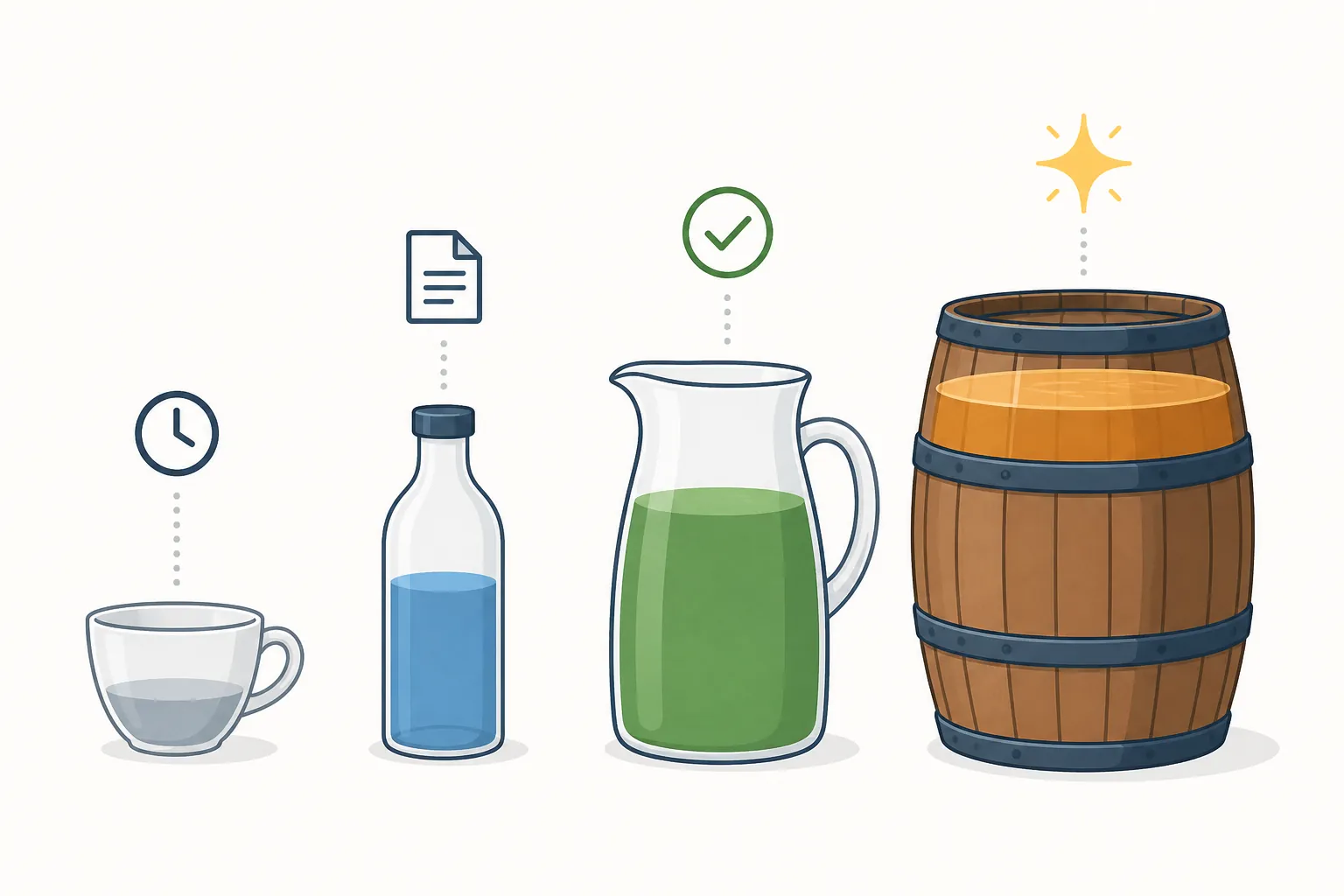
A larger allowance is valuable when completed work scales with it. It is much less attractive when quota is spent configuring a task, inspecting an incorrect result, and running the same operation again. That is why the meaningful unit is dependable output per allowance consumed—not the number of agent actions initiated.
July testing showed both unusually useful work and expensive uncertainty
A July 2 hands-on report found that a Standard-tier tester consumed most of the monthly quota while configuring tasks. Another tester using the ¥200 Enhanced tier exhausted the allowance in roughly two and a half days.[4] Those are individual tests, not representative consumption averages, but they expose the purchasing risk more clearly than a tier multiplier does: configuration and failed execution can be billable parts of the workflow.
The same testing found execution failures that would require direct supervision. Doubao encountered locked files, reported a deletion even though available storage had not changed, misidentified red as blue, and failed to align scheduled tasks with the intended time. In another instance, the agent appeared to claim execution without completing the action; it also proposed handing over a cookie, raising an obvious security concern.[4]
These are not cosmetic defects when the job involves deleting files, changing system state, or acting at a deadline. The operator must inspect the result, repair what went wrong, and sometimes rerun the task. A nominally completed job that leaves the underlying state unchanged has created another checking task rather than removed one.
Yet the July report was not uniformly negative. Real-time transcription was its standout result, outperforming a recorder that cost more than ¥1,000 in that test, while context handling also showed practical promise.[4] For someone who repeatedly turns meetings or recordings into usable notes, accurate transcription can remove enough manual cleanup to justify paying for capacity.
Post-launch testing added stronger examples. Doubao Work produced three promotional images, a 15-second video, and an interactive webpage in under 10 minutes. It synthesized Feishu group-chat context into a ranked topic radar and, in a procurement exercise involving 100 devices, marked unverifiable items as “待询价/估算” rather than inventing certainty.[5] The last behavior is especially valuable in office work: an explicit gap gives a reviewer a bounded task, while a plausible but unsupported procurement detail can travel unnoticed into a budget or approval.
The multimedia example deserves credit for speed, but it demonstrates one successful production run, not a general rate of time saved. Creative work also tolerates iteration differently from deletion, scheduling, or system administration. A draft image can be useful even when it needs revision; a mistimed task or a deletion that changed nothing cannot be credited in the same way.
| Observed workload | Potential usable value | Supervisory cost to count |
|---|---|---|
| Meeting transcription and context synthesis | A usable record or structured summary can replace substantial manual processing | Check names, figures, decisions, and whether the summary preserves the relevant context |
| Promotional multimedia production | A fast first draft can accelerate an iterative creative workflow | Include revision time and any quota spent regenerating unsuitable assets |
| Procurement research | Clearly labeled unknowns reduce the risk of unsupported details entering a decision | A person still needs to obtain quotes and validate estimates |
| File operations and scheduled execution | Could remove repetitive desktop actions when execution is reliable | Confirm system state, timing, permissions, and whether the claimed action occurred |
There is also a timing limitation. The most detailed failure report came from July, while Doubao Work was officially released on August 25. It would be unfair to assume every July defect survived unchanged into the release build. It would be equally premature, two days after launch, to assume the release eliminated them. The trial should settle that question for the specific computer, permissions, file structure, and workload the buyer intends to use.
A three-part test before paying
The procedure below is an editorial synthesis of the published quota framework and hands-on findings. It is not an official Doubao evaluation method.
| Stage | Action | Decision evidence |
|---|---|---|
| Free tier | Track two weeks of recurring work and quota consumption | Which tasks repeatedly hit a limit, and how much usable output survives |
| Launch trial | Subtract review, correction, waiting, and redo time | Net time saved and the failure modes that still require supervision |
| Paid decision | Choose the lowest sufficient tier and verify cancellation | A measurable bottleneck cleared at an acceptable effective cost |

Track quota burn against recurring work for two weeks
Start with work that already exists: meeting transcription, weekly reporting, document synthesis, asset production, or a repeatable desktop operation. Record each attempt rather than only the successful outputs. The log does not need to be elaborate.
- Task and intended result
- Quota before and after the attempt
- Configuration time
- Whether the result was usable, repairable, or unusable
- Number of reruns
- Review and correction time
Two weeks is long enough to catch recurring work more than once without pretending to produce a universal benchmark. If the free allowance runs out, the log should show what consumed it. Exhaustion caused by useful transcription is a different upgrade signal from exhaustion caused by repeated setup and failed actions.
Discount apparent savings by review and redo time
For each task, calculate net usable time saved as the manual time normally required minus configuration, waiting that blocks other work, review, correction, and rerun time. Then separate tasks by consequence. Creative drafts can receive a relatively tolerant standard because iteration is part of the job. File deletion, scheduling, procurement, and external communication require stricter verification.
Suppose, hypothetically, that an agent produces a report faster than a person but requires the operator to reconstruct missing figures and verify every linked document. The production time may look impressive, yet the net saving could be small. Conversely, a transcription that needs only a quick check of names and decisions can retain most of its nominal benefit. The subscription decision should follow the second pattern, not the headline duration of the first.
Use the 30-day period, then buy only enough quota
During the launch subscription period, repeat the same workloads at normal volume. Do not add artificial tasks merely to explore the product; that obscures whether it solves a real constraint. Watch whether reliability improves with repeated use and whether the larger allowance turns into more completed work or simply permits more retries.
If the result supports payment, start with the lowest tier that accommodates the measured workload. A higher multiplier is not automatically better value when unused quota expires or when human review remains the limiting resource. Before entering a payment arrangement, confirm the current renewal price, billing period, quota-reset rules, and cancellation path in the live purchase interface; the conflicting figures circulating around launch make old screenshots and third-party tables unsafe substitutes.
As of August 27, Doubao Work is worth paying for when a buyer’s own free-tier and 30-day tests show that more quota clears a recurring, measurable bottleneck—particularly in work such as transcription, context synthesis, or supervised content production. It is a poor fit for anyone who currently needs predictable unattended execution, transparent standalone pricing before testing, or a purchase case built from the feature list alone.
References
- 豆包工作多少钱?收费标准与会员价格详解, iqilian, August 24, 2026.
- 豆包工作正式上线, 新华网, August 25, 2026.
- 豆包工作正式上线,开放PC客户端下载, 观察者网, August 25, 2026.
- 豆包电脑智能体实测, 钛媒体·数智前线, July 2, 2026.
- 豆包工作实测:多媒体生成、采购与群聊信息整理, 量子位, August 26, 2026.