

Last verified: August 27, 2026. Doubao Work launched on August 25, 2026, so any buying decision made now is necessarily an early one.[1] Current pricing, plan eligibility, administrative controls, and compliance documentation were not available in the supplied source material and therefore require direct confirmation.
The search for “豆包工作 vs 飞书 区别 哪个好” starts with a misleading comparison. In ByteDance’s official positioning, Doubao is the general-AI personal entry point, Doubao Work is the agent intended to execute real work tasks, and Feishu supplies the enterprise identity, knowledge, and collaboration environment.[1] That makes Doubao Work and Feishu different layers of a proposed product chain, rather than interchangeable products competing for the same job.
This is vendor positioning, not independent evidence that the chain will integrate smoothly in every organization or reduce total software spending. It does, however, identify the purchasing question more accurately: should a team use the AI bundled with Feishu—identified in the supplied materials as Doubao Work Partner/Enterprise Doubao—or buy separate Doubao Work seats for an additional task-execution layer?[1]

The difference is the layer each product occupies
| Product or offer | Role in the official chain | What a buyer is deciding |
|---|---|---|
| Doubao | General AI and personal entry point | Whether an individual needs general AI access; it is not the enterprise collaboration environment |
| Doubao Work | Agent positioned to execute real work tasks | Whether users need a separate task-execution layer and, if so, who receives and administers its seats |
| Feishu | Enterprise identity, knowledge, and collaboration environment | Whether the organization needs the underlying workplace platform and whether its bundled AI covers the required work |
| Doubao Work Partner / Enterprise Doubao within Feishu | Bundled AI path identified in the supplied materials | Whether the existing Feishu purchase already provides sufficient AI capability without separate Doubao Work seats |
A conventional feature checklist would blur these roles. Feishu remains the place where organizational identity, knowledge, and collaboration are situated in the official model; Doubao Work is being introduced as the execution agent that may act on work rather than merely provide another collaboration surface.[1] Before comparing isolated features, an IT or operations owner needs to define the task that is still uncovered.
That definition must be operational. “We want agents” is not sufficient. Name the workflow, the users involved, the systems or knowledge it must reach, the approvals it must respect, and the person responsible when execution fails. Only then is it possible to tell whether bundled AI is enough or a separate seat has a defensible purpose.
Decision matrix: team profile, AI layer, and billing path
| Team profile | Likely starting point | AI layer to evaluate first | Billing path | Decision status |
|---|---|---|---|---|
| Small team using free Feishu | Preserve the existing collaboration setup and identify one concrete execution need | Check what AI is actually included or eligible in the current Feishu plan before evaluating separate Doubao Work seats | Confirm free-plan eligibility and limits; compare them with the terms for separate Doubao Work seats | Requires confirmation because current eligibility, limits, and seat pricing are not present in the source set |
| Growing team already paying for Feishu | Audit the AI capabilities already included in the paid Feishu agreement | Compare Doubao Work Partner / Enterprise Doubao with separate Doubao Work only against workflows the bundled option cannot cover | Existing Feishu contract or add-on route versus a separate Doubao Work seat purchase | Most exposed to duplicate spending; confirm entitlements, feature boundaries, administration, and billing ownership |
| Enterprise with compliance requirements | Begin with approval evidence rather than feature preference | Evaluate only the layer that can satisfy required identity, permissions, data handling, audit, and administrative controls | Use the procurement path that can be contractually approved and centrally governed | No selection can be made from the supplied evidence; compliance and control documentation must be obtained |
The matrix deliberately does not name a cheapest route. No current price list, minimum purchase, plan mapping, or rule for assigning seats was provided. A low-looking per-user amount would not settle the matter anyway if the organization has to pay twice for overlapping capability, create a second administrative process, or limit deployment because only some users can be approved.
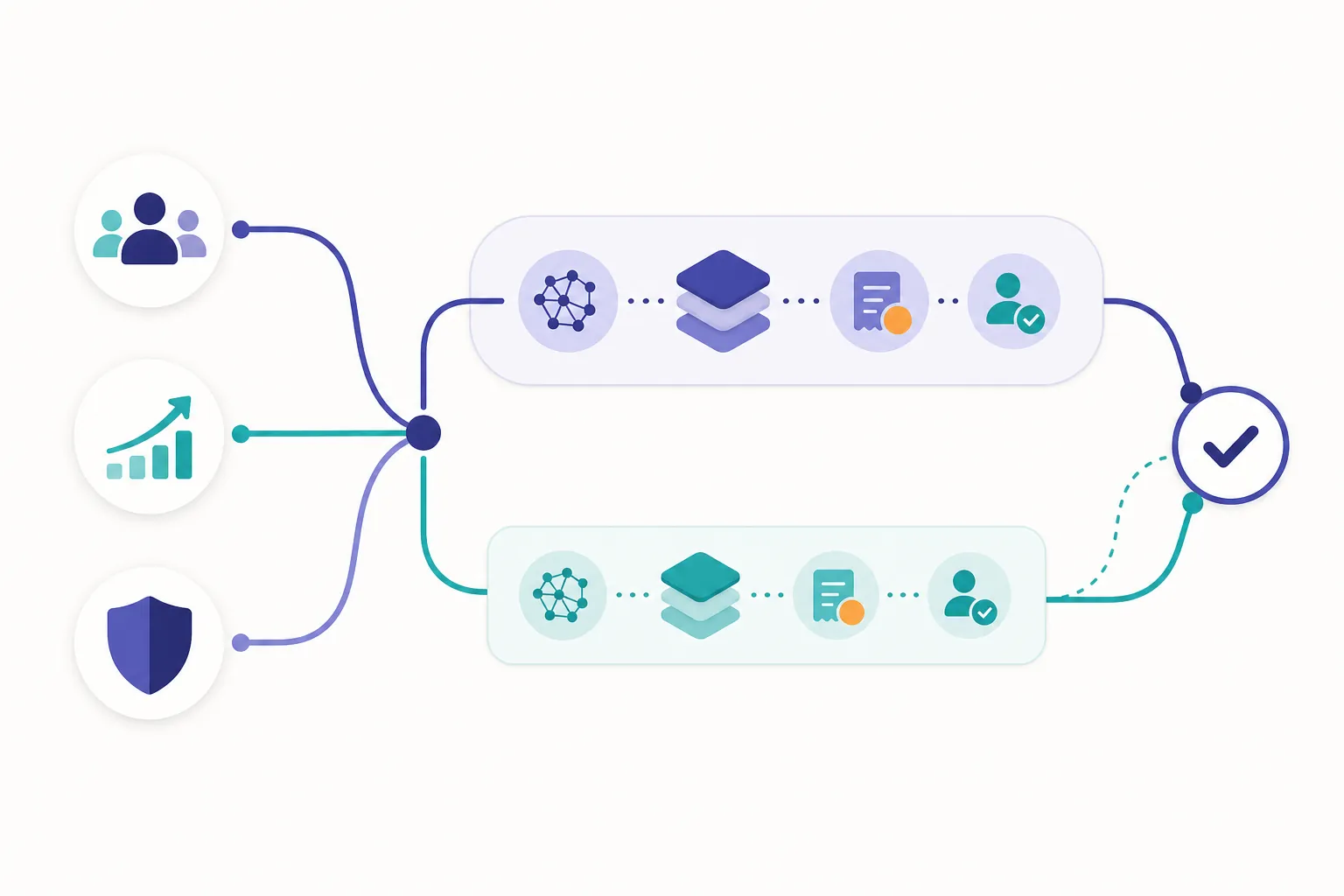
A small team should test the uncovered task, not buy the product story
For a small team using free Feishu, the first step is short: inspect the AI access available under the current plan, then identify one recurring task that remains unsupported. If the bundled route is unavailable or cannot perform that task, separate Doubao Work seats can enter the evaluation. If the need is occasional general assistance rather than repeatable work execution, the case for adding another paid layer is weak.
Seat allocation matters even at this scale. A hypothetical five-person team might discover that only the operations coordinator needs an execution agent while everyone else only consumes the resulting document or update. That is a reason to investigate targeted assignment, not evidence that such assignment is currently permitted. The available purchasing terms must confirm whether seats can be bought and managed that way.
Not for you if: the AI already available through Feishu completes the verified task, or the team cannot identify a repeatable execution workflow that would justify a separate seat.
Paid Feishu customers face the highest risk of buying overlap
A growing team already paying for Feishu has a different problem. It is not choosing from an empty desk. The organization already has a contract, user directory, collaboration habits, knowledge locations, administrators, and a budget owner. The relevant comparison is therefore bundled Feishu AI—Doubao Work Partner/Enterprise Doubao in the supplied naming—against the incremental capability of separate Doubao Work seats.[1]
Start with an entitlement audit. The Feishu contract owner should establish which AI offer is included, which plan or add-on activates it, which users can receive it, and what administrative controls accompany it. Product demonstrations do not answer contractual questions. Neither does a shared ecosystem name guarantee that identity, permissions, billing, support, and audit responsibilities are unified.
Compare workflows through the point of completion
The evaluation should follow several representative workflows from request to completed result. Record where each option can read context, where it can take action, where a person must approve, where permissions stop it, and where the output is stored. A claim that an agent can execute tasks is meaningful only when the organization knows which task, inside which permission boundary, with what review path.
- Existing coverage: Can the bundled Feishu AI complete the required workflow with the organization’s current plan and configuration?
- Incremental execution: Which required action can a separate Doubao Work seat perform that the bundled route cannot?
- User scope: Does every employee need the execution layer, or only people who initiate and supervise the workflow?
- Administration: Who provisions access, changes permissions, reviews activity, and removes access when a user changes roles?
- Budget ownership: Is the purchase part of the Feishu agreement, a separate software line, or a departmental expense?
- Failure handling: Who receives the task when the agent cannot proceed, and where is that handoff recorded?
This is also where total cost can diverge from seat price. Separate access may be worthwhile when it closes a verified execution gap for a defined group. It may be wasteful when the team pays for overlapping AI while introducing another entitlement list and support route. The supplied evidence establishes neither outcome, so savings should be demonstrated in the team’s own workflow rather than assumed from the launch positioning.
Not for you if: the bundled Feishu offer already covers the required tasks under acceptable permissions and controls. In that situation, separate Doubao Work seats need a specific incremental use case; novelty and ecosystem symmetry are not enough.
Compliance-sensitive enterprises need evidence before a winner
For an enterprise with formal compliance requirements, the product-layer model is useful but insufficient. Official positioning can explain intended roles; it cannot substitute for the documents that security, legal, procurement, and data-governance reviewers need. The supplied source set contains no verified detail about current data handling, retention, auditability, deployment boundaries, certifications, contractual controls, or administrator capabilities for the relevant offers.
The review should therefore begin with an evidence request covering the exact plan and purchasing route under consideration. Avoid treating documentation for Feishu generally as proof that a separate Doubao Work purchase inherits identical controls. Conversely, do not assume that separate seats necessarily create a weaker control model. Both conclusions require product- and contract-specific evidence.
| Approval question | Evidence to request | Why the matrix cannot answer it |
|---|---|---|
| How are users identified and provisioned? | Current identity integration, provisioning, role, and deprovisioning documentation | The official chain describes product roles, not the controls available under a particular plan |
| What information can the agent access or act on? | Permission model, connector scope, authorization flow, and administrator configuration | Task-execution positioning does not define each organization’s effective access boundary |
| How are actions reviewed? | Approval, logging, audit, exception-handling, and export capabilities | No administrative-control evidence was supplied |
| How is organizational data handled? | Applicable data-processing, storage, retention, deletion, and contractual documentation | No verified data-handling or compliance documentation was supplied |
| Who owns support and incident handling? | Contractual support route, service responsibility, and escalation terms for the selected billing path | A connected product chain does not prove unified operational responsibility |
Not for you if: your procurement or compliance decision requires evidence that is absent here. Do not use this matrix as approval documentation; use it to decide which offer and billing route must undergo review.
What “better” should mean in the purchase request
Feishu is better when the organization’s need is primarily the enterprise environment for identity, knowledge, and collaboration, or when its bundled AI already covers the verified work. Doubao Work becomes the relevant candidate when the team can name an additional task-execution requirement that the bundled route does not satisfy. Those conclusions follow the products’ stated roles, but the final choice still depends on commercial terms and control evidence that must be confirmed.[1]
The defensible next question is therefore narrower than “Doubao Work or Feishu?” Ask whether the organization needs an additional task-execution layer, which users genuinely need it, and whether that layer can be bought, administered, and approved through the appropriate path.
References
- 豆包工作全新发布!详解核心价值、功能及与豆包、飞书的关系