
Give Doubao Work (豆包工作) one activity brief and the reported result is not simply a polished answer in a chat window. In an APPSO hands-on test, the agent returned a plan document, a budget spreadsheet, and a proposal presentation as three natively editable files. The run reportedly consumed about 1% of the available five-hour rolling quota.[1]

That handoff is the clearest answer to what Doubao Work adds beyond the ordinary Doubao chatbot. Chat mode generates material for a person to carry into the next application. Work mode decomposes the request, invokes tools, operates authorized software, and delivers artifacts that can remain inside the workflow. The difference is visible when the recipient opens the budget, adjusts a formula, revises one slide, and sends the files for approval without rebuilding them from copied chatbot output.
Doubao Work officially launched on August 25, 2026, but the underlying work-agent functionality did not materialize all at once. Doubao introduced its “工作任务,” or Work Tasks, mode in June 2026; phone remote control followed on August 17; and Doubao Work became the product brand on August 25.[2][3] Those dates matter because launch coverage sometimes folds earlier functions into the new brand and makes the release appear more sudden than it was.
There are also two PC experiences to distinguish. The standalone Doubao Work client is dedicated to work mode. The regular Doubao PC client retains both conventional chat and work modes.[2][4] Doubao Work is therefore best understood as a separate agent product class and interface, not as a claim that every Doubao user received an entirely new set of capabilities on launch day.
How a task moves through Doubao Work
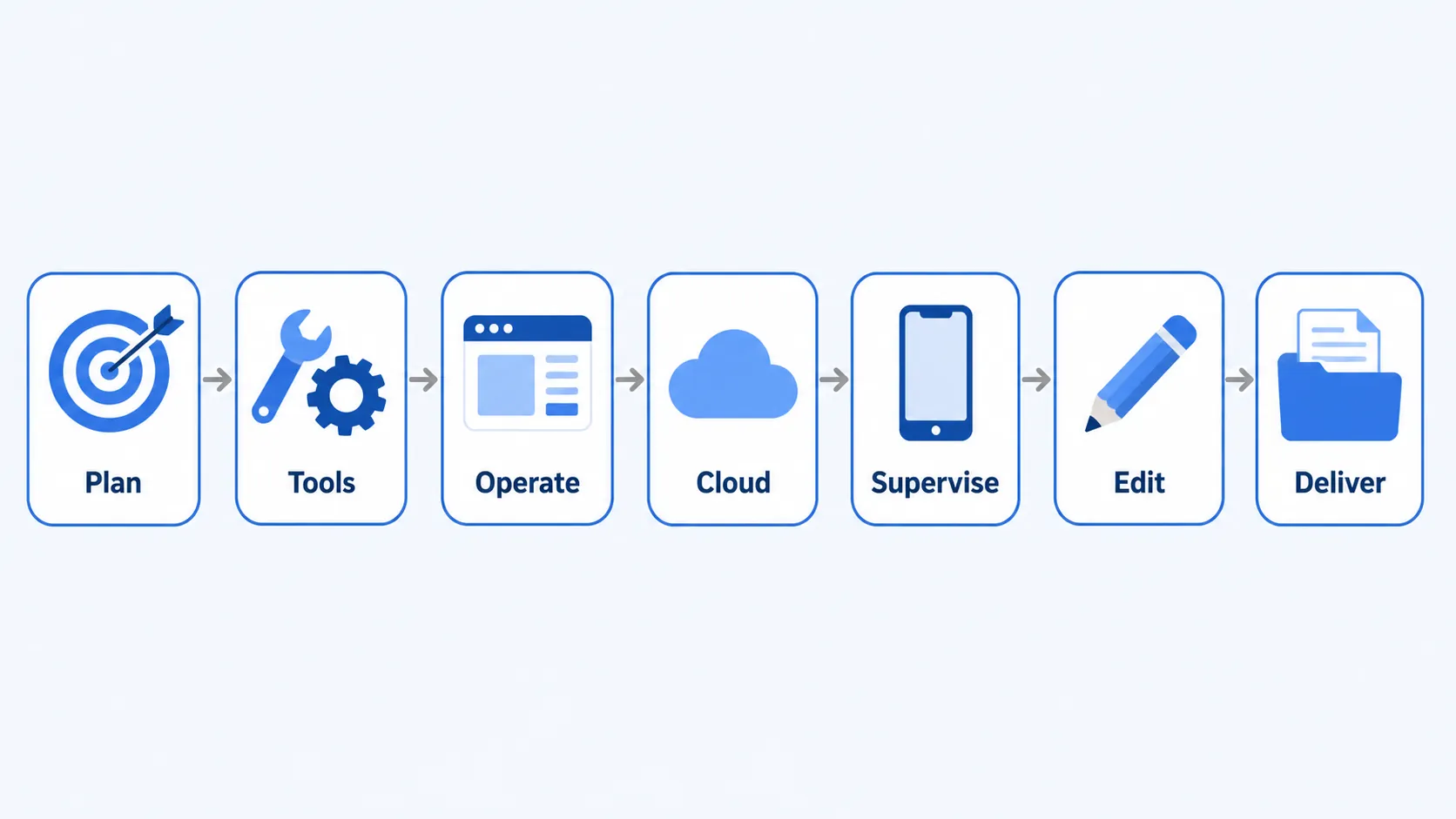
| Stage | What happens | What the user should inspect |
|---|---|---|
| Plan | The agent decomposes the goal into subtasks. | Whether the plan matches the requested scope and deliverables. |
| Call tools | It selects available work partners, skills, connectors, or application tools. | Which services and data the task will use. |
| Operate | With authorization, it can use a browser or local computer applications. | Whether the requested actions and access are appropriate. |
| Hand off to cloud | Long-running work can continue on a cloud computer. | Which task is running remotely and what information it carries. |
| Supervise | The user can monitor or control supported work from a phone. | Progress, requests for intervention, and unexpected behavior. |
| Correct | A selected portion of the result can be edited in place. | Whether the correction changes only the intended section. |
| Deliver | The agent returns editable documents, tables, slides, or webpages. | File structure, formulas, permissions, citations, and readiness for handoff. |
The official description says Doubao Work can autonomously break down goals, call tools, and operate an authorized browser or local computer. For longer jobs, execution can move to a cloud computer so the work continues after the user shuts down the physical PC.[5] This is more consequential than a background progress animation: it removes the requirement to keep a laptop awake merely because the agent is still gathering information, moving between applications, or assembling files.
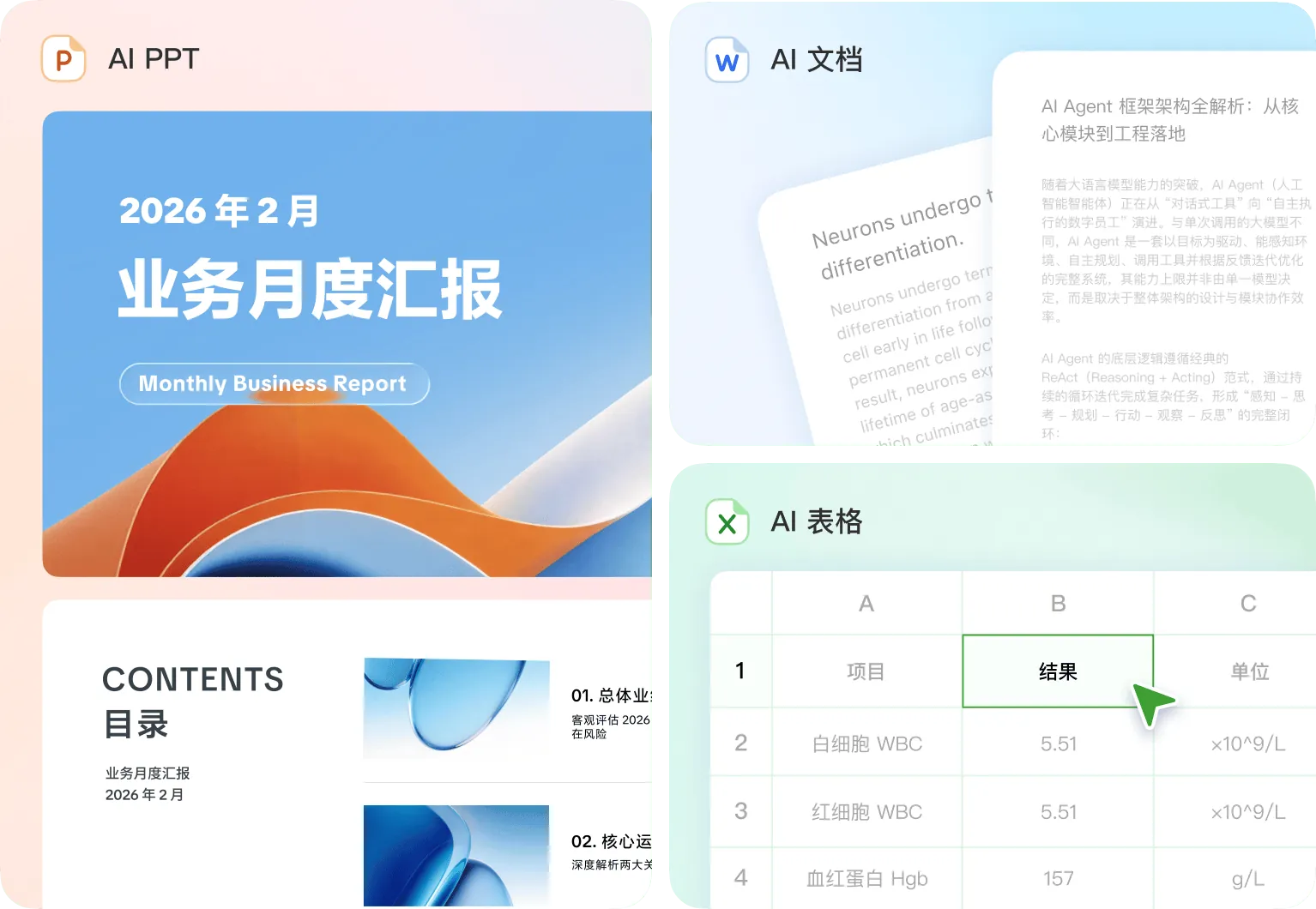
The user still needs control points. Doubao Work supports point-to-edit co-editing: select a portion of a generated document, table, presentation, or webpage and request a localized revision instead of regenerating the entire result.[5] In an operational workflow, that helps preserve approved sections while correcting one assumption, one formula, or one visual. It also makes review more legible because the human can specify where the output went wrong.
Phone control extends that review loop away from the desk. The capability was added on August 17, 2026, and requires current Doubao clients on both the computer and phone, followed by authorization inside the application.[3] It is supervision rather than proof of autonomy: a user can check progress and intervene remotely, but still has to decide whether a completed action is acceptable.
Scheduled work, reusable skills, and connectors extend the same execution model. A schedule specifies when a recurring task should run; a skill packages a repeatable capability; and a connector supplies an authorized bridge to another service or source of context. At launch, ByteDance also described more than 100 “work partners” and the ability to assemble multi-agent work teams.[4] The partner count indicates breadth of available roles, not evidence that every role performs reliably or that a larger roster automatically improves a task.
What remains distinctive: Feishu context
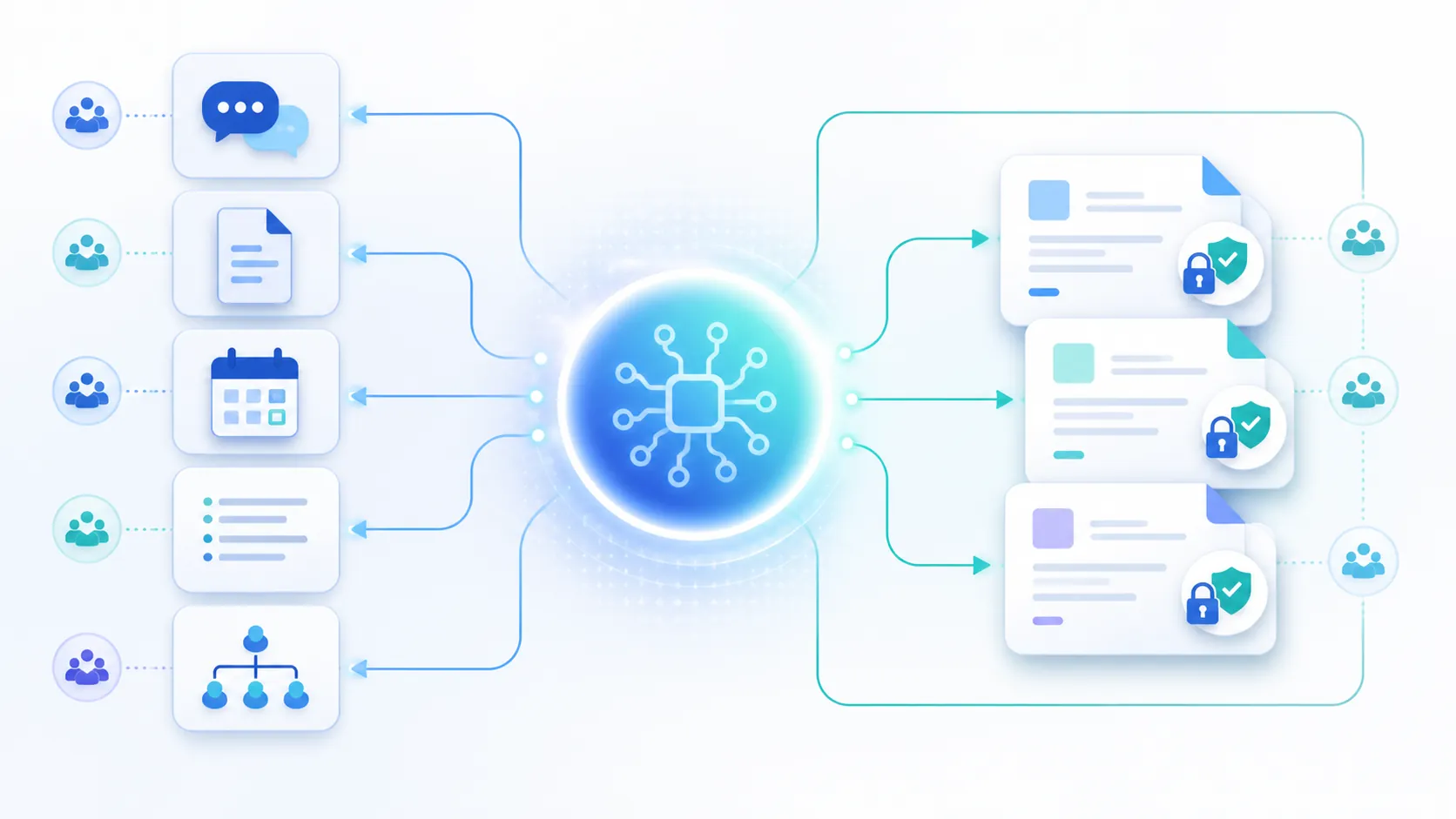
Browser operation, local-app control, cloud execution, scheduled tasks, specialist agents, and editable office files are all useful. They are also increasingly familiar components of office-agent products. Doubao Work’s more defensible advantage appears when the user signs in with a Feishu account.
With that account-level connection, Doubao Work can use the Feishu material the person already has permission to access, including chats, documents, meeting minutes, calendars, and the organization graph. Results can then be written back as Feishu cloud documents with inherited permissions.[1][5] The agent is not merely receiving a few files uploaded for one prompt; it can work within an existing body of organizational context, subject to the signed-in user’s access.
Consider an event proposal. A standalone agent may need the user to upload last quarter’s plan, paste the current attendee requirements, explain who approves the budget, provide the latest calendar constraints, and identify the correct recipients. In a properly connected Feishu environment, parts of that context may already exist in permitted chats, meeting notes, documents, calendars, and reporting relationships. The practical gain is fewer context-reconstruction steps before execution begins.
Delivery matters just as much. When the hands-on test used a Feishu login, its results arrived as Feishu cloud documents while retaining inherited permissions.[1] That can spare the operator from recreating sharing settings, uploading local files, and explaining where the final versions live. It also keeps the output available for ordinary team editing after the agent’s run has ended.
This advantage is conditional. It is strongest when a team’s useful history, documents, meetings, calendar activity, and collaboration structure already live in Feishu. A non-Feishu user can still benefit from task planning, application control, cloud execution, and editable files, but does not receive the same reservoir of organizational context or the same permission-preserving return path. For that user, Doubao Work looks capable without looking uniquely differentiated.
A practical Doubao Work setup and first test
Start with a bounded task whose output can be checked. A proposal package is a better evaluation than “research this market” because it specifies concrete deliverables: for example, a written plan, a budget sheet, and a presentation. State the required format, source boundaries, budget rules, deadline, and approval audience in the brief.
- Choose the client deliberately. Install the work-only Doubao Work PC client if that is the intended workspace, or use work mode inside the regular Doubao client if you also need conventional chat.
- Sign in with Feishu when the task genuinely needs permitted team context. Before execution, review which account is active and whether its access is broader than the task requires.
- Describe the final artifacts, not only the topic. Ask for editable files and identify the required document, spreadsheet, presentation, or webpage structure.
- Review the proposed plan and requested tool access before authorizing browser, local-application, connector, or cloud-computer actions.
- If remote supervision is needed, update both mobile and PC clients and complete the in-app authorization flow.
- Use point-to-edit for localized corrections. Avoid regenerating an accepted file merely to change one paragraph, table range, or slide.
- Open every delivered artifact in its native editor. Check formulas, links, factual claims, formatting, ownership, and sharing permissions before treating the task as complete.
Quota usage deserves attention during this test. Press coverage describes a five-hour allowance with a rolling weekly reset rather than an unrestricted or permanently exhausted allocation, and reports that free access uses the Turbo model while paid access uses Pro.[1] Do not estimate capacity from the activity-brief example alone: consuming about 1% on one task says nothing reliable about a research-heavy job, a browser workflow with repeated retries, or a multi-agent run.
The launch offer also needs date-sensitive treatment. Coverage on August 25 said that users who downloaded, logged in, and upgraded by August 25 could receive 30 free days, while existing paid members would receive a 30-day extension.[6] Today is August 27, so that reported cutoff has already passed. Do not assume a new account remains eligible based on launch-day articles; confirm the live terms and current CNY pricing on the official Doubao Work price page before subscribing.[7]
What the launch does not yet establish
Doubao Work is two days old under its current brand. There is not yet enough time to establish normal reliability, long-term retention, failure rates, or how consistently its cloud and local-computer workflows behave across organizations. The successful three-file hands-on example demonstrates that the workflow can work; it does not demonstrate that most users will receive the same result.
Community claims about quotas being consumed unexpectedly or office tasks failing should be treated as investigation leads, not measured product-wide rates. A serious trial should record the brief, selected model, tools authorized, quota before and after the run, intervention points, output quality, and any retries. Without that context, an isolated complaint or success story cannot support a general reliability conclusion.
There is also a product-boundary limitation. In-app agent creation was discontinued on July 15, 2026, for regulatory reasons.[2] Buyers evaluating the advertised work partners and multi-agent teams should therefore distinguish using ByteDance’s available agent capabilities from freely creating and publishing their own agents inside the application.
ByteDance says Doubao Work received China Academy of Information and Communications Technology certifications for office-agent capability and a cloud benchmark.[5] Those are vendor-reported certification claims, not independent evidence that the product will complete a particular organization’s workload accurately or reliably. The relevant test remains whether it can perform the intended task under the organization’s permissions, applications, review process, and risk tolerance.
Who has a reason to adopt it now
Feishu-based teams have the most credible reason to test Doubao Work. They can evaluate the complete proposition: existing team context goes in, the agent performs the authorized workflow, and editable results return to the collaboration system with inherited permissions. The trial should use real but low-risk work, especially tasks where staff currently spend time reconstructing context, moving information among applications, and restoring sharing settings at delivery.
Standalone Doubao users still receive a substantial office agent: goal decomposition, tool use, browser and local-app operation, cloud continuation, remote supervision, scheduled work, point-to-edit correction, and native file delivery. What they do not receive is the clearest reason to choose this product over another capable office agent—the Feishu context and permission-preserving handoff.
Doubao Work is not for you if you are a non-Feishu user seeking a uniquely differentiated office agent. It is also not for you if work cannot be entrusted to a product until it has accumulated months of reliability evidence. The editable document, spreadsheet, and presentation are a convincing demonstration of completed work; two days after launch, they are not yet a track record.
References
- 豆包工作上手体验 — 爱范儿 / APPSO, August 25, 2026
- 豆包工作正式发布 — IT之家, August 25, 2026
- 豆包工作任务模式支持手机远程控制 — 新浪财经, August 17, 2026
- 豆包工作发布,支持100多个工作伙伴与多智能体团队 — 南方都市报 / 163.com, August 25, 2026
- 豆包发布AI办公产品“豆包工作” — 新华网, August 25, 2026
- ByteDance launches Doubao Work with Feishu integration and 30-day free access — TechNode, August 25, 2026
- 豆包工作价格 — Doubao