
Why Agencies Need a Layered Automation Stack (Not a Single Tool)
Most marketing automation content on the web treats the buyer as a single business with one customer base, one brand voice, and one set of campaigns. That assumption breaks down the moment you manage five, ten, or twenty clients. An agency cannot run its entire operation inside a single platform — not HubSpot, not ActiveCampaign, not any all-in-one suite — because the requirements split across three distinct domains: client-facing execution, internal operations, and cross-client reporting.
The data backs up the urgency. Approximately 76% of enterprises already use some form of marketing automation, and the sector is projected to reach $13.71 billion by 2030. Clients expect agency partners to deliver at that level. Yet most agencies still stitch together their tech stack reactively — a CRM here, an email tool there, a spreadsheet to track it all — and end up with data silos, duplicated work, and account managers spending their time on manual exports instead of strategy.
The alternative is a deliberate, layered architecture. Agencies that automate internal and client workflows can reclaim 5 to 10 hours per account manager per week, according to industry benchmarks. That is not a marginal efficiency gain — it is the equivalent of adding a full-time resource for every two account managers without increasing headcount.
The 5-Layer Agency Automation Stack Architecture
A single-platform approach fails because it tries to be everything: CRM, email sender, workflow builder, analytics suite, and project manager. No tool excels at all five simultaneously, and the compromises show up as missing features, awkward workarounds, or per-seat costs that balloon with every client added.
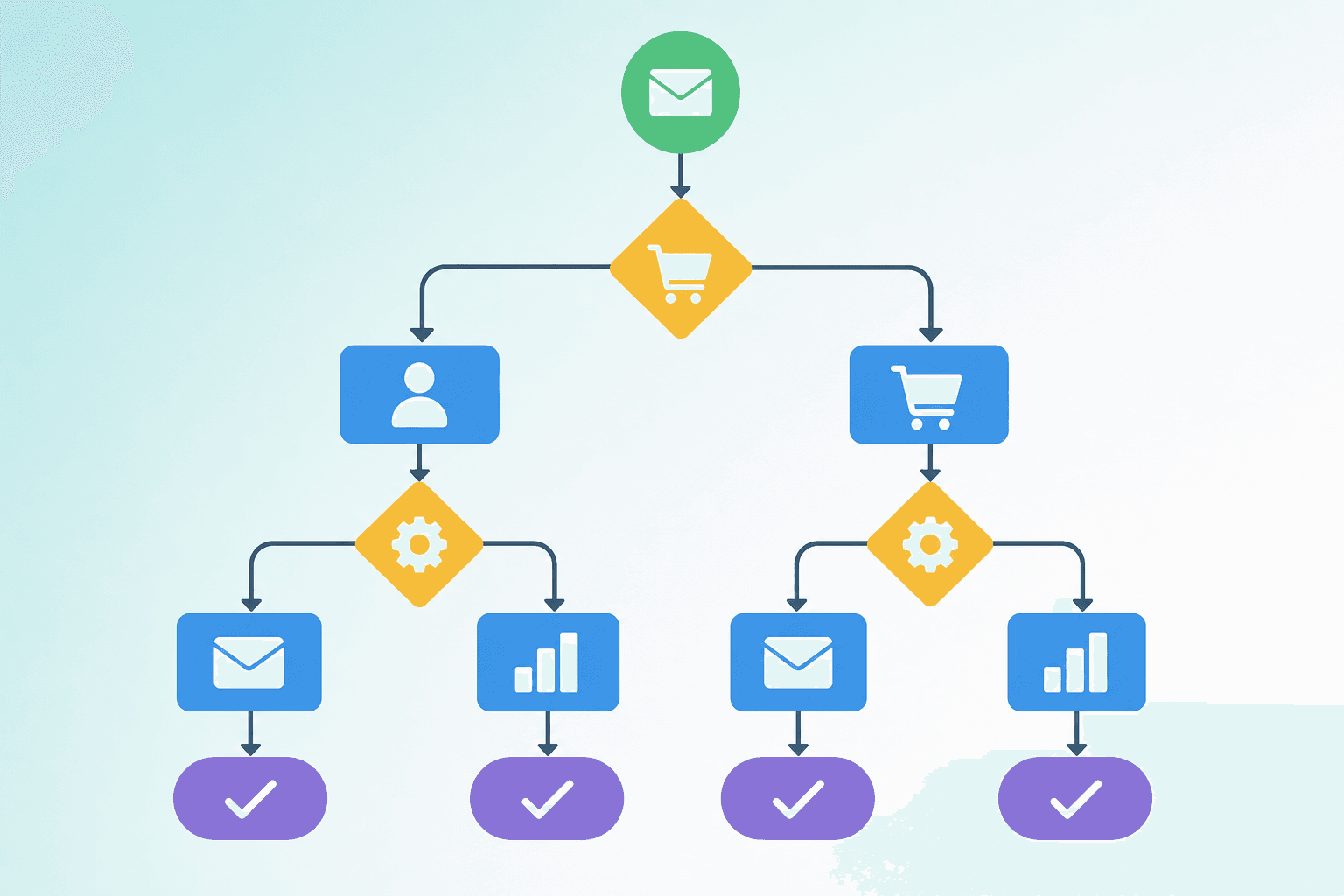
The solution is a five-layer stack where each layer has a clear job and connects to the others through standardized data flows:
- Foundation Layer (CRM): The single source of truth for contacts, companies, deals, and client hierarchies. Every other layer reads from and writes to this system.
- Automation / Orchestration Layer: The connective tissue that moves data between tools, applies conditional logic, and executes multi-step workflows across the stack.
- Channel-Specific Tools: Dedicated platforms for email, SMS, social media, and advertising — each optimized for its channel's delivery requirements and compliance rules.
- Operations & Reporting Layer: Agency project management, time tracking, resource planning, and cross-client dashboards that keep the business running.
- Social Proof & Content Layer: Tools for collecting testimonials, managing reviews, and distributing content — often overlooked but critical for client retention and new business.


Comments
Join the discussion with an anonymous comment.